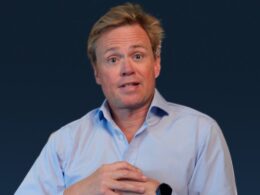



Stijn Van Nieuwerburgh, professor of real estate at Columbia Business School, presented a landmark analysis of the AI data center buildout at the Markus Academy in March 2026, laying out a framework that should reorder how advisors and investors think about one of the largest capital formation events in modern history.
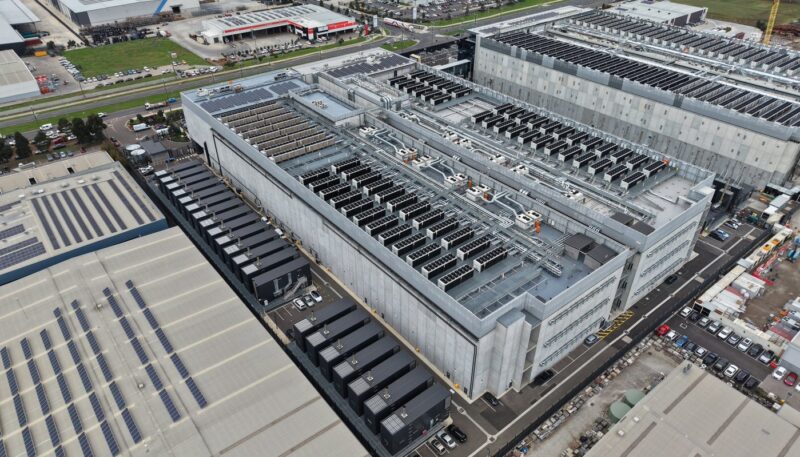
The AI boom is not a software story. It is a physical capital story, and the numbers are staggering. Van Nieuwerburgh opens with a frame that cuts through the noise: "AI is driving a wave of physical capital formation unusual in scale and composition." A single modern 200 MW data center built for AI training carries a total price tag of $8.2 billion, roughly one-third of which is the facility and power infrastructure, the rest consumed by IT equipment. The U.S. alone has plans for one thousand such facilities, representing approximately 200 GW of new capacity. Global data center investment is projected to reach at least $3 trillion through 2030, with annual spending peaking near $750 billion before the decade closes.
To understand the scale, Van Nieuwerburgh places the AI buildout alongside the great infrastructure programs of American history. The railroad era consumed 2.4% of GDP. Electrification required 1.1%. The Interstate Highway System drew 1.6%. The telecom fiber boom reached 0.8%. The AI buildout is projected at 2.8% of GDP from 2025 through 2032, the largest single technology investment wave ever recorded. Notably, in Q4 of 2025, AI-related capital expenditure accounted for 100% of U.S. GDP growth, a data point Van Nieuwerburgh presents as a current, observed fact rather than a forecast.
Hyperscaler capex tells the same story. Aggregate spending by Microsoft, Amazon, Meta, Google, and Oracle reached $415 billion in 2025 and is projected to hit $655 billion in 2026, a 58% year-over-year surge. That spending is now absorbing nearly all operating cash flow generated by those same companies, with the capex-to-operating-cash-flow ratio approaching 90% for 2026.
The Ownership Shift and Where Risk Goes
Van Nieuwerburgh's second major insight concerns who owns what, and why the answer is changing fast. Hyperscalers historically self-built and owned their data centers. That model is giving way to leasing, driven by massive capex pressure, the speed advantage of leasing existing capacity, and the desire to preserve financial flexibility for IT investment. "Third-party landlords," he notes, function as "residual claimants on hyperscalers' demand for compute."
Of the estimated $2.9 trillion needed to build the compute hyperscalers require between 2025 and 2028, only 48% will be financed through internal cash flows. The remaining 52% will be externally financed, drawing on $800 billion in private credit, $200 billion in corporate debt, and $150 billion in securitized instruments. Private credit alone accounts for $200-250 billion already deployed in the data center space, with Blue Owl, Blackstone, Apollo, Brookfield, and KKR among the dominant lenders. The top five private credit providers hold 60-70% of that market.
Data center leverage at the facility level runs far higher than headline numbers suggest. Van Nieuwerburgh is direct: "DC (data center) leverage much higher than 40%, closer to 70%." The landmark example is Meta's Hyperion data center in Richland Parish, Louisiana, a 2.06 GW facility with a final potential scale of 5 GW. Meta sold an 80% equity stake to Blue Owl in October 2025, forming a joint venture called Beignet, which then issued $27.3 billion in debt, the largest single investment-grade bond ever issued in the United States. The Beignet leverage ratio stands at 90%. As of the presentation date in March 2026, the bond trades at $106, having jumped from $100 to $110 at issuance before settling, and PIMCO, which purchased nearly $18 billion of the bond at issuance, had already realized approximately $2 billion in profit.
Regulatory Arbitrage and the Opacity Problem
Perhaps the most consequential and underappreciated dimension of this buildout is what Van Nieuwerburgh calls a "probability vacuum" in accounting treatment. Because Meta's lease renewals are not assessed as at least 70% likely under GAAP, future lease obligations beyond the initial four-year term need not appear on the balance sheet. Simultaneously, because the residual value guarantee attached to the lease is also considered not probable, it too escapes recognition. The result: "While one of these two obligations will happen with prob 1, neither scenario is reflected on Meta's balance sheet." Credit ratings agencies have followed suit. S&P does not include either obligation in adjusted debt. "The financing architecture increases leverage and makes risks opaquer, while preserving financial flexibility and equity multiples and credit ratings for the hyperscalers."
This is not incidental. It is the design. Hyperscalers trade at software-company multiples. Moving invested capital onto the balance sheet lowers return on invested capital and compresses multiples. The economic motivation to push debt off-balance-sheet is, Van Nieuwerburgh argues, far larger than the incremental cost of doing so. The scale of unrecognized future lease commitments across hyperscalers had reached $662 billion in yet-to-commence leases as of year-end 2025 filings, up from $231 billion just one year earlier.
What Could Go Wrong
Van Nieuwerburgh identifies five distinct risk categories. Rising cost of capital threatens hyperscalers as capex outpaces cash generation and future lease obligations eventually surface on balance sheets. Tenant credit risk is concentrated: many facilities serve a single tenant, and the implosion of a major AI model company, OpenAI, Anthropic, or xAI, would cascade through the credit chain. The deck notes that Oracle's five-year CDS spreads had risen sharply to above 150 basis points by early 2026, a signal the market is beginning to price this risk. Development and operational risks include power infrastructure delays averaging four years for grid connection, supply chain bottlenecks in semiconductors, and cost overruns. Technological obsolescence threatens both GPU assets and the physical cooling and power infrastructure of data centers themselves if architectural shifts accelerate. Finally, the systematic risk of data center REITs has risen sharply, with market beta climbing from roughly 0.45 in 2021 to nearly 1.0 by early 2026, undermining any assumption of low-correlation, infrastructure-like behavior.
Running beneath all five risks is what Van Nieuwerburgh calls circularity. NVIDIA, OpenAI, Oracle, CoreWeave, and their counterparts are interconnected through revenue commitments, investment stakes, and credit dependencies that amplify rather than diversify risk. "Large first principal component: AI revenue risk." The deck also flags an early sign of demand fragility: Oracle and OpenAI were already scaling back leasing plans at their Abilene, Texas campus in early 2026, reducing targeted capacity from 2 GW to 1.2 GW under the Stargate initiative.
Five Key Takeaways for Advisors and Investors
1 The AI buildout is the largest physical capital formation event in U.S. history and was responsible for 100% of U.S. GDP growth in Q4 2025. Client portfolios without exposure to the financing ecosystem, not just the equity names, may be underweighted to the cycle's primary beneficiaries.
2 Private credit is the dominant financing vehicle for data center real estate, with $200-250 billion already deployed and heavy concentration among five managers. Due diligence on private credit allocations must account for DC-specific risks: tenant concentration, obsolescence, and leverage at 70-90% LTV.
3 Balance sheets of hyperscalers materially understate economic leverage. Unrecognized lease obligations and residual value guarantees, now totaling over $662 billion in uncommenced commitments across the sector, represent contingent liabilities that neither GAAP nor current credit ratings fully capture. Advisors should treat published debt figures as a floor, not a ceiling.
4 DC REIT beta has nearly doubled since 2021 and now sits close to 1.0. The historical case for data center real estate as a defensive, low-correlation infrastructure asset no longer holds at current valuations and risk exposures.
5 Revenue generation from AI deployment is the critical variable that determines whether this buildout produces returns or becomes a misallocation. AI use remains heavily subsidized. The key question, as Van Nieuwerburgh frames it, is "not only how much is being invested but how the revenues, costs, and risks of the AI buildout are distributed across the ecosystem."
Footnote: Van Nieuwerburgh, Stijn. "Data Centers: Financing the AI Buildout." Columbia Business School, Markus Academy, 19 Mar. 2026, https://business.columbia.edu/sites/default/files-efs/imce-uploads/Research/Research_Papers/Datacenters-Slide-deck%20v9.pdf.