



Forward-looking analysis of this week's most important investment themes
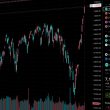
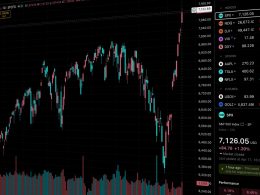
The central tension we’re watching entering the week of April 20 is this: equity markets have run hard on ceasefire relief — flipping from oversold to overbought in roughly twelve sessions — and yet the fundamental story underneath remains, in Fidelity's Jurrien Timmer's measured phrase, "bent, not broken." The question is not whether the economy is in trouble. The question is whether markets can hold their gains while the geopolitical situation remains genuinely, demonstrably unresolved. This week's earnings calendar and a consequential Fed Chair confirmation hearing will begin to answer that question.
The Ceasefire Isn't a Peace Deal
Let’s be precise here: the Strait of Hormuz is not fully open. Iran declared it open; the US naval blockade remains in force; ships still require coordination with Iranian forces to transit. What the April 8 two-week ceasefire actually accomplished was to take the worst-case scenario off the table — a full wartime closure of the strait, crude above $150, and a deep recession scenario priced into credit markets. That outcome is genuinely meaningful, and markets were right to respond positively. As Franklin Templeton Institute's Stephen Dover wrote, this looks far more like a tactical relief rally than a durable normalization.
To be fair, relief rallies can persist, especially when earnings are doing the heavy lifting. And, we're watching carefully for any signal that talks collapse when the two-week window closes. Energy prices probably won't fall quickly back to pre-war levels — the impact has already extended into chemicals, fertilizer, and industrial supply chains, not just crude. Oil at $90–$115 is a different macro environment than the one most earnings models were calibrated to entering 2026. The chokepoint story has shifted; it has not resolved.
Stocks Follow Earnings — And Earnings Are About to Tell Us Everything
Here is what cuts through the geopolitical noise: 12.6% Q1 S&P 500 EPS growth is expected, which would mark six consecutive quarters of double-digit annualized earnings growth. Energy-sector EPS estimates alone jumped 18% in the past 30 days. The fundamental case for equities has not buckled.
The week ahead will put that thesis to its most direct test yet. GE Aerospace, UnitedHealth, RTX, Boeing, Tesla, IBM, Texas Instruments, ServiceNow, Honeywell, American Express, and Intel all report. We're watching guidance quality more closely than headline EPS beats. In an environment where input costs — energy, shipping, fertilizer — are structurally elevated, what a CFO says about margin trajectory in the back half of 2026 will tell the market far more than whether Q1 beat by two cents. Invesco's Brian Levitt has argued the market likely hasn't found its floor yet, citing widening credit spreads, drifting inflation expectations, and a dollar that has modestly strengthened. The coming earnings wave will either reinforce or refute that concern. It is simply too early to tell — but not for long.
The Dollar's Line in the Sand
Fidelity's Jurrien Timmer has identified a level worth respecting: the DXY has been failing at 100. This is not merely a technical observation — it is a structural one. As more of the world's trade takes place regionally and as the US energy supply story becomes complicated by Middle East risk, the long-term case for dollar devolution is gaining tangible, real-world evidence. Gold, which Timmer notes is now trading back in line against global money supply growth, is doing exactly what a portfolio anchor should do in this environment.
Our long-held view is that diversification is discipline, not default. A dollar that continues to fail at 100 is a tailwind for non-US equities and for real assets broadly. In that context, the structural bull case for gold remains intact, and the diversified, globally tilted posture looks increasingly appropriate rather than merely cautious.
The Fed Chair Wildcard — Watch Warsh on Tuesday
This may be the most underappreciated event of the week. Kevin Warsh — President Trump's nominee to succeed Jerome Powell when his term expires on May 15 — testifies before the Senate Banking Committee on Tuesday. The timeline is tight. Markets have priced a "hold steady" Fed posture: fewer cuts, not more, given energy-driven inflation firmer than the start of the year. But Warsh brings different policy instincts, and any signal that he would ease aggressively despite firmer CPI — or that his confirmation faces a political obstacle — could move rates markets materially. Retail sales data on Tuesday (expected at +1.4% month-over-month) and the University of Michigan sentiment reading on Friday round out a genuinely consequential data calendar.
The Week Ahead
The two most important questions markets will be answering this week are: Does earnings season confirm that corporate margins can survive structurally higher energy costs and still deliver double-digit growth? And does the Warsh hearing introduce new uncertainty into the Fed's rate path and institutional independence?
If earnings guidance is constructive and Warsh's testimony is measured, the relief rally has a path to consolidate. If guidance disappoints or Warsh surprises, the technical fragility that Piper Sandler's Craig Johnson has flagged — an overbought market on lagging intermediate-term breadth — could assert itself quickly. It is hard to envisage a week that simply drifts.
The discipline of active asset allocation remains unchanged. Our posture is patient and diversified: tilted toward global equity and real assets, carry preferred over duration in fixed income, and gold maintained as a portfolio anchor in a period when the dollar's reserve status continues, slowly, to evolve. A ceasefire that holds changes the near-term risk calculus. A ceasefire that fails reprices everything. The facts will tell us — and more facts are arriving this week.
— AdvisorAnalyst Editorial Team, Sunday, April 19, 2026
Sources
- Quick Thoughts: A helpful ceasefire, but a fragile pause
- Jurrien Timmer: When in Doubt, Zoom Out
- Broadcom's Bullish Signal Is Flashing Again—Here's What the Technicals Are Saying Now
- The Economy Takes Multiple Shocks in Stride
- Iran war: What's driving market sentiment?
- Don't Trade the Headlines. Watch These Two Things Instead — April 13, 2026
- The Worst-Case Scenario is Off the Table, Bringing Global Relief
- Jurrien Timmer: Bent Not Broken
- Indicators suggest the market likely hasn't hit bottom yet
- What Happens Next?
- The Stock Market Rally: Buy Or Fade It?
- Five Catalysts for the Week of March 30, 2026
- Jurrien Timmer: Leaning Towers
- Stock market next week: Outlook for April 20-24, 2026
- Stock market records, Iran updates, and Tesla earnings: What to watch this week