





by William Smith, CFA, Head—Credit, and Scott Schachter, Senior Investment Strategist and Head of Credit Business Development, AllianceBernstein
Investors concerned about market turbulence don’t have to sacrifice return potential to reduce risk. Historically, short-duration high-yield bonds have delivered returns neck-and-neck with those of the broader high-yield market but with substantially less volatility. The recent rise in yields makes today an especially compelling entry point.
A Stronger Historical Risk/Return Trade-Off
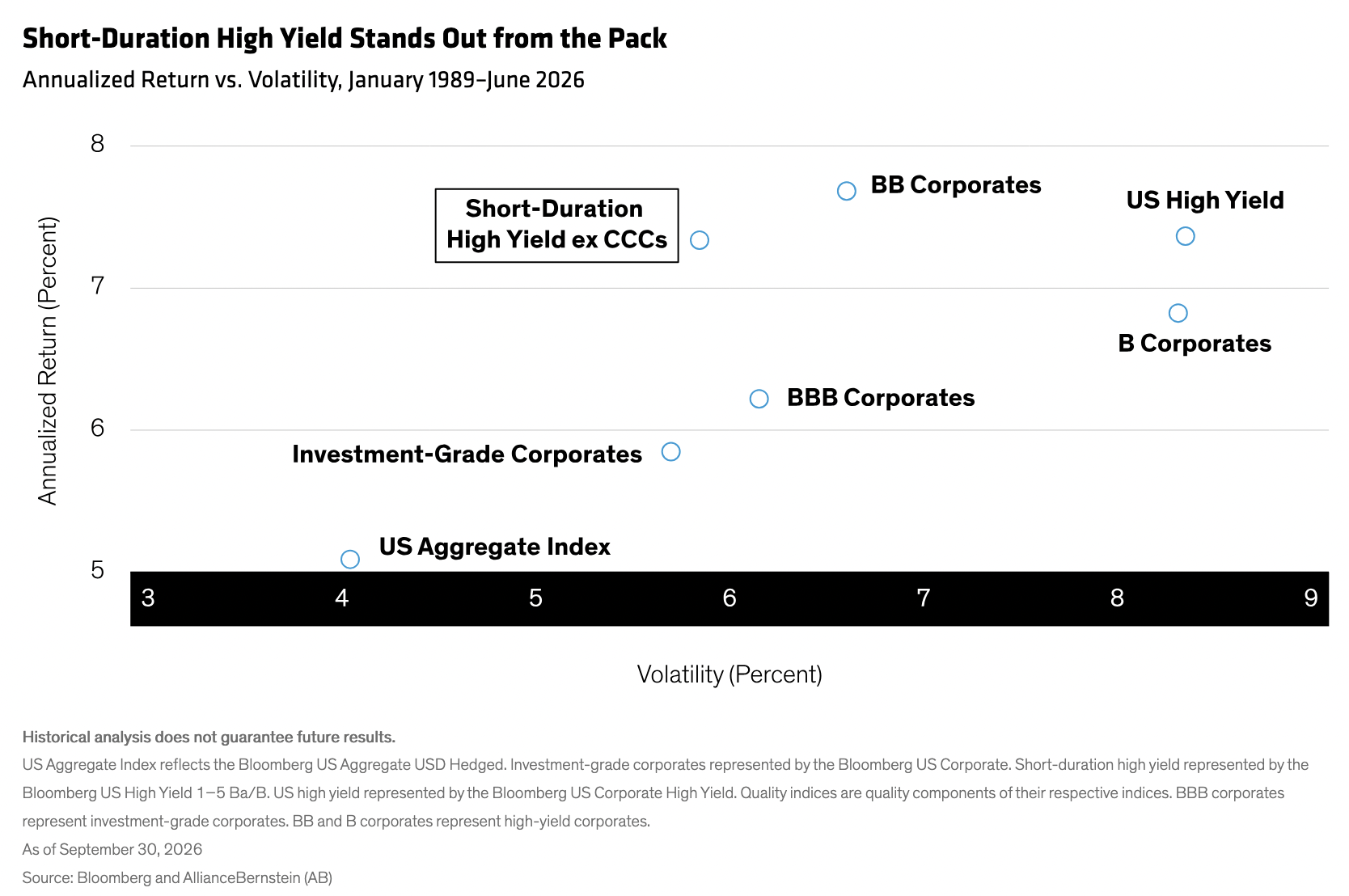
For income-oriented investors looking to keep a lid on volatility, short-duration high-yield bonds have a strong track record. Over nearly four decades, short-maturity high-yield bonds (ex CCC-rated debt) generated returns on par with the broader high-yield market—but with just two-thirds of the volatility. Short-duration high yield even outperformed investment-grade BBB-rated corporates on both measures (Display).
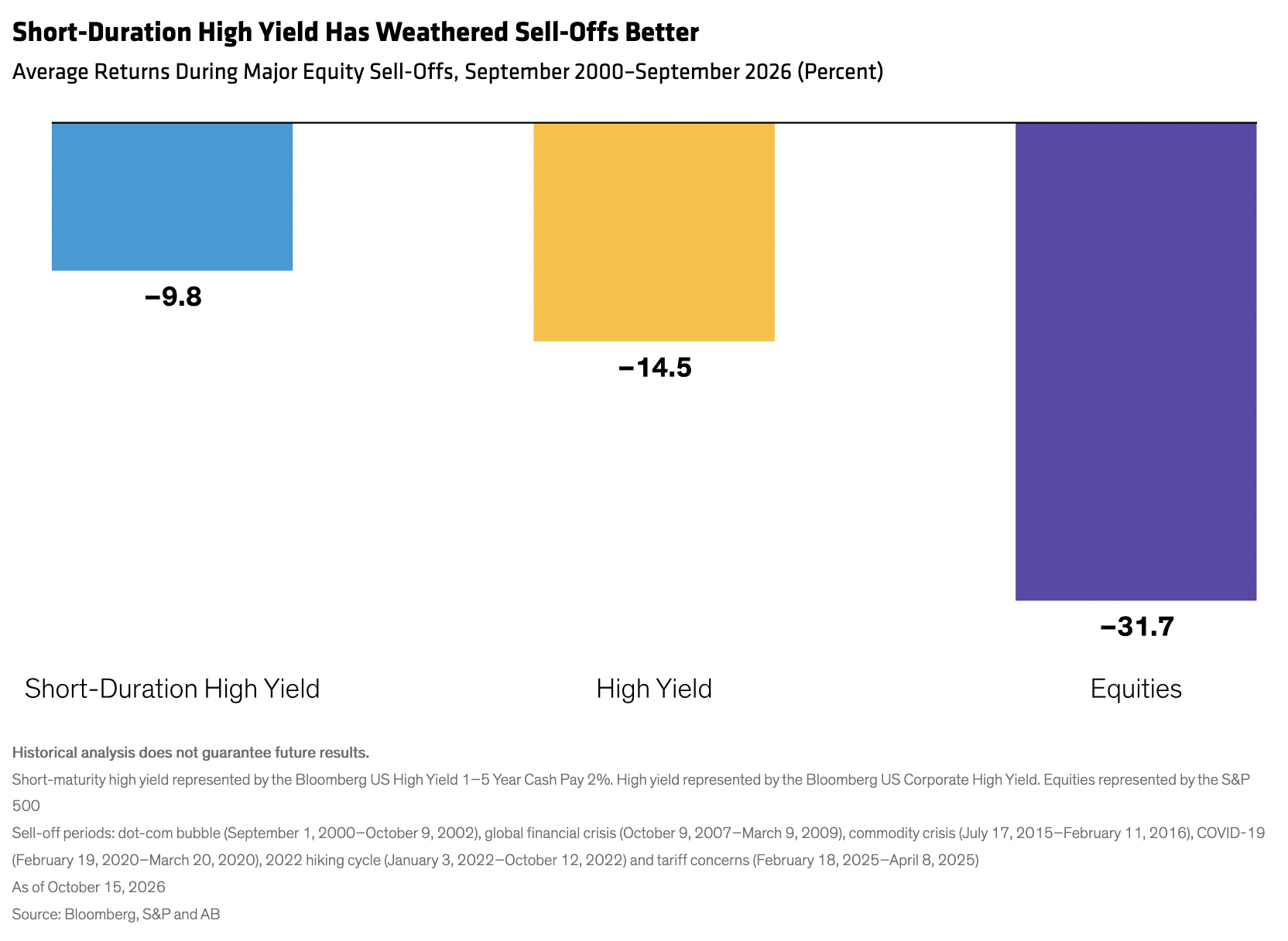
But short-duration high-yield bonds really come into their own during periods of extreme market stress. Across major sell-offs, short-duration high yield historically experienced around two-thirds of broader high yield’s average drawdown and less than one-third the decline of equities (Display).
Cutting Risk on Two Fronts: Maturity and Quality
Two areas of the high-yield bond market have been outsized sources of volatility historically, as well as in 2026: long-duration bonds and the lowest-rated credits. Limiting exposure to longer bonds and CCC-rated debt may help investors capture much of high yield’s return potential while limiting downside risk.
Long-duration bonds are more sensitive to rate and spread changes; thus, shorter-duration bonds provide a potential buffer against market turbulence both when rates rise and when spreads widen. Shorter-dated credits also give investors better visibility into near-term financial risks, allowing them to more easily avoid bonds that might default.
The lowest rung of the high-yield universe carries meaningfully more default risk, with CCC-rated credits historically accounting for around 80% of defaults. As of September 30, more than 20% of CCCs traded at distressed levels, with spreads of 1,000 basis points or more—implying significant potential default risk and underscoring the need for stringent due diligence and strong, research-driven conviction when identifying attractive opportunities in this rating bucket.
Yields Above 8% Create an Attractive Entry Point
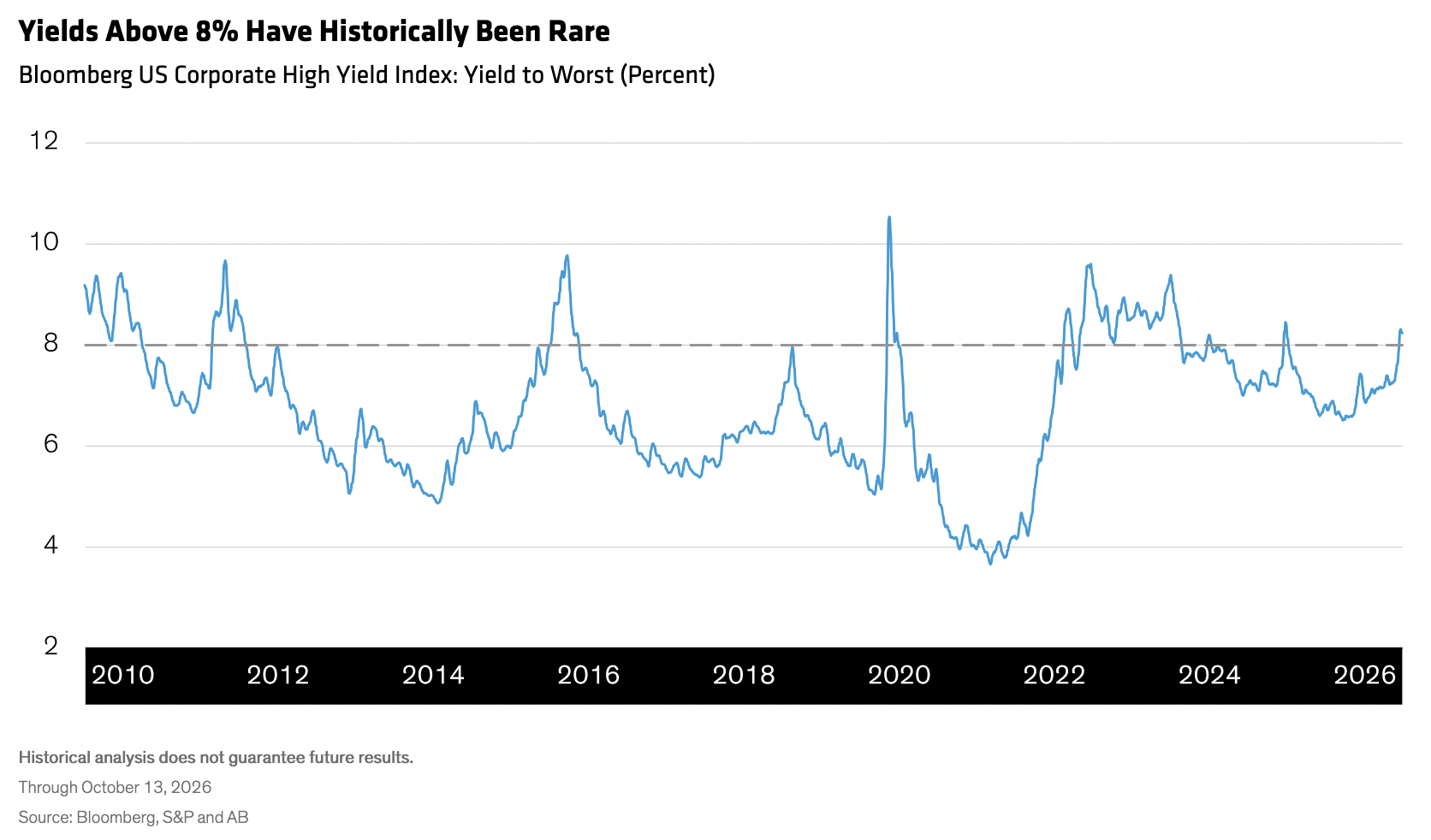
The recent backup in yields makes this an especially compelling time to consider short-duration high yield, in our analysis. In late September, the Bloomberg US High Yield index climbed above the 8% yield threshold for the first time since April 2025’s “Liberation Day” sell-off. The recent back-up in yields was driven mostly by the increase in Treasury yields; widening spreads accounted for only 25% of the move higher, with the lion’s share driven by CCC-rated debt.
It’s rare for the benchmark yield to reach this level. Since the global financial crisis, the US high-yield index has crossed above the 8% threshold only eight times, including recently (Display).
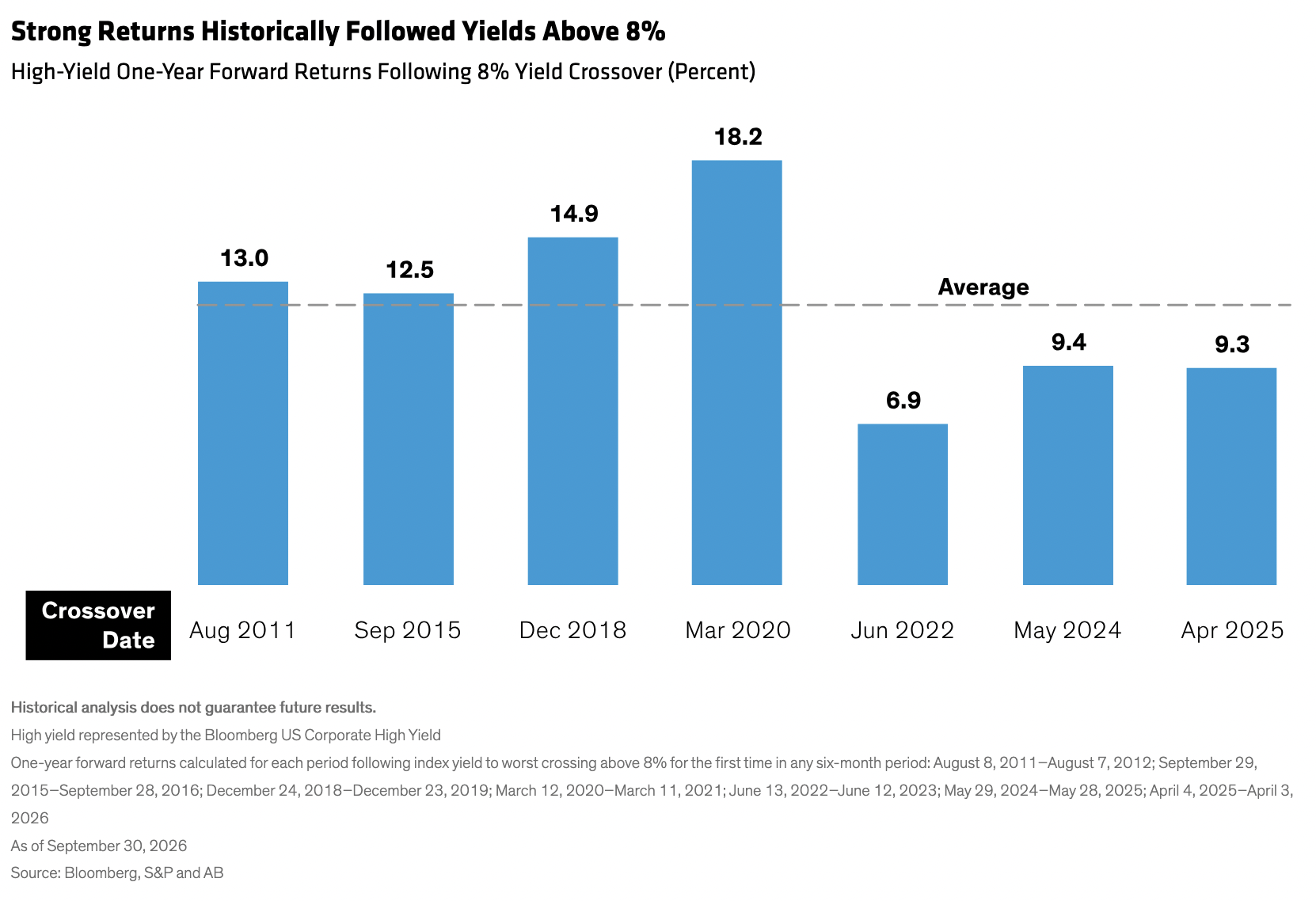
As we see it, this 8% threshold is significant and could trigger potential buyers to shift into the asset class. Historically, returns for the year following a crossover above this threshold have been exceptionally strong, averaging 12% (Display). Further, yield to worst has historically been a good predictor of future returns over the following five years.
Pursuing attractive returns doesn’t require assuming undue risk. By selectively emphasizing shorter maturities and higher-quality credits, investors can lock in today’s high yields while keeping potential volatility and drawdown risk in check. In today’s high-yield market, shorter may indeed be smarter.
The views expressed herein do not constitute research, investment advice or trade recommendations, do not necessarily represent the views of all AB portfolio-management teams, and are subject to change over time.
Copyright © AllianceBernstein