




Listen on The Move
The autocallable note has been one of the most popular structured income strategies in the world for years. Until recently, using it well meant managing a rotating book of individual notes, each with its own call dates, reinvestment risk, and administrative overhead. The BMO Strategic Autocallable Income US Large Cap ETF (ZACU) changes that. BMO Global Asset Management’s new autocallable ETF brings institutional-grade capital markets expertise into a single, liquid, evergreen fund structure any advisor can consider for their clients.
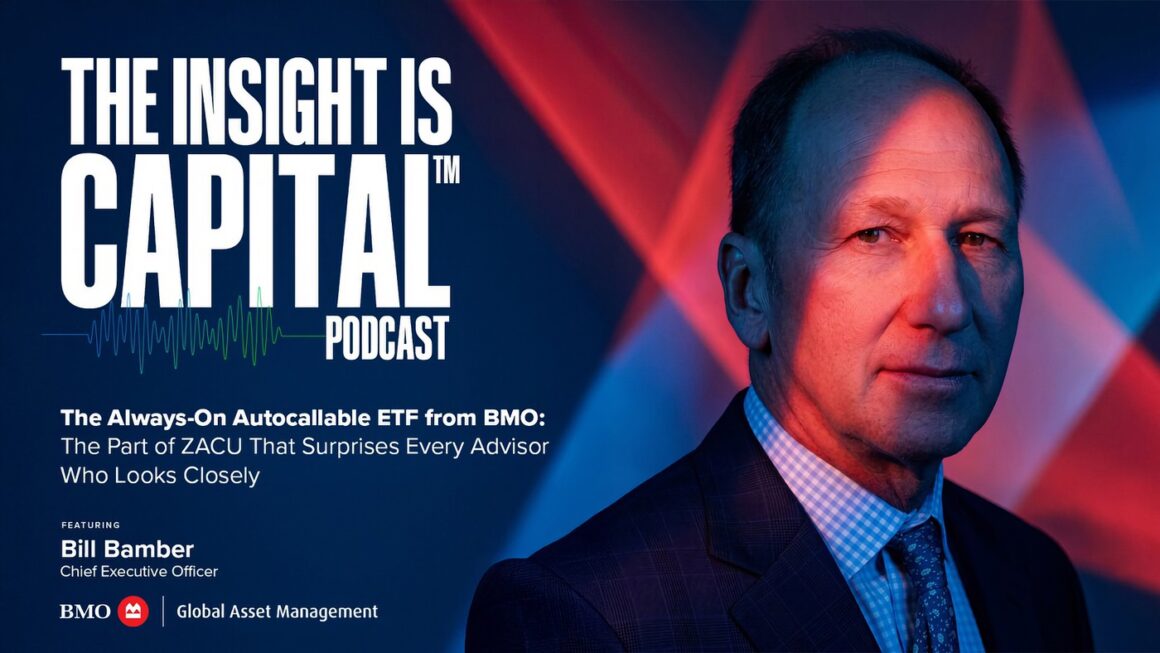
In this episode of Insight Is Capital, BMO GAM CEO Bill Bamber explains the thinking behind ZACU, how it's unique strategy powers its enhanced yield target, and what the broader convergence investing roadmap means for advisors and investors who could not previously access strategies like these due to scale requirements.
Listen to the full conversation here.
Chapters
00.00 — Bridging Capital Markets and Retail Investing
03:19 — Defining Convergence Investing Strategies
06:20 — Solving Autocallable Note Challenges
10:55 — ZACU's Single Stock Volatility Strategy
15:16 — Portfolio Management and Team Expertise
18:27 — Income Generation and Risk Tradeoffs
23:58 — Hedging Macro Risk with ZCDX
28:00 — Future Product Pipeline and Innovations
30:28 — Advisor Support and Resources
33:46 — Scaling Complex Strategies via ETFs
Please watch to the end of the video for full disclaimers.
For more BMO Strategic Autocallable Income US Large Cap ETF (ticker: ZACU) details and disclaimers please read here.
More...
BMO ETFs: bmoetfs.ca
BMO GAM on LinkedIn: linkedin.com/company/bmo-global-asset-management
#ZACU #ZCDX #BMOETFs #BMOGlobalAssetManagement #AutocallabeETF #ConvergenceInvesting #StructuredNotes #ETFCanada #IncomeInvesting #YieldEnhancement #WealthManagement #FinancialAdvisors #CapitalMarkets #InsightIsCapital #AdvisorAnalyst #InvestmentStrategy #CanadianETF #StructuredProducts