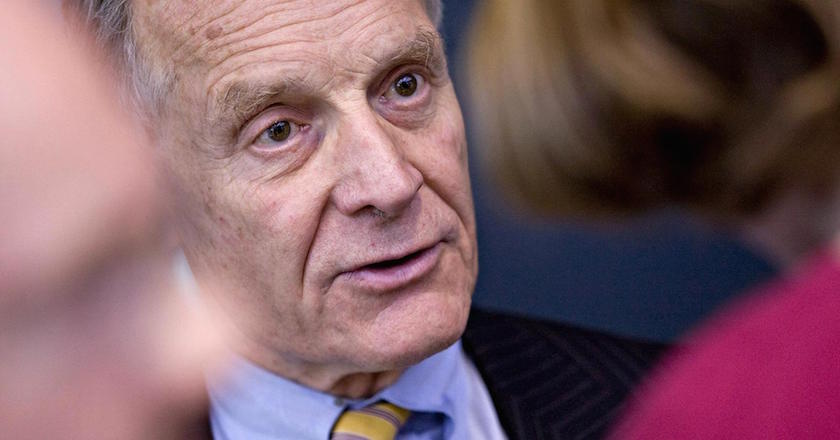



There's a particular kind of market irony that only becomes visible over time. Six months ago, J. Keith Buchanan of Globalt Investments argued that the dividend factor had become a mirage — not because dividends were worthless, but because yield alone was never the real story. The real story was always value, quality, and capital discipline wearing an income badge. Now, in the sequel, Buchanan raises a harder question: it isn't just whether dividends matter anymore. It's whether markets care about cash flow at all.
That escalation is the through-line connecting both pieces1,2 — and it demands attention from every advisor building income-oriented portfolios in 2026.
From Mirage to Disappearance
In the November 2025 paper, Buchanan laid out the structural case. Over thirty years, dividend-paying stocks delivered stability — lower drawdowns, lower betas, steadier navigation through the crashes of 2000–02, 2008–09, and 2022. But stability extracted a cost. "During periods of broad multiple expansion," Buchanan writes, "the dividend factor simply has not kept pace. When investors are willing to pay up for growth, the discipline of paying a dividend can become an anchor."
His diagnosis of why is precise. "We don't see dividend yield as a stand-alone factor. It's a composite of value and quality, inexpensive stocks with steady cash flows and disciplined capital allocation." In other words, what looked like dividend alpha was largely value exposure filtered through quality. When value is out of fashion, dividends get dragged down with it.
Two structural forces accelerated the deterioration. First, the S&P 500 dividend yield compressed from roughly 3% in 1995 to approximately 1.4% by 2025 — a reflection of both rising valuations and a corporate pivot toward buybacks as the preferred return mechanism. Second, the technology and AI-oriented companies powering index-level gains either initiated dividends late or bypassed them entirely. "It's not that the factor stopped working," Buchanan notes. "The market's leadership just migrated to businesses that simply don't play that game."
The AI CapEx Regime Change
By June 2026, Buchanan's follow-up sharpens the argument into something more unsettling. The issue has shifted from dividend preference to a full-scale market repricing of present cash flow. "Today, the issue is no longer whether dividends matter. The issue is whether markets care about cash flow at all."
The mechanism is specific: the equity risk premium has compressed to levels rarely seen outside periods of elevated investor optimism. When that premium narrows, growth assumptions carry more weight than near-term earnings, and immediate cash generation loses pricing power. The AI investment supercycle is turbocharging that dynamic. "Many of the companies we consider to be the market's most highly valued are not being rewarded primarily for what they earn today. Rather, they are being rewarded for what investors believe they may control tomorrow."
US corporations are committing hundreds of billions toward data centers, custom silicon, cloud infrastructure, and AI model training — capital that in prior cycles would have found its way back to shareholders. Buchanan identifies the resulting market psychology with precision: "Investors appear willing to relax that discipline. Markets are encouraging management teams to spend aggressively because the perceived cost of underinvesting in artificial intelligence is extraordinarily high."
The Discipline Argument Cuts Both Ways
Here is where Buchanan's argument earns its nuance. The traditional appeal of dividends, he wrote in November, was never purely income. "Dividends represented discipline. Management teams that consistently returned capital to shareholders were often forced to be more selective in their investment decisions." The AI era has inverted that logic: markets are now rewarding the absence of that constraint.
That creates a new fault line. Not growth versus value, but self-funded growth versus capital-intensive growth. Companies with durable free cash flow can pursue AI buildouts while maintaining financial flexibility. Others face a harder choice. "That distinction matters because artificial intelligence is not simply another software cycle. It is rapidly becoming one of the largest corporate capital spending initiatives in modern history."
The late 1990s parallel is invoked deliberately. The lesson then wasn't that innovation lacked value — it was that valuation and capital allocation ultimately mattered as well. Buchanan applies the same frame now: "Not every dollar devoted to artificial intelligence will generate attractive long-term returns."
The Quality Bridge
Across both pieces, quality is the connective tissue. In November: "By emphasizing firms with consistent free cash flow coverage, stable margins, and moderate payout ratios, investors capture the signal of discipline without the noise of distress." The yield-chasing trap, empirically, runs in the opposite direction — the highest-yielding portfolios have historically underperformed second- and third-decile yield portfolios over time, precisely because extreme yields signal distress rather than discipline.
In June 2026, the quality filter resurfaces as the distinguishing variable in the AI era: "The strongest businesses are not necessarily those paying the highest dividend today. They are often the businesses capable of investing in future growth opportunities while simultaneously maintaining financial flexibility and returning excess capital when appropriate."
Looking Into the Second Half of 2026
Buchanan doesn't forecast a sudden reversal — but he maps the conditions under which one becomes more probable. If risk premiums remain compressed and AI investment delivers, current leadership persists. But: "if economic growth moderates, financing costs remain elevated, or AI investments generate more uneven outcomes than currently expected, investors may once again place greater emphasis on cash generation, balance-sheet strength, and capital allocation discipline."
The conclusion is not a eulogy for dividends. It is a clarification of what they represent. "Cash flow still matters. The question is whether investors are being adequately compensated for ignoring it."
5 Key Takeaways for Advisors and Investors
- Yield alone is not a factor — it's a proxy. High dividend yield is a composite signal of value and quality. Advisors should assess dividend strategies through that lens, not raw income screen.
- The equity risk premium compression is the real threat. When the spread between earnings yield and Treasury yields narrows, markets structurally discount present cash flows. Monitor this spread as a leading indicator of dividend strategy headwinds.
- Quality filters matter more than ever. The top decile of dividend yield has historically underperformed the second and third deciles. Screen for free cash flow coverage, payout sustainability, and margin stability — not maximum yield.
- AI CapEx is redefining capital allocation norms. Clients should understand that this cycle is different: corporate cash that once supported buybacks and dividends is being redirected into infrastructure buildout at historic scale. That is priced in — until it isn't.
- Dividend sleeves remain portfolio ballast, not benchmark competitors. As Buchanan frames it: "a steady contributor, not a sprinter; a source of resilience, not speculation." Position them accordingly within multi-factor or defensive allocations, not as growth substitutes.
Footnotes:
1 Buchanan, J. Keith. "The Dividend Mirage: Why Yield Alone No Longer Pays." Globalt Investments, 21 Nov. 2025, Globalt.com.
2 Buchanan, J. Keith. "The Dividend Mirage, Part II: When Markets Stop Paying for Cash Flow." ETF Database, 11 June 2026,