


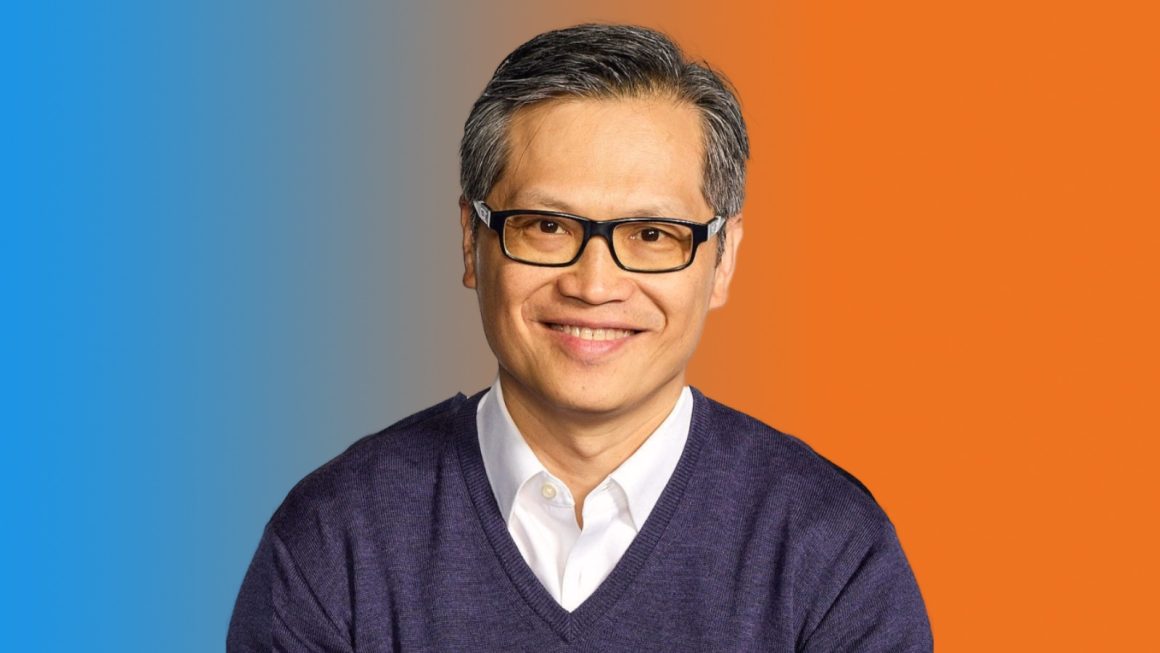

Through the first five months of 2026, value has quietly and consistently outperformed growth — without a headline to its name. For Richard Wong, lead portfolio manager and head of Mackenzie's Cundill boutique, that silence is fitting. Value investing doesn't announce itself. It accumulates. And in a conversation with Mackenzie's head of portfolio construction Rajan Bansi on the Invested podcast, Wong makes the case that the conditions underpinning value's resurgence are not cyclical noise — they are structural fact.
The Return of Valuation
Wong's argument begins with interest rates. "For about 13 years between the financial crisis in 2008/9 to the end of the pandemic, most developed world central banks kept the interest rates close to zero," he explains. "In a zero rate environment, discounting of cash flows don't work properly. The market values a dollar earned far in the future the same as a dollar earned today. In that environment, valuation didn't matter and value strategies didn't deliver that well."
The post-pandemic normalization changed everything. "Since the end of the pandemic we've gotten back to norm," Wong says. "There was structural inflation and there was structurally positive interest rates. No central banks around the world would want to drive rates back to zero. That was not sustainable, but it did sustain for a long time." With cost of carry positive again, discounting mechanisms function as designed. "A strategy that uses valuation tools and discounting mechanisms can deliver results again. And that's what we have done at the Cundill boutique. We've had very good 1, 3, 5 year numbers because we are in a regime where valuation matters."
Wong's framing is historically grounded. He recalls that when he entered the business in the mid-1990s, "every single textbook was about why does value always outperform." The zero-rate era was the anomaly. The current environment is the restoration.
Canada: Beyond the Banks
Bansi pivots to Canada — a market many advisors instinctively reduce to banks and energy producers. Wong pushes back on that reduction, not by dismissing those sectors, but by expanding the frame. The Cundill Canadian Security Fund carries up to 49.9% flexibility to invest outside Canada, which Wong views as essential given the TSX's structural gaps in technology and healthcare. But within Canada, he sees a more textured opportunity set than the default narrative suggests.
His centerpiece Canadian idea is Finning International. "We own a name called Finning for about two and a half, three years now," Wong says. The thesis runs through the structural difficulty of developing new mines. "It's becoming very, very difficult to develop new mines — environmental regulation, approvals, the resources and the capex that needs to go into them." Existing operators are therefore forced to extract more ore from existing bodies at progressively lower concentrations, requiring heavier equipment use, more excavation, and intensive servicing — all of which flows directly to Finning as Caterpillar's dominant dealer in Western Canada, Argentina, and Chile. "Their equipment is being used more heavily and they do the servicing," Wong notes. A secondary growth layer has emerged from data centre buildout: Finning's power equipment division services emergency generators at facilities before grid connection. "That's one of our top 10 positions."
On copper, Wong names Teck Resources and Capstone Mining as holdings that benefit from the same resource security theme. "Copper goes into everything — goes into data centers, goes into the grid, both of which are growing." A potential China re-acceleration and any housing recovery represent upside optionality. Mining stocks broadly, he argues, trade at "pretty good valuations" while sitting at the intersection of multiple structural demand drivers.
The fund's most recent opportunistic buy is Transforce, Canada's leading trucking firm. When Liberation Day tariff announcements caused the stock to plummet, Wong's team revisited a name they had followed for years. "We roll up our sleeves and we did a lot of work and we think, you know what, that was a great entry point." The thesis: an excellent operator consolidating a fragmented industry, building route density and squeezing costs. "The whole trade war has basically forced them to even cut more cost. So they're emerging on the other side with even better margins, better density, more integrated systems." The stock has since recovered substantially.
Tariffs as Signal, Not Verdict
On USMCA renegotiations and tariff risk, Wong is measured but not alarmed. "In the near term it's going to cause volatility," he acknowledges, but argues the integrated nature of North American supply chains makes dislocation structurally impractical. "Most companies would tell you that trying to break that up would take years and years of work and billions and billions of additional investments."
His deeper read is geopolitical: the US administration is assembling a controlled continental bloc. "I believe that when all the rhetoric is done, ultimately they are going to secure a block that they have security and control over in North America." He draws a parallel to Liberation Day itself. "That actually turned out to be a huge buying opportunity — buy good businesses at crazy bargain prices. So I envision that noise and headline risks created by these negotiations coming up could create that for us too."
AI Without the Bubble Narrative
Wong takes on the reflexive comparison between today's AI infrastructure cycle and the 2000 dot-com bust — and rejects it on fundamental grounds. "Back in 2000, companies like Nortel and Cisco, they were building fiber in the ground, but nobody was really using them. They're building fiber, waiting for traffic to fill them, and they largely lay empty and underutilized for like a decade afterwards." Today's semiconductor cycle is structurally different. "They are making a lot of money and their products are completely sold this year. They're not laying fiber where nobody's using, they're producing product. They are massively in shortage. So this cycle is uniquely, very, very different in my opinion. The stock price moves are driven by strong fundamentals and not speculation."
Beyond AI hardware, Wong identifies traditional semiconductors as a separate and underappreciated opportunity, pointing to two holdings — Japan's Renesas and Switzerland's ST Micro — as companies supplying the automotive and consumer appliance economy. "The traditional economy is inflecting upwards," he argues, citing the US manufacturing PMI's recent turn after three years flat. "Last year they were really beat up and lagging and we got an opportunity to buy those stocks. And now they're paying dividends for us — not literal dividends, but lots of upside returns."
3 Key Takeaways for Advisors and Investors
- The value regime is structural, not seasonal. Positive real rates are the new baseline, and discounted cash flow analysis is functional again. Advisors should frame client expectations around a multi-year value cycle, not a temporary rotation.
- Canada's opportunity set is wider than the default. Banks and energy remain valid, but the most compelling risk-adjusted ideas may sit in less-covered names — Finning, copper producers, and idiosyncratic operators like Transforce — that benefit from resource security, infrastructure spending, and trade dislocation. Tariff-driven selloffs are historically entry points, not exit signals.
- AI is not off-limits for value investors — but discipline applies. Wong's framework separates speculative AI hype from companies with real product scarcity and earnings. Traditional semiconductors serving the old economy also deserve attention as manufacturing activity inflects upward globally.
Footnote:
1 Mackenzie Investments. "Value's moment: Canada, tariffs, and the case for stock picking | The Invested." 1 June 2026,
2 "Podcasts." Home, 11 June 2026, www.mackenzieinvestments.com/en/institute/insights/mackenzie-investments-podcasts.