


There is a number at the center of the artificial intelligence revolution that no one in power wants to talk about. It isn't the valuation of Nvidia, or the parameter count of GPT-4, or the $500 billion pledged to Stargate. It's the number of joules consumed every time someone asks a chatbot to write a cover letter, generate an image of their dog as a Renaissance painting, or produce a five-second video for Instagram. Multiply that number by a billion — the daily message volume OpenAI reported in December — and you begin to see the shape of what MIT Technology Review reporters James O'Donnell and Casey Crownhart1 spent months trying to measure.
Their conclusion is as clear as it is uncomfortable: the common understanding of AI's energy consumption is full of holes, the industry is operating behind a wall of strategic opacity, and the costs of this revolution — financial, environmental, and civic — are being quietly transferred to everyone else.
The Architecture of Opacity
The report draws a sharp distinction between what can be measured and what the industry chooses to disclose. Open-source models like Meta's Llama family can be studied directly. Closed-source models — ChatGPT, Gemini, Claude — are, as Boris Gamazaychikov of Salesforce put it, "a total black box."
The energy cost of a single text query ranges from roughly 114 joules for a small model to an estimated 6,706 joules for the largest tested — a 59-fold spread determined by model size, prompt complexity, data center location, time of day, and grid carbon intensity. A standard AI-generated image runs approximately 2,282 joules. A five-second video generated by one of the better open-source models requires about 3.4 million joules — more than 700 times the cost of a single high-quality image, equivalent to running a microwave for over an hour.
These numbers, dramatic as they are, represent only what researchers can access. The major commercial models remain deliberately unmeasured, their energy profiles protected as trade secrets. "Without more disclosure from companies," O'Donnell and Crownhart write, "it's not just that we don't have good estimates — we have little to go on at all."
Inference Is the Business
One of the report's most clarifying structural insights concerns where AI's energy demand actually lives. Training a model like GPT-4 consumed an estimated 50 gigawatt-hours — enough to power San Francisco for three days — and cost over $100 million. But training is a one-time event. Inference, the continuous process of answering queries, is the ongoing cost of doing business, and it now accounts for an estimated 80–90% of AI's total computing power consumption.
As Microsoft Azure researcher Esha Choukse noted: "For any company to make money out of a model — that only happens on inference." The energy bill, in other words, is not the R&D budget. It's the cost of goods sold, and it grows with every user, every feature, every agentic workflow layered on top.
The Grid Problem No One Is Solving
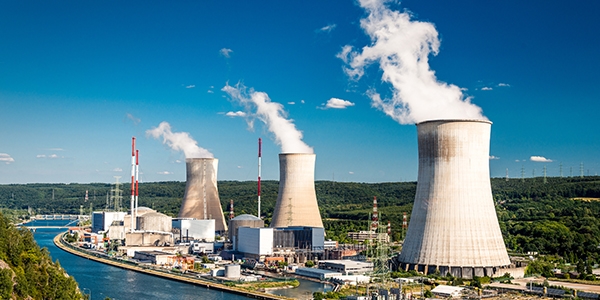
Data centers require constant, uninterrupted power. That structural requirement disqualifies intermittent renewables as a primary energy source and pushes operators toward fossil fuels, particularly natural gas. A Harvard preprint cited in the report found that the carbon intensity of electricity used by data centers was 48% higher than the US average — a premium driven partly by geographic concentration in coal-heavy mid-Atlantic grids and partly by the 24/7 operational requirement.
Virginia, which hosts more data centers than any other US state, generates more than half its electricity from natural gas. Meta, Amazon, and Google have pledged to support tripling global nuclear capacity by 2050, but new nuclear takes years — sometimes decades — to bring online. In the interim, the gap is being filled with methane. Elon Musk's Memphis supercomputing facility was found, via satellite imagery, to be running dozens of methane gas generators that regulators allege violate the Clean Air Act.
The Future Is Not an Extrapolation
The most important strategic point in the report is this: current energy consumption figures are not a baseline. They are a floor. "It's likely that our AI footprint today is the smallest it will ever be," O'Donnell and Crownhart write.
The next generation of AI usage — voice mode, companion AI, agentic workflows, reasoning models, personalized models trained on individual user data — is categorically more energy-intensive than today's chatbot interactions. Reasoning models have been found to require 43 times more energy for simple problems. DeepSeek's chain-of-thought model generates roughly nine pages of internal reasoning per response. Lawrence Berkeley National Laboratory projects that by 2028, AI-specific electricity consumption in the US alone could reach 326 terawatt-hours annually — enough to power 22% of all US households, generating emissions equivalent to over 300 billion miles driven.
Hugging Face researcher Sasha Luccioni offered perhaps the starkest assessment: "The precious few numbers that we have may shed a tiny sliver of light on where we stand right now, but all bets are off in the coming years."
Who Pays
The report's final, underreported dimension is fiscal. Harvard's Electricity Law Initiative analyzed utility agreements between tech giants and power companies and found that discounts negotiated by Big Tech effectively raise electricity rates for residential consumers. A 2024 Virginia legislative report estimated that average ratepayers in the state could face an additional $37.50 per month in data center energy costs.
"Why should we be paying for this infrastructure?" asked Harvard legal fellow Eliza Martin. "Why should we be paying for their power bills?"
It is a question regulators have not yet answered. It is one advisors and investors should be asking now.
Five Key Takeaways for Advisors and Investors
Energy infrastructure is the real AI trade.
The Nvidia moment is already priced. The durable investment thesis sits upstream and downstream: power generation, transmission, nuclear, cooling infrastructure, and grid modernization. Lawrence Berkeley's projections make the demand curve unambiguous.
Carbon exposure is a hidden liability in AI portfolios.
Data centers running on 48%-above-average carbon intensity grids face mounting regulatory, reputational, and potentially financial risk as emissions accounting matures. ESG-sensitive mandates need to stress-test AI exposure accordingly.
Inference economics will determine winner and loser dynamics.
As 80–90% of AI computing costs shift permanently to inference, energy efficiency at the model and hardware level becomes a core competitive differentiator. Companies that solve this — or source cleaner power cheaper — will structurally outperform.
Disclosure gaps are a material risk.
The opacity O'Donnell and Crownhart document is not just a policy problem — it is an investment risk. Companies unwilling to disclose energy consumption data are also companies whose cost structures, regulatory exposure, and environmental liabilities cannot be properly modeled.
Ratepayer and regulatory blowback is a systemic tail risk.
The transfer of AI infrastructure costs to residential electricity bills is already documented and politically combustible. Advisors with utility and real estate exposure in data center-dense regions should model for rate case disruption and regulatory friction as this issue moves from research papers to legislative agendas.
Footnote:
1 O'Donnell, James, and Casey Crownhart. "We Did the Math on AI's Energy Footprint. Here's the Story You Haven't Heard." MIT Technology Review, 20 May 2025.
Copyright © AdvisorAnalyst