


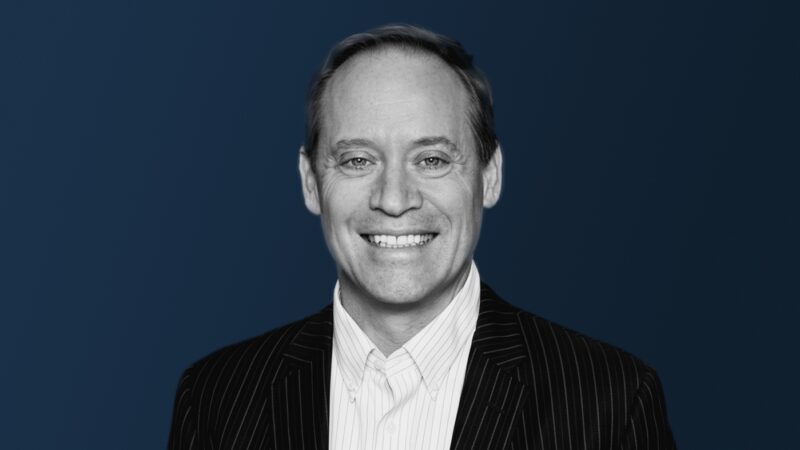

In a wide-ranging Excess Returns conversation¹ recorded the day after the midterms, hosts Matt Zeigler and Justin Carbonneau press Mike Green, founder and CEO of Tier1 Alpha Asset Management, on one question: with stocks wobbling and the economy softening, what would turn passive flows? Zeigler moves the talk from elections to IPOs, jobs, inflation, AI and the Fed, but Green keeps returning to one answer. The catalyst has not yet arrived, and markets now run on plumbing more than information.
What Did the Midterms Change?
Less than the rally suggests. Green notes that short-dated hedges, including zero-day options, were "remarkably rich," so the bounce reflects their removal. On the vote itself, he reads California as a rejection of new taxes: "We want the government to figure out how to do more with less and do it more effectively." He fears recriminations, not a shift to the center, will follow.
Is the Market Still Pricing Information?
Green says no. The SpaceX debut is his exhibit. "We created conditions for false demand through the overweighting of low-float securities into the index, and we've turned the indices into monetization vehicles for large-scale IPOs." The result is a strange dichotomy: "it's easier to get a trillion-dollar company public than it is to get a 500 million-dollar company public."
To be clear, Green does not dismiss fundamental skeptics so much as sidestep them. "What matters is we've created a mechanical system that facilitates the issuance and the IPO." Anthropic is expected to follow, and Green warns of "at least one more gasp of this system that defies all expectations." Even valuation gets a defence. "Equities are just a series of residual cash flows that you're attempting to value," but the cost of capital cannot come from history when "nothing on the scale or behavior of an Anthropic or an OpenAI or even a SpaceX has ever materialized before."
What Would Turn the Flows?
Not valuation alone. Vanguard is raising equity weights in its target date funds, which feeds more passive buying. The obvious trigger, Green says, is "a rise in unemployment and a fall in contributions, particularly from middle-aged workers." Today's low hire, low fire market means "we're now bringing in 22-year-olds who contribute 1,000 to their 401(k) while retaining 55-year-olds who can contribute up to 60,000 to their 401(k)."
Beneath that sits a weakening economy. "The K-shape is increasingly undeniable," and "California's employment numbers are actually contracting now for 9 consecutive months." The JOLTS openings data, he argues, is distorted by prior revisions and "a 25% response rate." Hard data has a bias of its own: it "simply tells us how many dollars are being voted, not how many people are voting in that manner."
Green worries that a growing share of hiring sits in the gig economy, a private "job bank." Unemployment benefits have not kept pace with inflation, so "if the unemployment benefits are worthless, nobody's going to apply for them." Claims data therefore hides distress, and a downturn could bring "a catastrophic decline in real wages." His historical parallel is stark: "unemployment in 1837 in New York City went to 63%."
Why Do Factors Fail?
Green's thesis is that "all of these historical factors are really just shadows cast on the wall of Plato's cave." Value managers compare a discounted cash flow to market price. Passive allocates by market value alone, so for value, "the aggregate marginal flow is against it," which is why "the value factor is uniquely underperforming." The same logic applies to size. And a fund is not a stock: "You can't do a discounted cash flow analysis on a fund. It doesn't have cash flows."
Why Does Concentration Feed Itself?
Liquidity does not scale with size: "for every doubling of market cap, liquidity scales by about 75%." A $5.5 trillion company should be 300 to 400 times more liquid than a $15 billion one, yet "it only has about 10 times as much liquidity." The consequence: "the largest stocks continue to be the largest beneficiaries of these flows." Rising dispersion is simply the replicating portfolio at work.
How Does Tier1 Act on It?
Green is not abandoning analysis. "I still consider myself a fundamental investor." His framework treats markets as "a liquidity management exercise, effectively crowd control with water cans." Tier1 tracks about 4,000 ETFs and funds, then tilts portfolios gently. With "very small tilts, we can create a significant amount of increased return at the same level of risk," he says. The core product accepts "roughly 1% tracking error in exchange for what we believe is roughly 1% alpha." A second pairs equities with managed futures to mimic a 60/40.
Green is candid about the model: "we are the parasitic load on the passive environment." If discretionary flows overtake passive, "it simply will change the emphasis," and "our approach is going to work across market cycles." He adds that a long drawdown would still shrink his own assets under management.
Is Inflation What It Appears?
Green splits the question. "We clearly have had inflation in fossil fuels," because refining and export capacity lag surging production, and "those frictions are what show up as higher prices in many situations, unfortunately exacerbated by the conditions of growing monopolization." Firms with pricing power pass costs through at a premium, and insurance follows car prices with a one-year lag. "It's a compounding phenomenon."
Will AI Spending Pay Off?
It depends, and Green reaches for 1999. Fibre buildouts were priced on scarce bandwidth until technology commoditized it. His example is Cogent Communications, which "now transmits 27% of all global internet traffic" yet has a market capitalization of roughly $400 million. As he puts it, "Everybody likes cute puppies. We're just not willing to pay a lot for it." A superintelligence, he says, "is going to create innovations that radically compress the cost of that access." If governments protect the winners, the return on capital becomes a question of taxpayer subsidy, as with the Dutch East India Company.
What Does Green Make of the Fed?
Little. Green calls Kevin Warsh "a market fundamentalist not understanding that all markets are defined by regulations and rules around them," and insists "markets are never free." Asking bond investors what they want invites a predictable answer, higher yields. "We just ceded control." The academic and political infighting around the Fed, he concludes, is "naked political grabs."
Where Does Green Land?
Green frames the moment through Dickens, who "was describing a K-shaped economy." He is sober about politics: "I think that we are approaching real risks that democracy no longer continues in anything other than performative function in the United States." He is equally clear that "we are going to run out of time." He also concedes uncertainty: "I could be just as wrong."
His outlook is measured, not bleak. "I am more optimistic than most," he says, because "there is no other species out there that has created its own artificial forms of intelligence and thought." His fear is who controls the tool. His belief is that "humans are truly extraordinary creatures."
5 Key Takeaways
- Know your marginal buyer. Flows, not forecasts, may set near-term price direction, and mega-cap IPOs are easier to place than small ones.
- Watch labour, not sentiment. Falling mid-career contributions are the flagged trigger, and official claims data may understate distress.
- Expect concentration to persist. Sublinear liquidity reinforces mega-cap dominance until flows reverse.
- Treat factors as flow proxies. Value and size face structural headwinds in a passive-dominated market.
- Tilt, do not abandon. Small, flow-aware tilts keep tracking error near 1%, and AI returns may fall to users, not owners.
Footnote:
¹ Returns, Excess. "Stocks Are Falling. The Economy Is Weakening. So Why Doesn’t Mike Green See Passive Flows Turning?" YouTube, 6 Nov. 2026, www.youtube.com/watch?v=354vZMoIvlE.