




by Benjamin Jones, Global Head of Research, Strategy & Insights, Invesco
Key takeaways
- Markets aren’t denying risk; they’re judging that many shocks, from hot inflation prints to geopolitical tension, are proving less catastrophic than feared.
- Disruption doesn’t automatically mean decline. Supply chain shifts, industrial policy, and the AI investment cycle all suggest that stress can coexist with adaptation and renewal.
- History tends to move in cycles, not straight lines, and periods of disorder may still be able to lay the groundwork for a more constructive phase for investors.
That, to me, is the best way to understand why markets appear to ignore scary headlines without behaving irrationally. Markets don’t need a world free of bad news, in my view. I believe they need events to prove less bad than feared. Last week's US Producer Price Index rose 1.4% in April and 6.0% over the year,1 which is hardly trivial. But here, as with geopolitics, investors seem to be asking: Is this the start of something systemic, or a stress that can be absorbed? So far, the latter. Global earnings have still been growing,2 consumers have held up better than many feared,3and the AI investment cycle continued to provide momentum.4
Opportunities can emerge when old assumptions are challenged
There’s a broader point here. A disrupted world can still be an investable world, in my view. In fact, some of the most interesting opportunities may emerge precisely because old assumptions are being challenged. In my opinion, globalization isn't ending so much as changing shape. Supply chains have been rerouted, energy systems have been rethought, industrial policy has returned, and capital has moved towards resilience rather than pure efficiency. None of that’s especially neat or comfortable. It can be inflationary, politically noisy, and uneven. But systems have often evolved out of stress. Periods of strain have also been the periods in which the foundations of renewal have been laid.
Which is why I keep coming back to the idea of cycles. Neil Howe’s “Fourth Turning” framework has shaped my thinking because it reminds us that history doesn’t move in a straight line. Periods of order can give way to periods of upheaval, and upheaval can create the conditions for a more constructive phase. I wouldn’t use it as a prediction machine, and I’d be wary of anyone who does. But as a lens, it can be useful. Political fragmentation, generational frustration, institutional strain, and economic realignment all feel part of today’s backdrop to me. My point isn’t that crisis is everywhere — it’s that disorder can sit alongside the early architecture of renewal.
Markets seek direction, not perfection
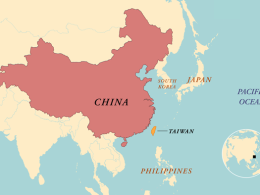
I can see that dynamic in several places today. Even when geopolitics intrudes, markets seemed more interested in whether events point towards escalation or stabilization. The recent summit in Beijing with US President Trump and China President Xi Jinping is one example. There was no grand breakthrough, but less deterioration in the relationship. Often, that’s enough. Markets don’t seem to require perfection. In my view, they look for direction, for evidence that the system is bending rather than breaking, and for signs that uncertainty may be manageable even if it’s not disappearing.
For investors, the practical lesson isn’t to dismiss risks or pretend the world feels calm. It clearly doesn’t. It’s to remember that markets are generally forward-looking and usually more interested in the direction of change than in the emotional temperature of the day. Investors who wait for the news to feel comfortable may usually find that markets have already moved on. I’m reminded frequently of the book “The Better Angels of Our Nature.” The world can look more frightening than it really is, not because the problems are unreal, but because many are well-informed about them. This may be a world disrupted, but it’s not necessarily one in decline.
Footnotes:
1 Source: Bloomberg L.P. as of May 15, 2026
2 Source: Bloomberg, L.P., as of May 15, 2026, based on the growth of the MSCI ACWI earnings per share (EPS). The MSCI All Country World Index (ACWI) captures large- and mid-cap representation across 23 developed markets (DM) and 24 emerging markets (EM) countries. With 2,515 constituents, the index covers approximately 85% of the global investable equity opportunity set.
3 Source: US Census Bureau, May 14, 2026. April retail sales rose 0.5% from the prior month.
4 Source: Motley Fool, May 1, 2026. US-based hyperscalers Amazon, Alphabet, Meta, Microsoft, and Oracle forecasted $720 billion in capital expenditure in 2026.
Copyright © Invesco