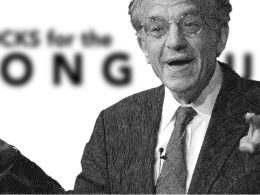




by William Smead, Smead Capital Management
Successful investing is the defeat of human nature. Human beings prefer to buy shares of a common stock which have gone up in price recently. They prefer to participate in styles and sectors which have done better in the most recent five to seven years. Lastly, human beings prefer to make money sooner, rather than later. Fortunately for us, THE MOTELS wrote and performed a song back in the early 1980’s (Only the Lonely), which explains what we believe is needed to be a successful common stock owner and what we need to do in the marketplace as we look out into the second half of 2012. Excuse me while I expose the fact that I was somewhat addicted to music videos in my early twenties.
We walked the loneliest mile
We smiled without any style
We kiss altogether wrong
No intention
The price you pay to participate in the ownership of a business is usually critical to the compounded returns you will receive. Risk, in our view, is determined by the dollar outlay, not the volatility of either the stock price or stock market movements. Numerous studies have been done by such stalwarts as Francis Nicholson, Fama-French, Bauman-Conover and David Dreman on how much valuation matters to forward stock price performance. Regardless of the valuation metric used (PE ratio, Book Value, etc.), the studies all show that the cheapest stocks as a group outperform all other groups over short periods (one year) and longer periods (seven years).
To pay these depressed prices you must “walk the loneliest mile”. The warts that these out-of-favor shares carry mean that you “smile without any style”. Avoiding popular securities and cozying up with cheap stocks means that “we kiss altogether wrong”. It means that for a significant period of time that you have “no intention” of your securities reaching any meaningful popularity. It’s like she told us in the video, “Only the lonely can play.”
We lied about each other’s dreams
We lived without each other thinkin’
What anyone would do
Without me and you
Investment styles and sectors which have done extremely well must be avoided, in our opinion. A “well known fact” is a body of economic information which is known to everyone in the marketplace and has been acted upon by nearly anyone who could get access to capital. The problem with the “well known fact” is that we become convinced of it at exactly the wrong time. Think of it like this; everyone was very excited about the possibility of a radio in every home or car in 1929, confident about Japan as a great manufacturer in 1989 and that the internet was going to change our lives in 1999.
The problem is that stock prices “lied about each other’s dreams.” If you bought RCA in 1929 or the Nikkei Index in 1989 or Cisco in 1999, you know what a lie the “well known fact” was. Losses over the following years were stunning. Warren Buffett says it best when he says, “What the wise man does in the beginning, the fool does at the end.” Human beings like to gather together and be part of a crowd. We go to concerts and sports stadiums to cheer our favorite team or sing with our favorite performers. We don’t like to live “without each other”. We wonder as human beings how we could possibly do well investing without doing “what anyone would do.”
We believe there is an extremely damaging “well known fact” today, which will destroy capital over the next three to five years. Over the last two years, we have observed that institutional and individual investors “know” that China is not susceptible to business cycles and “know” that the emerging middle classes arising in BRIC and commodity-producing countries will cause demand for commodities like the world has never seen.
This fact might be true, but “what anyone would do” with this fact will have to be done “without me and you”. Former Intel CEO, Andy Grove, was asked what the best advice was that he ever got in business. He quoted his professor from the City College of New York who said, “When everybody knows that something is so, it means nobody knows nothin’!”
So hold on here we go
Hold on to nothin’ we know
I feel so lonely way up here
The weird thing about successful investing and defeating human nature is the intense urge to “hold on to nothin’ we know”. By avoiding China, the BRIC trade, commodities, energy stocks, basic materials companies, heavy industrial shares and anyone or anything that has “suckled on the bounteous teat” of China, we “feel so lonely way up here”. We believe it was the central reason for our outperformance over the last twelve months in the US stock market.
We mention the time we were together
So long ago, well I don’t remember
All I know is that it makes me feel good now
It’s like I told you
Only the lonely can play
Valuation matters and avoiding what is popular is critical, but none of it matters if you don’t practice long duration. In the stock market environment of the last five years, human beings have struggled to stay put in good quality common stocks which fit our eight proprietary criteria. Imagine how nearly impossible it is for the average investor to hold an index ETF or shares of their local company for any longer than six months. This is why, “We mention the time we were together.” Market timing produces trading costs and it is the enemy of the portfolio results of the human beings. Studies show that humans pour money into the stock market when it is popular and withdraw money when it is on sale. The combination of cutting off winning securities and incurring meaningful annual cost of as much as 1.5% to come in and out of the stock market is why most active managers under-perform the index they are benchmarked against. For us, our time frame is “so long ago, well I don’t remember”.
The reason to participate in the ownership of common stocks is to create wealth. When you invest in a portfolio of good quality securities, which aren’t part of the market’s most popular sectors and hold them for a long time, you are allowed to sing, “All I know is that it makes me feel good now.” Everyone wants to look back in five to seven years and be happy about what they accomplished with their portfolio when it comes to creating wealth. “But like I told you, only the lonely can play!”
Best Wishes,
William Smead
The information contained in this missive represents SCM’s opinions, and should not be construed as personalized or individualized investment advice. Past performance is no guarantee of future results. All of the securities identified and described in this missive are a sample of issuers being currently recommended for suitable clients as of the date stated in this missive and do not represent all of the securities purchased or recommended for our clients. It should not be assumed that investing in these securities was or will be profitable. A list of all recommendations made by Smead Capital Management within the past twelve month period is available upon request.
Copyright © Smead Capital Management