


The conversation about global trade disruption has been dominated by tariffs for several years. A new report from Deutsche Bank Research Institute argues that framing is dangerously incomplete. In Sea Change: The Market Implications of the Threat to the Maritime Commons 1, published September 25, 2026, Macro Strategist Oliver Harvey makes a pointed and well-evidenced case: the oceans are now a front in geoeconomic competition, and markets are not paying nearly enough attention.
The Ocean Is the Economy
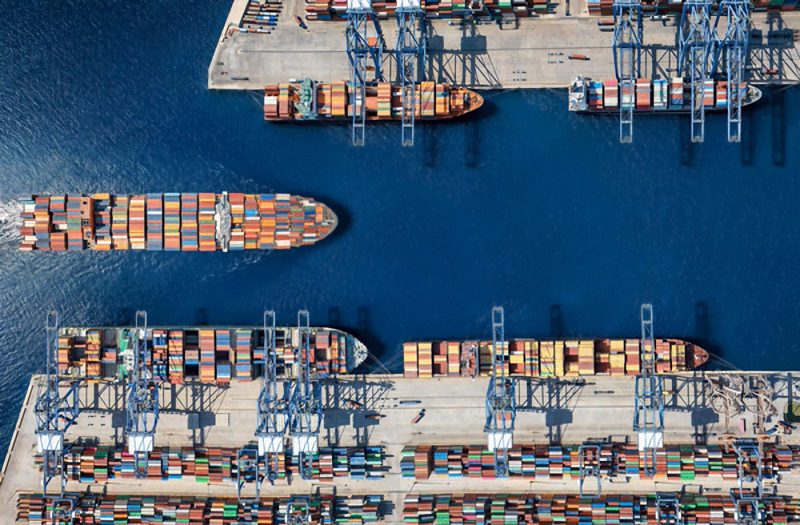
The stakes are not subtle. Maritime transport moves four fifths of all goods traded worldwide. Over 90% of exported oil travels by sea. Fiber optic submarine cables carry 99% of the world's international internet traffic. Harvey is direct about the implication: "The sea is increasingly a theatre of geoeconomic competition, a trend that could accelerate further with climate induced changes to Arctic maritime routes."
That competition has intensified rapidly. The COVID pandemic introduced the first major friction. What followed was a cascade: Russia's Black Sea blockade in 2022, Houthi attacks on commercial shipping in the Red Sea in 2023, a resurgence of piracy off the Horn of Africa, and most recently the twin blockades of the Strait of Hormuz and Bab el Mandeb. Each event arrived as a discrete shock. Harvey argues they should be understood as a trend.
Tariffs vs. Blockades: The Comparison That Should Unsettle Markets
The report's most provocative finding concerns the relative impact of tariffs versus physical supply shocks. Bloomberg news trend data shows that "maritime disruption has featured a lot less than tariffs in the market's mind." Harvey argues this is a costly blind spot.
U.S. import price data tells a different story than the headlines. The impact of the COVID pandemic, the Russian invasion of Ukraine, and the Hormuz crisis have each registered far more sharply on import prices than the first or second rounds of Trump-era tariffs. The IMF recently modelled that a 100-hour delay in ports lifts U.S. inflation by 50 basis points over five months. The IMF's growth downgrade following the Ukraine war reached 1% cumulatively, against just 0.2% attributable to tariffs the following year.
"Disruption to ocean commerce has generated outsized impacts on both the prices of goods and the volumes of cross border trade," Harvey writes. The distinction between price effects and volume effects is critical. Localized disruptions tend to manifest in freight rates and insurance costs. Regional blockades, like the current crisis in the Gulf, create volume shortfalls that cannot simply be rerouted around.
Three Tiers of Risk
Harvey organizes maritime risk into three categories of ascending severity. The first encompasses localized disruptions: piracy surges, route-specific sanctions, and shipping cost increases. These are disruptive but manageable through rerouting, re-flagging, and substitution. The Houthi attacks in 2023 fall here, though Egyptian Suez Canal revenues have still not meaningfully recovered.
The second tier is the regional blockade with limited rerouting capacity. The current Gulf crisis is the clearest example. Crude oil transiting the Strait of Hormuz represents 21% of global supply. LNG accounts for 20%. With war risk premiums becoming "prohibitively high, or in certain cases cancelled altogether for high risk vessels," the adjustment mechanisms that work for localized shocks begin to fail.
The third tier is what Harvey calls global disruption: an event with no modern precedent outside the two World Wars. He identifies the Indo-Pacific as the most credible candidate. The South China Sea carries over a third of global maritime trade. The Taiwan and Malacca straits are the two single most important choke points on earth. "Economies in the region are highly dependent on maritime commerce for export and energy needs, with economies such as Japan, Korea and Singapore almost entirely dependent on maritime trade of their energy needs." A Chinese blockade or quarantine of Taiwan met with a U.S. counter-blockade extending to the Strait of Malacca would, in Harvey's assessment, produce an economic impact comparable to the world wars and "almost certainly be consistent with a global recession."
The Pax Americana Is Being Quietly Unwound
Running beneath the specific risk analysis is a structural argument that carries serious long-run weight. The rules-based maritime order built after 1945 has survived this long not because of the law itself, but because the United States was willing to enforce it. Harvey identifies several signs that this commitment is eroding: U.S. Navy Freedom of Navigation Operations in the Taiwan Strait have fallen more than 50% from levels under both the Biden and first Trump administrations; the Trump administration's apparent endorsement of Iranian transit tolls calls into question White House support for the post-1945 architecture; and a push for deep-sea mining on the U.S. continental shelf conflicts with UNCLOS provisions treating the deep seabed as a common global good.
"Should the US cease to enforce international maritime law," Harvey writes, "the risk could be that a 'race to the bottom' ensues in which state actors can leverage maritime coercion for political or economic purposes."
Country Vulnerability: Asia and Europe Most Exposed
Harvey concludes with a vulnerability scorecard. The most exposed economies are small, trade-dependent, and island-based: Singapore, the Philippines, Vietnam, Korea, and the Netherlands rank among the highest. Larger continental economies with diverse land borders, including the United States, Russia, China, and Brazil, score considerably lower. Japan's naval power provides some offset, but its near-total maritime energy dependency keeps it highly exposed. Germany, with 12% of GDP in maritime imports, carries meaningful exposure despite its continental position.
Five Key Takeaways for Advisors and Investors
1 Physical supply shocks outrank tariffs as a market risk. The historical record is clear: maritime disruptions move import prices and trade volumes more severely than tariffs. Portfolios constructed around a tariff-risk framework may be underweighted to a more disruptive category of shock.
2 The Gulf crisis is a Category Two event, not a transient spike. The twin blockades of Hormuz and Bab el Mandeb have disrupted both main routes of Saudi oil supply simultaneously. The economic impact is expressing itself in volume terms, not just price terms, which is the signature of a more serious event.
3 The Indo-Pacific carries tail risk of a generational magnitude. A Taiwan blockade scenario, particularly one that escalates to broader regional maritime disruption, represents the only plausible Category Three event in current conditions. The semiconductor supply chain amplifies the stakes considerably beyond historical analogies.
4 The erosion of the U.S. role as maritime enforcer is a structural, not cyclical, shift. Declining FONOPS frequency, tolerance for transit tolls, and domestic resource claims that conflict with UNCLOS each point in the same direction. This is a slow-moving variable with potentially large long-run consequences for the cost of global trade.
5 Asian and European equities and currencies carry the highest maritime vulnerability. The vulnerability scorecard identifies the economies most exposed to severe disruption. Advisors with significant allocations to those markets should consider how maritime risk fits into scenario planning for tail events, particularly in energy-intensive sectors.
Footnote:
1 Harvey, Oliver. "Sea Change: The Market Implications of the Threat to the Maritime Commons." Deutsche Bank Research Institute, 25 Sept. 2026, https://theideafarm.com/wp-content/uploads/2026/09/Deutsche-Bank-Sea-Change-Maritime-Commons.pdf.