
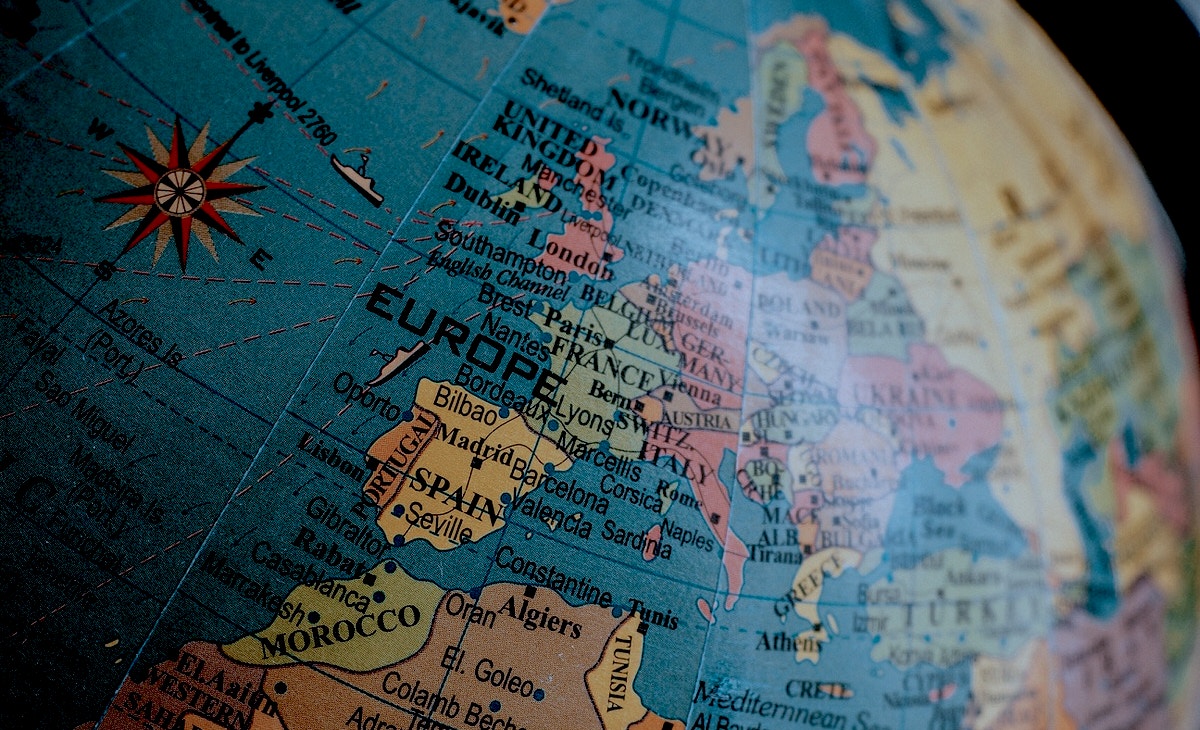



Europe is undergoing what Jitania Kandhari, Deputy CIO of Morgan Stanley Investment Management's Solutions and Multi-Asset Group, calls "its most significant economic policy shift since the creation of the euro." The full Morgan Stanley Investment Management report, Mapping Europe's Barbell1, lays out a continent mid-transformation, not yet healed of its structural ailments but moving decisively in a new direction. The investment implications are consequential and, for advisors, the framing matters as much as the destination.
The Old Model Has Fractured
Germany anchors the thesis. For decades, German industrial supremacy rested on three pillars Kandhari identifies explicitly: cheap Russian energy, insatiable Chinese demand for capital goods, and an American security umbrella that kept defense spending minimal. That architecture is now gone. Eurozone industrial output sits 3% below its 2021 level. Chemicals capacity is down 9% since 2022. China, once Germany's best customer, has become its most capable competitor. And the American security commitment is, as the report states plainly, "being held up for renegotiation by an administration that views burden sharing in transactional terms."
Germany's response is a historic fiscal pivot: a €500 billion investment program targeting infrastructure, defense, energy resilience, industrial capacity, and digital sovereignty. Kandhari frames this as more than a balance sheet decision. It is, potentially, "the transmission mechanism for a broader European CapEx cycle spanning industrials, power, defense, construction, automation and digital networks" across the continent.
Four Europes, Four Opportunity Sets
The report's analytical value lies in its regional granularity. Western Europe houses industrial champions in defense and aerospace but is constrained by fiscal fragility, particularly in France, where a deficit above 5% and a 2027 presidential election with credible far-left and far-right candidates argue for stock-level selectivity rather than broad country exposure. The Netherlands, home to ASML, the sole producer of extreme ultraviolet lithography equipment underpinning every advanced semiconductor, represents a global chokepoint captured through a single market.
Northern Europe enters this cycle in structural surplus. Sweden and Denmark are moving defense budgets above 3% of GDP by 2030. More than 90% of Norway's and Sweden's electricity comes from low-carbon sources, making the Nordics an emerging magnet for hyperscaler data center investment as the AI buildout runs into power constraints globally.
Southern Europe's arc is perhaps the sharpest reversal. The countries that endured IMF austerity programs in the 2010s, Greece, Portugal, and Spain, now outgrow the eurozone core. Spain's immigration from Latin America has materially improved its dependency ratio relative to Germany and France. Greek banking, once existentially stressed, is now among the most profitable in the eurozone following comprehensive restructuring.
Eastern Europe is the industrial frontier. As Kandhari argues, the region offers "what Western Europe increasingly cannot: competitive energy costs, skilled engineering labor, available factory capacity and geographic proximity to the defense supply chains that NATO is urgently rebuilding." Poland is the anchor, absorbing Recovery and Resilience Facility and SAFE funds as the primary beneficiary of Europe's defense buildout. Industrial production indices show Poland rising as Germany contracts, a structural shift, not a cyclical one.
A Regime Change, Not a Renaissance
Kandhari is precise about the distinction between trajectory and transformation. Europe has not solved its structural problems. The EU has not produced a global-scale platform company in a generation. Venture funding remains a fraction of U.S. levels. The cumulative unrealized corporate R&D gap since 2012 has reached approximately €740 billion. Electricity prices remain materially higher than in the U.S. or China. The near-unanimity requirement across 27 member states has consistently prevented reform at speed and scale. These are load-bearing constraints, not footnotes.
What has changed is direction. "Europe has not solved its structural problems, but it has changed its trajectory," Kandhari states. The resulting portfolio, she argues, "has a natural barbell with country convergence and continental themes." On one side, targeted country exposures where domestic macro improvement drives returns, particularly in Southern and Eastern Europe. On the other, cross-border structural themes: rearmament, electrification, automation, and AI infrastructure, "best constructed bottom-up across markets, rather than through broad country allocations."
Europe's comparative advantage in AI, Kandhari suggests, lies not in consumer-facing platforms but in the industrialization layer, "the picks and shovels of the buildout including semiconductor capital equipment, grid transformers, gas turbines and industrial automation."
5 Key Takeaways for Advisors and Investors
- Country risk and corporate opportunity are decoupled. France's fiscal fragility and Germany's industrial pivot are not arguments against European exposure; they are arguments for selectivity. The opportunity is in specific global industrial champions, not broad index allocation.
- The defense rearmament cycle is pan-European and multi-year. No single market captures the full theme. France, Germany, Sweden, Britain, and Poland all contribute to a cross-border capital expenditure cycle with multi-year revenue visibility.
- Southern Europe's convergence story has legs. Healthier private balance sheets, restored banking profitability, and large EU funding pipelines make Spain, Greece, Portugal, and Italy domestically compelling in a way that was unimaginable a decade ago.
- Eastern European banks are a direct expression of industrial relocation. Predominantly deposit-funded and now structurally profitable after the 2021-23 inflation shock, these banks sit at the intersection of credit recovery and public investment demand.
- Europe's AI advantage is in infrastructure, not platforms. Semiconductor equipment, grid buildout, sovereign compute, and industrial automation are where European companies hold defensible positions. The buildout remains heavily in private markets, broadening the opportunity set beyond listed equities.
Footnote:
1 Kandhari, Jitania. "Mapping Europe's Barbell." Big Picture, 3Q 2026, Morgan Stanley Investment Management, 18 Sept. 2026, https://www.morganstanley.com/content/dam/im/assets/publication/thought-leadership/big-picture/article_mappingeuropesbarbell_ltr.pdf.