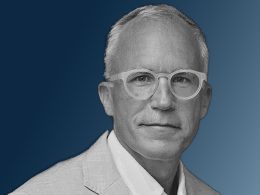



The regime that defined four decades of investing is not simply interrupted. It has been structurally challenged, perhaps permanently. That is the central argument Michael Devereux, professor at the Vancouver School of Economics, brings to BMO Global Asset Management's Open Outcry podcast1, in a conversation that cuts through the noise with rare precision. Speaking on the arc of sentiment since 2008, Devereux argues: "We've been really reevaluating the open system, and I think this reevaluation and loss of faith in globalization has led us to the political system we have now."
The Break Point Was 2008
Devereux traces the inflection point clearly: "I think we are entering an era where the sentiment towards openness has really changed," he says. The open liberal trading system had earned broad faith until the global financial crisis. Since then, consensus has fractured, and the fracture has been widening.
What has emerged is what economists are beginning to call hegemonic competition. "Countries are no longer fostering an open system where they're following rules of trade based on the WTO, rules of international capital flows based on the IMF oversight," Devereux observes. "We've had this kind of series of policies that have been quite internally focused."
The critical question is whether the Trump administration is the cause or the accelerant. Devereux is clear on this. U.S. tariffs now stand at levels unseen since the 1930s. And even when this administration exits the scene, Devereux doubts the system reverses: "Once you bring in tariffs to protect one group or one sector, it's very hard from a political economy point of view to reverse those, no matter who's in power." The ratchet only turns one way.
Inflation vs. the Cost of Capital
Host Bipan Rai, Managing Director, Head of ETF & Alternatives Strategy at BMO Global Asset Management frames the economic consequence directly. If hegemonic competition means states are "using economic power, whether it's through trade or sanctions, to achieve geopolitical objectives," then the logical implication is reshoring, more competition for commodities, and persistent inflationary pressure.
Devereux accepts the premise but separates the two concepts most investors conflate. Reshoring will likely "raise the price of certain goods and materials," he says, but that is a one-time level effect, not a sustained inflation. "We have to distinguish between a one-time increase in prices of goods or services and an ongoing inflation."
Where Devereux is less sanguine is on the cost of capital. His view is explicit: "I'm pretty optimistic on inflation, I'm much less complacent about continuing in the era of low cost of capital and low interest rates that we've had for a long time."
Two forces drive this. First, the AI buildout is unprecedented in its demand for capital. "These major corporations are selling bonds now to fund these data centers," Devereux notes. "All these big tech companies have run out of their big cash loads that they've been holding onto for the last decade or so, and now they're all borrowing on capital markets."
Second, the fiscal backdrop across the developed world is alarming by any historical measure. The U.S. deficit is pushing toward 7% of GDP. France is breaking euro-system rules. Germany is now resolved to run budget deficits to fund defense. "We have this global system where most developed countries or advanced economies are in substantial fiscal deficits," Devereux says, adding that demographic pressures will compound the strain over the next decade.
The Dollar's Reign Is Not Over
Pundits have called the dollar's decline for more than a decade. Devereux is skeptical: "The death of the dollar has been greatly exaggerated."
The dollar's structural role has not changed: Treasury bills still represent the liquidity backbone of the international financial system. The bulk of global trade is still invoiced in dollars, corporate lending outside the U.S. is still denominated in dollars, and FX reserves remain overwhelmingly dollar-denominated.
The alternatives remain structurally deficient. The euro lacks a single fiscal authority and therefore has no true safe asset equivalent to the U.S. Treasury. The renminbi operates under effective capital controls and lacks comparable financial infrastructure.
Perhaps most counterintuitively, the rise of stablecoins is likely to reinforce dollar primacy rather than erode it. "To a first approximation, all stablecoins are backed by U.S. Treasuries," Devereux notes, meaning the growth of crypto-adjacent assets in the international system will increase demand for Treasuries, not replace them.
Geoeconomics Is Not a Buzzword
The discipline that ties these threads together is what academics are calling geoeconomics: the use of economic tools to pursue strategic national objectives outside the frameworks of the WTO, IMF, and UN. For investors, this shift is not abstract. It reconfigures supply chains, commodity flows, capital costs, and sovereign credit in ways that conventional macro models have not fully internalized.
The evidence in the data may still be catching up. As Devereux notes, world trade in 2026 has not fallen dramatically relative to prior years. "There hasn't been anything substantial in the data yet, but certainly the atmosphere has changed." That lag between sentiment and data is precisely where risk gets mis-priced.
5 Key Takeaways for Advisors and Investors
- Deglobalization is structural, not cyclical. The erosion of support for open trade and capital flows has been building since 2008. Tariff ratchets, domestic security priorities, and political economy dynamics make a return to the pre-crisis liberal order unlikely regardless of who governs in Washington.
- Distinguish price-level effects from sustained inflation. Reshoring will raise the price of certain goods, but the Bank of Canada and other central banks retain the tools to anchor the long-term inflation rate. The real concern is not CPI overshoot but persistently higher real interest rates.
- The cost of capital is rising for structural reasons. Two forces are compressing bond markets simultaneously: massive AI-driven corporate borrowing and fiscal deficits across the G7 that show no sign of reversal. Portfolios positioned for the low-rate era face a different environment over the next 5 to 10 years.
- The U.S. dollar is not being dethroned. Despite chaotic trade policy and financial weaponization through sanctions, there is no credible alternative. The euro lacks a unified fiscal system; the renminbi lacks open capital markets. Dollar dominance is structurally entrenched.
- Geoeconomics demands a rethink of diversification. As states use trade, sanctions, and industrial policy as strategic tools rather than following multilateral rules, correlations across assets, regions, and currencies may shift in ways not captured by historical models. Advisors need to actively revisit international exposure, supply-chain sensitivity, and duration positioning in this new framework.
Footnote:
1 "E49 – Globalization in Retreat by The Open Outcry." Spotify for Creators, 27 Nov. 2026, creators.spotify.com/pod/profile/capital09/episodes/E49--Globalization-in-Retreat-e3t2n9h.