



The numbers are almost impossible to contextualize. The four largest hyperscalers — Microsoft, Meta, Google, and Amazon — are expected to spend $700 billion on capital expenditures in a single year. To frame that figure, Irena Petkovic, CFA, Equity Analyst, Mawer Investment Management offers a vivid historical anchor: "The Apollo moon landing program, which lasted 13 years, it cost $300 billion. So we've got 2 Apollo moon landing programs, more than 2, in one year." In percentage of GDP terms, this investment dwarfs even the peak telecom buildout of the dot-com era, which topped out at $100 to $120 billion annually. The only historical analog that comes close, Petkovic argues, is the railroad era.
The question that follows is not whether the scale is extraordinary. It is. The question is whether the returns will be.
From Cost Center to AI Factory
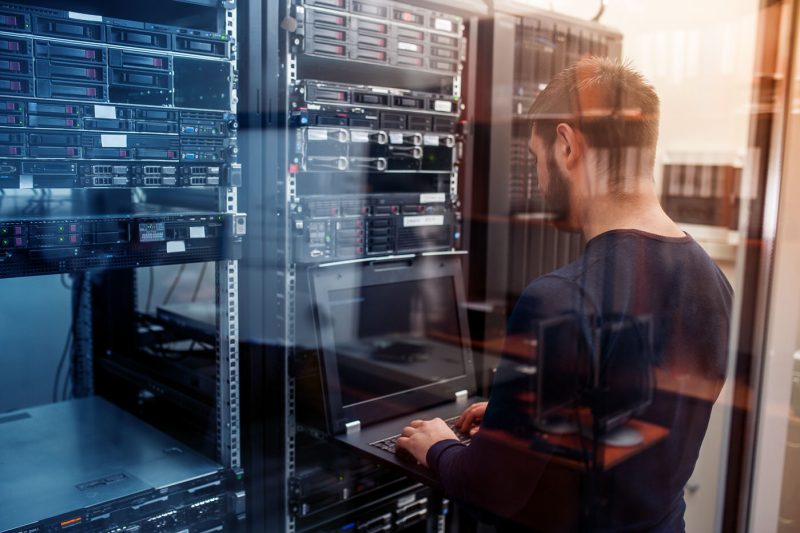
The conceptual shift required of investors begins with the data center itself. Petkovic recounts a lunch with Nvidia founder Jensen Huang that crystallized the transformation: "Previously, a data center was a cost center. You wanted to minimize the cost of it. You wanted to run it most efficiently, and it was sort of tertiary to the business. It wasn't core. But now the data center is something that can actually generate revenue."
That revenue is generated through tokens. Huang calls it the AI factory: a facility that takes electricity, runs it through chips, and produces tokens that can be sold. A million tokens is roughly 750,000 words of AI work. The price of a token is tiered by model sophistication — frontier models command a premium of up to 5x over their less performant counterparts — creating a market that can address both the most demanding enterprise use cases and the most cost-sensitive ones simultaneously.
Approximately half of the $700 billion in annual CapEx goes into chips and networking equipment. The other half funds land, cooling infrastructure, and construction. The initial investment is front-loaded and fixed-cost-heavy, but the incremental cost of generating each additional token is, as Petkovic describes it, "basically just electricity." The economics of scale, once built, are formidable.
Four Ways to Monetize the Machine
Petkovic maps four distinct monetization channels that hyperscalers are using to generate returns on their data center investments.
The first is raw compute rental — GPU hours sold directly to AI labs and enterprises running their own models. This is the most commoditized channel. The anchor tenants are the large AI labs: "They're like the anchor tenant there. They haven't quantified it, but you're usually renting out GPU hours if you want to train a big model, and that favors scaled players who are well-capitalized."
The second channel is AI-enabled productivity software: tools like Microsoft Copilot and Gemini Enterprise, billed by usage or by user, with software-like margins. The third is the use of compute to enhance existing core businesses. Meta is the instructive example. Rather than renting out GPU hours externally, Meta deploys its data center capacity to improve ad placement, charging advertisers more because the ads convert at higher rates. The returns are real but harder to isolate.
The fourth and newest channel is direct token sales — and it is where the most attention is concentrated. Hyperscalers are positioning themselves as the routing layer of the AI economy: "If you want to use a really cheap open weight model, you can run that on AWS. Or if you have a super technical task, you can pay to use, you know, Fable from Claude or something like that. So they're positioning themselves to address as much of the market as they can."
Early Evidence Is Encouraging
Return on AI CapEx is not yet fully verifiable, but the early indicators are substantive. AWS is growing at 37% — the same rate it posted when it was half its current size. Microsoft has disclosed that over the last 12 months, 90% of its cloud revenues came from customers outside the frontier labs, suggesting meaningful enterprise adoption beyond OpenAI and Anthropic. Most pointedly, Amazon's CEO has stated that the company recoups its server and networking investments in under three years — a payback period implying returns well in excess of cost of capital.
On durability, Petkovic highlights a telling signal: "We're talking to our non-AI corporates about how they're using AI. I think that's one of the best primary sources of evidence that we can have." The current concentration of enterprise AI usage in coding and software engineering is understood. What would signal durable proliferation is adoption spreading into customer service, procurement, and operations: "When you hear them talk about things like it's helping in customer service or that we built a model routing functionality, those things are very encouraging signs."
The Risks Are Real
The bear case is not difficult to construct. If pilot programs in non-coding enterprise functions fail to graduate into full deployment, token demand growth may not keep pace with the relentless decline in token prices. "You can be right, but still be wrong," Petkovic says plainly. Volume growth has so far more than offset price compression. That may not always be the case.
The financing risk is also worth watching. The hyperscalers have thus far funded the buildout primarily through internal cash flows — a key distinction from the debt-fueled telecom overbuild of the late 1990s. But Google has already issued 100-year bonds, and further recourse to debt markets may unsettle investors who draw that historical parallel. Circular financing dynamics involving chip designers like Nvidia add another layer of complexity.
Environmental and regulatory friction poses a third risk. A one-gigawatt data center consumes the equivalent power of 750,000 homes. States such as Texas are already imposing moratoriums on new data center construction. "It's incumbent on us to explain to people that AI is a good thing and not something to be feared," Huang told Petkovic at lunch — a message the industry clearly still needs to land with a skeptical public.
Portfolio Positioning: Calibrated, Not Concentrated
Mawer's global equity strategy approaches this uncertainty with deliberate balance. The team holds hyperscaler and picks-and-shovels exposure, but not at outsized index-relative weights. Importantly, the portfolio maintains natural counterweights: positions in software businesses and professional services companies that some classify as AI "losers" but that Petkovic views as potentially underappreciated beneficiaries, added to opportunistically as prices have come down. A third layer of ballast comes from companies entirely insulated from AI disruption: cement producers, building inspection firms, and businesses operating firmly in the physical world.
The discipline is to avoid a monolithic bet in either direction. The question of what returns the AI CapEx cycle ultimately generates remains genuinely open. The framework for tracking the answer, however, is increasingly well-defined.
5 Key Takeaways for Advisors and Investors
1 The scale of AI investment is genuinely unprecedented. At $700 billion in annual CapEx across four companies, the AI buildout surpasses anything seen in the dot-com era and has no modern historical parallel. Advisors should help clients understand this is not incremental technology spending — it is a structural reorientation of how the world's largest businesses allocate capital.
2 The data center has become a revenue-generating asset. The shift from cost center to AI factory is not marketing language. It changes how investors should model these businesses. Token economics — with high fixed costs, very low incremental costs, and tiered pricing across model performance — are the new revenue engine, and understanding them is prerequisite to evaluating hyperscaler fundamentals.
3 Early return signals are measurable and meaningful. AWS's sustained 37% growth rate at scale, Microsoft's 90% non-lab cloud revenue mix, and Amazon's sub-three-year server payback period are not anecdotes. They are data points that suggest the thesis is progressing — but they require ongoing surveillance, not a one-time read.
4 The two most credible risk scenarios are demand disappointment and financing drift. If enterprise AI adoption stalls outside coding, token volume growth may not sustain margins as prices fall. And if the industry tilts from self-funded to debt-funded construction, the historical rhyme with the telecom bust becomes louder. Both are watchable and neither is inevitable.
5 Portfolio construction should reflect genuine uncertainty on both sides. A portfolio with only AI winners is undiversified. So is one that avoids the theme entirely. The prudent approach owns the hyperscalers at calibrated weights, maintains exposure to potential "AI losers" that may prove more durable than feared, and holds positions in businesses that are simply beyond AI's reach — as ballast, not as default.
Note:
Irena Petkovic, CFA is an Equity Analyst at Mawer Investment Management. Rob Campbell, CFA is an Institutional Portfolio Manager at Mawer. This article is based on Episode 226 of The Art of Boring Podcast.