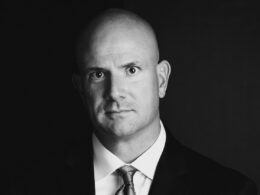



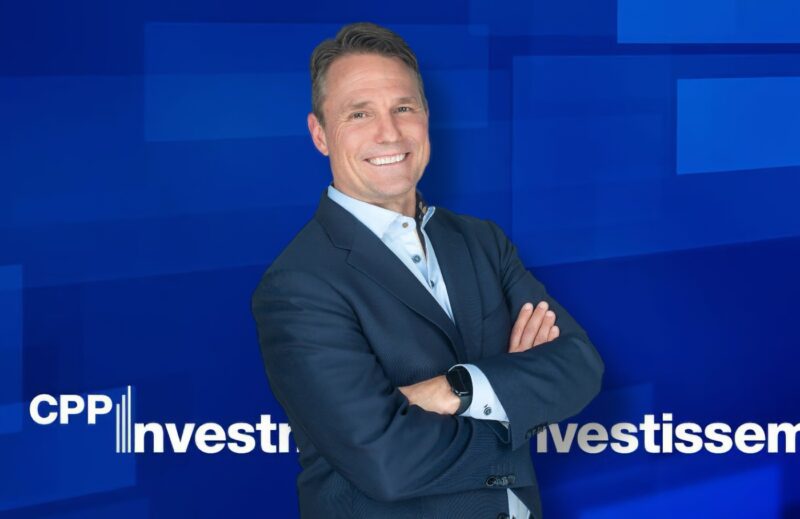

When Nicolai Tangen, CEO of Norway's sovereign wealth fund, sits down with John Graham, CEO of CPP Investments, the conversation that follows1 is not a soft promotional exercise. It is a candid, intellectually substantive exchange between two of the world's most powerful capital stewards, each running funds that dwarf most national economies. What emerges is a portrait of disciplined long-termism, tempered optimism, and a frank admission that even the most sophisticated institutions are still figuring out how to navigate the moment.
From $12 Million to $800 Billion
Graham opens with the arithmetic of compounding at its most vivid. CPP Investments received its first check, twelve million dollars, approximately twenty-seven years ago. Today the fund sits at roughly $800 billion. More striking still: $550 billion of that total is investment income. As Graham observes directly, "70% of the fund is investment income." That single data point encapsulates the case for patient, disciplined long-term investing more powerfully than any theoretical argument could.
The fund's mandate, enshrined in federal legislation, is deliberately spare. "Maximize return without undue risk of loss, accounting for the factors that impact the funding of the plan." No ministry dictates the split between equities and bonds. As Tangen puts it with characteristic bluntness, "Here you are, John Graham, $800 billion. Go and see what you can do with it." That latitude is rare and consequential.
A Pension Plan, Not a Wealth-Maximizing Vehicle
Graham is precise about what CPP Investments is and is not. This distinction matters because it shapes every major capital allocation decision. The fund is not optimizing for maximum return in the abstract. It is managing against a defined set of obligations, an aging demographic reality, and a partially funded liability structure that has evolved substantially from the pay-as-you-go model that nearly collapsed the Canada Pension Plan thirty years ago.
The fund operates on three core decisions, Graham explains: what level of risk to take, how to allocate across asset classes, and how to maximize total portfolio return within those constraints. It is a total portfolio approach, not a siloed one. The pension mandate is not a constraint on ambition. It is the architecture around which ambition is organized.
Private Markets: Constructive, Not Complacent
One of the sharpest portions of the conversation concerns private equity, an asset class where CPP Investments is among the largest players globally, and where NBIM holds no exposure at all. Graham acknowledges the recent turbulence plainly. Private equity "has had a more challenging couple of years," he concedes, and returns "have not been at expectations." But he does not walk away from the thesis.
"I personally continue to be a believer in the private governance model," Graham states. "For certain companies at certain times in their lifecycle, private ownership makes a lot of sense. Getting out of the scrutiny of the public markets, having the investors be very actively engaged from a governance perspective on the board of directors." Over ten to fifteen years, he notes, private equity has been one of the biggest drivers of value for the portfolio. The long-term structural conviction holds even as short-term performance has disappointed.
AI: Fluency First, Alpha TBD
On artificial intelligence, Graham is genuinely thoughtful and notably honest. CPP Investments has rolled out multiple LLMs to every employee, backed by training programs and "boot camps." Adoption at the grassroots level has been strong. At the senior level, the organization is working through roughly half a dozen processes where AI could meaningfully improve operational efficiency.
But when Tangen presses the real question, Graham does not reach for a comfortable answer. "Has AI made us a better investor? Have we made better investment decisions because of AI? At this point, TBD. At this point, unclear." That is not evasion. It is the scientist's instinct for epistemic honesty. The work is being done. The results are not yet in.
You Cannot Diligence a Bad Deal Into a Good One
The most memorable exchange comes when Tangen asks about failure. Graham's answer is both practical and philosophical. "You can't diligence a bad investment into a good investment," he says. "Spending another week is not going to turn a fundamentally bad investment into a good investment. And in fact, you may just convince yourself that it is."
The failure pattern he identifies is familiar to anyone who has sat in a deal committee: the belief that more work, more structuring, more creativity can rehabilitate a fundamentally flawed opportunity. It cannot. Sometimes, Graham says simply, "you have to know when to quit."
5 Key Takeaways for Advisors and Investors
1. Compounding is the strategy. Seventy percent of an $800 billion fund is investment income, not contributions. Time in the market, with disciplined reinvestment, remains the most powerful wealth-building mechanism available.
2. Know what kind of investor you are. CPP Investments is a pension plan, not a wealth-maximizing vehicle. Mandate clarity shapes every allocation decision. Advisors should help clients define their own mandate before building any portfolio.
3. Private markets reward patience, not timing. Short-term underperformance in private equity does not invalidate the structural thesis. The governance model and illiquidity premium remain intact over a ten- to fifteen-year view for investors with the horizon to hold.
4. AI adoption is table stakes; AI alpha is unproven. Building fluency across the organization is necessary and urgent. But claims that AI is already generating better investment decisions should be met with skepticism. The honest answer from one of the world's best-resourced funds is: not yet confirmed.
5. More diligence cannot rescue a bad investment. The discipline to walk away from a flawed opportunity is more valuable than the technical skill to structure around its weaknesses. Recognizing when to stop is as important as knowing when to proceed.
Footnote:
1 "CPP Investments CEO: The Canadian Model, Public vs Private and Investing for 22 Million Canadians | Norges Bank Investment Management." Norges Bank Investment Management, 8 July 2026, www.nbim.no/en/news-and-insights/podcast/2026/cpp-investments-ceo-the-canadian-model-public-vs-private-and-investing-for-22-million-canadians.