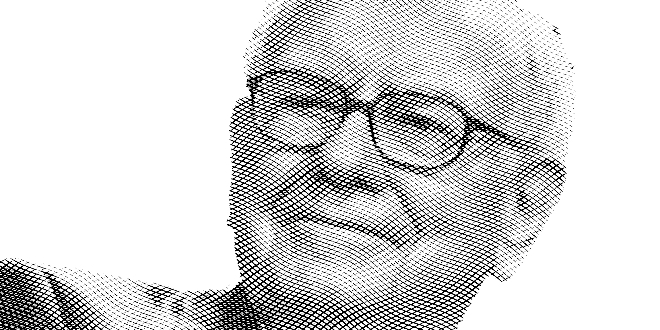





Charles Schwab's Liz Ann Sonders and Collin Martin sit down with former Federal Reserve Vice Chairman Richard Clarida1 to take stock of a market running hot on earnings, a central bank navigating a leadership change, and an inflation picture that stubbornly refuses to simplify.
The Earnings Story Is Real. So Is the Risk Embedded in It.
The second quarter earnings season is, by any objective measure, extraordinary. Liz Ann Sonders, Chief Investment Strategist at Charles Schwab, puts a precise number on it: "The consensus expectation for the S&P was 24%. And we're now running at 51% and change. And we have never seen a parabolic ascent in earnings like we are seeing right now."
To contextualize that figure, Sonders notes the only prior instances of comparable earnings surges occurred in post-recession recoveries, where depressed base figures made the mathematics easy. That is plainly not today's environment. The driver, as she explains, is the AI capital expenditure cycle, whose feeders reach well beyond technology and communication services into materials, utilities, energy, and industrials. Breadth, in other words, is genuine.
But the concentration risk underneath that breadth deserves attention. The top ten earnings contributors account for 65% of forecast earnings growth for 2026 versus 2025. Nvidia alone represents 18%. Sonders identifies this as the clearest known risk in the equity market: "When you're seeing such a lofty number, it does raise the expectations bar." The Korean KOSPI serves as her reference point, where Samsung reported above the published sell-side consensus yet still cratered, having apparently undershot what she calls "the whisper number or the hype number or the hope number." That dynamic is already visible at the individual stock level in U.S. markets.
Higher for Longer. Not Forever.
Collin Martin, Director of Fixed Income Strategy at Schwab, frames the rate environment with appropriate precision. Short-term rates are likely to hold. The economy remains resilient, the labor market stable, and nothing in recent data has given fence-sitting FOMC hawks the nudge they need to pull the trigger on another hike. The June FOMC meeting produced three dissents in favor of a hike. Martin describes the CPI print as constructively in-line: "We don't want upside surprises, and we didn't get upside surprises." His expected range for the 10-year Treasury has been revised upward to 4.25% to 4.75%, reflecting sticky inflation, elevated short-term rates, and unresolved fiscal concerns.
Clarida on the Fed's Inflation Dilemma
Richard Clarida, PIMCO's Global Economic Advisor and former Fed Vice Chair, offers the most structurally rigorous framing of the inflation problem. The June FOMC meeting was pivotal. As recently as March, no Fed official anticipated a rate hike in 2025. By June, nine committee members favored one. The shift was driven by a material deterioration in the inflation outlook: "The Fed thought inflation this year would fall to 2.7%. In June, they thought it would increase to 3.3%."
Clarida is direct about the core methodological debate at the Fed. He acknowledges the credibility problem in focusing too narrowly on core measures that exclude what most Americans actually spend money on: "For many Americans, maybe 40% of the population, rent, food, and energy is most of their expenditure budget." He advocates broadening the inflation assessment to include a suite of measures, including trimmed-mean approaches, alongside labor market and productivity data. That view is consistent with the task forces being established under new Fed Chair Kevin Warsh.
On supply shocks, Clarida draws a distinction investors often miss. The case for looking through a supply shock is limited to specific conditions, particularly single-step energy price increases that push the price level higher without sustaining ongoing inflation. He is clear that this logic does not apply universally: "It's not everywhere and always the case that central banks should look through supply shocks." He adds that favorable supply shocks, including three decades of goods price deflation driven by Chinese labor market integration, made monetary policy meaningfully easier, a reminder that the category cuts both ways.
Forward Guidance: Less Is Now More
On Fed communications, Clarida draws the essential distinction between committee-level forward guidance and the individual signals of 19 FOMC members. The June statement under Warsh eliminated formal forward guidance. Clarida places that in historical context: "Alan Greenspan was Fed chair for 19 years, and for probably 15 of those years did not provide any forward guidance." The absence of committee-level guidance is not an absence of guidance altogether. It is simply guidance expressed differently.
Key Takeaways for Advisors and Investors
- Earnings strength is real, but the expectations bar is now dangerously high. Blended S&P 500 earnings growth of 51% for Q2 has set a baseline against which even strong future quarters may disappoint. Monitor whisper numbers, not just sell-side consensus.
- Concentration risk inside a broad rally is not benign. Nvidia alone represents 18% of expected 2026 earnings growth. Portfolio construction should reflect the difference between index-level breadth and the true earnings distribution underneath it.
- The Fed is not on the verge of cutting rates. With inflation reaccelerating to a projected 3.3% in the Fed's own June forecast, the path to cuts has lengthened materially. Plan for short-term rates to hold and 10-year yields to range between 4.25% and 4.75%.
- AI is inflationary now, disinflationary later. Near-term data center build-outs are pushing chip and electricity prices higher. PIMCO's base case, endorsed by Clarida, is that this relationship flips over a three-to-five-year horizon as AI drives productivity gains. Positioning should account for both phases.
- A new Fed chair means a regime transition, with associated volatility. Elimination of formal forward guidance under Warsh is historically consistent with elevated uncertainty during leadership handoffs. Investors navigating this period should expect more noise from individual FOMC voices and less signal from committee statements.
Footnote:
1 Liz Ann Sonders, Collin Martin. "The Economy's Curious Balancing Act (With Dr. Richard Clarida)." Schwab Brokerage, 14 Aug. 2026, www.schwab.com/learn/story/economys-curious-balancing-act-with-dr-richard-clarida.