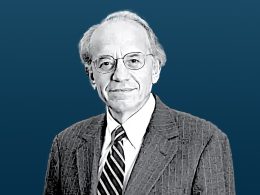




Warren Buffett has long been misread. In a July 2025 paper1 from Sparkline Capital, founder and Chief Investment Officer Kai Wu argues that the standard portrait of Buffett as a Ben Graham disciple hunting for cheap, asset-heavy businesses is not only incomplete but fundamentally misleading. The real Buffett, Wu contends, is a systematic investor whose enduring edge traces directly to two factors: Intangible Value and Quality. That distinction carries important consequences for every advisor and investor now navigating the post-Buffett era at Berkshire Hathaway.
Three Eras, One Evolving Thesis
Buffett's career divides cleanly into three phases. The Industrial Age produced a Graham-style portfolio anchored in tangible book value, with GEICO as its defining position. The Consumer Age introduced brand equity as a central driver of intrinsic value, most vividly through Coca-Cola. The Information Age culminated in Apple, which Wu identifies as the capstone holding, one that simultaneously embodies intellectual property, network effects, brand equity, and human capital.
Wu traces the pivot explicitly. In his 1983 shareholder letter, Buffett wrote that his thinking had "changed drastically from 35 years ago," moving toward "businesses that possess large amounts of enduring Goodwill and that utilize a minimum of tangible assets." By 2018, Buffett was observing that the four largest companies by market value "do not need any net tangible assets." Wu's balance sheet decomposition confirms the trajectory: in 1978, tangible capital dominated Berkshire's portfolio companies. By 2024, intangible assets commanded the balance sheet.
Not a Value Investor. Not Exactly.
The price-to-book data cuts against the conventional narrative decisively. Of 240 stock-date observations covering Buffett's top five holdings since 1978, only 19, or 8 percent, showed a P/B ratio below one. The median was 3.1. The average was 7.9. Apple, his largest holding today, trades at over 57 times book value. Wu is direct: Buffett "clearly recognizes that tangible book value is only one component of intrinsic value."
When sector effects are controlled for in the factor regression, Buffett's apparent tilt toward low P/B stocks disappears entirely. His positive Value loading, Wu shows, reflects the sectors he favors, particularly financials, not a deliberate preference for cheapness within those sectors. In fact, within each sector, Buffett consistently chooses the higher-P/B stock. American Express over its peers. Coca-Cola over its peers.
The Factor Architecture of Outperformance
Since 1978, Berkshire's stock portfolio has beaten the S&P 500 by 3.0 percent per year. Wu's six-factor regression attributes 87 percent of that excess return to systematic exposures. Intangible Value and Quality each contributed 1.1 percent annually. After accounting for all factors, residual alpha falls to an insignificant 0.4 percent per year. What appeared to be genius, Wu argues, was largely structured exposure. "What initially appeared to be pure alpha may in fact largely reflect systematic exposures."
The picture sharpens further when the analysis is broken into two periods. Since 1995, Buffett's Intangible Value loading has increased by 50 percent relative to the full period. But his stock-picking alpha has turned negative at minus 1.9 percent per year, suggesting that Berkshire's scale, now constrained to large-cap stocks at a $1 trillion market cap, has eroded its ability to fully exploit the factors Buffett himself pioneered.
A Replicable Framework
The practical implication is consequential. Wu constructs a simple two-factor long-only portfolio allocating 50 percent each to the top 20 percent of stocks on Intangible Value and on Quality. That portfolio has matched Berkshire's stock returns since 1978 and beaten the S&P 500 alongside it. Importantly, the same two-factor framework generates excess returns across U.S. large-cap tech, international equities, and small-caps, markets where Buffett himself never systematically invested. The framework, Wu concludes, is not Berkshire-specific. It is universal.
Five Key Takeaways for Advisors and Investors
1. Reframe "value investing." Buffett's edge was never about price-to-book. It was about identifying durable intangible moats. Advisors should help clients understand the difference.
2. Intangible Value and Quality are the two factors that explain Berkshire's outperformance consistently, across time periods, sectors, and geographies.
3. Berkshire's shrinking opportunity set is structural, not cyclical. At $1 trillion in market cap, Greg Abel inherits a capital base that mechanically limits the investment universe. Cash now represents 30 percent of total Berkshire assets.
4. Buffett's framework is more portable than Berkshire itself. Low-cost factor funds offering Quality and Intangible Value exposure exist today across most major markets. Investors need not own Berkshire to access the philosophy.
5. Buffett's genius was discovering these factors decades before academic finance named them. His historical alpha, Wu notes, "may in fact largely reflect systematic exposures." That is not diminishment. It is instruction.
Footnote:
1 Wu, Kai. "Buffett's Intangible Moats." Sparkline Capital, July 2025, https://blog.sparklinecapital.com/wp-content/uploads/2025/07/sparkline-buffett.pdf.