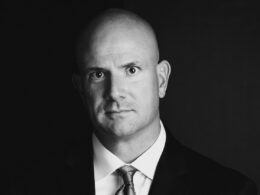





Most people are underperforming relative to their ability. That is not a provocation. It is the clinical assessment of Dr. Gio Valiante, one of the world's leading performance psychologists, whose work with elite athletes, hedge fund portfolio managers, and C-suite executives has given him an unusually precise view of the gap between what human beings are capable of and what they actually produce.
The reason for that gap, Valiante argues, is structural. "There's a term that I came across many years ago called the central governor hypothesis," he tells Shane Parrish on the Knowledge Project. "Most people underperform. We're not designed to overperform. We're designed to survive." The brain, in this framing, is not an instrument of excellence. It is an instrument of survival. The very mechanisms that kept the species alive, the pull toward comfort, the avoidance of pain, the aversion to risk, are the same mechanisms that suppress achievement. Comfort and safety, as Valiante puts it plainly, "are the exact opposite of overperformance."
To move beyond the middle of the distribution requires, first and foremost, an act of agency. A conscious choice to push against the grain of biology. "Overperformance or achieving one's potential requires a cognitive decision to push oneself there," he says. But the choice, as anyone who has abandoned a New Year's resolution by March can attest, is only the beginning. The research on behavioral change points not to intention but to action. Drawing on John Dewey, Valiante makes the case that transformation moves in only one direction: "We don't think our way into a pattern of living. We live our way into a pattern of thought." Change the behavior first. The belief follows. "It doesn't matter what you think, what you feel, or what you say. It's just a matter of what you do."
The Motivation Divide
What separates those who execute from those who merely intend? Valiante traces the answer back to a simple question he has posed to hundreds of athletes, from PGA Tour professionals to recreational golfers: why do you do what you do? The answers consistently sort into two camps.
The first is mastery orientation, where the intrinsic satisfaction of the activity itself drives engagement. The second is ego orientation, where the activity is merely a vehicle for external reward: money, status, validation. The research is unambiguous about which camp produces elite performance over the long run. "What you find at the very tail end of the distribution, the top 1% of 1%, the all-timers," Valiante explains, "is they tend to gravitate toward their calling intuitively. And the reason why they do it is for the love of the craft itself."
This distinction carries direct implications for how people sustain performance across a career. Those who drift from mastery into ego orientation, chasing outcomes rather than engaging with process, tend to burn out or plateau. The path back, as Valiante observes in athletes who experience career renaissances, is always the same: they fall in love with the craft again. "It's Kelly Slater. I fell in love with surfing again. It's Brooks Koepka in golf recently. I love golf again."
Environment Over Intention
One of the conversation's most counterintuitive insights concerns the primacy of environment over mindset. The popular view holds that greatness is mainly a matter of mental resolve. Valiante pushes back hard. Situated cognition, the psychological principle that the brain constantly interacts with its environment on both conscious and largely unconscious levels, means that the systems people inhabit do more to shape behavior than the goals they set. "We don't rise to the level of our goals," he notes, referencing James Clear's formulation, "we shrink to the level of our systems."
Talent hotbeds, the small geographies and institutions that produce disproportionate concentrations of elite performers, share a common feature: they are environments where mistakes are treated as data rather than verdicts. "The primary mechanism of suppression, why people don't achieve what they're capable of achieving, has to do with how they're conditioned with dealing with mistakes and failure." Systems that punish error too harshly do not eliminate mistakes. They eliminate risk-taking, and with it, the possibility of greatness.
The Architecture of Confidence
Perhaps the most practically applicable section of the conversation concerns how confidence actually works. Valiante distinguishes sharply between self-esteem (how one feels about oneself), self-concept (how one views oneself), and self-efficacy, which he defines as operationalized confidence, the specific belief in one's capacity to execute in a given domain. It is self-efficacy, not IQ or personality, that correlates most reliably with high performance.
Self-efficacy is built from four sources: prior mastery experiences, verbal and social persuasions from others, vicarious comparison with peers, and physiological states. The critical insight is that failure registers more painfully than success feels good across all four. This asymmetry produces a systematic bias toward underconfidence, where even capable people anchor to their worst moments. "Golfers always want to talk to me about their bad shots. Portfolio managers always want to talk to me about the money they've lost."
The remedy is not false optimism but deliberate recalibration. Small wins, accumulated deliberately, restore the confidence architecture that fear dismantles. For a portfolio manager in a drawdown, for an advisor in a difficult stretch with clients, the prescription is the same: "Let's start finding small wins, things that we know we can, and then celebrate them because it changes the emotional profile. And you start stacking incremental small wins and that leads to greatness."
The Debris of Childhood
Valiante closes the conversation with perhaps its most searching observation, drawn from Freud: "We spend our adult lives undoing the debris of childhood." The extrinsic ambitions that drive so many high performers, the relentless accumulation, the need for external validation, often trace back to formative wounds that were never addressed. The Wall Street executive who had made hundreds of millions but remained miserable discovered, through deep psychological work, that he had spent decades compensating for a heartbreak at eighteen. The wealth was real. The wound was older. Until the two were separated, neither the money nor the relationships could deliver what he actually needed.
The invitation Valiante extends is not easy, but it is clear: do the work to understand what actually drives you, before it costs more than you expect.
Five Key Takeaways for Advisors
1. Underperformance is the biological default. The brain is wired for survival, not excellence. Helping clients recognize that comfort-seeking is structural, not a character flaw, reframes the conversation around deliberate effort rather than shame.
2. Behavior precedes belief. Clients who wait until they feel ready to act will wait indefinitely. The practical prescription is to change the action first. Confidence and conviction follow from doing, not the reverse.
3. Confidence is the critical variable in financial decision-making. Fear distorts the perception of opportunity. A confident investor sees abundance; a frightened one sees landmines everywhere. Protecting a client's confidence, especially in volatile periods, is as important as protecting their capital.
4. Small wins rebuild risk appetite. For clients in crisis, whether a market drawdown or a life transition, the path back runs through incremental success. Helping them make one small correct decision is more valuable than outlining the full recovery plan.
5. The source of motivation determines the ceiling. Clients who pursue financial goals as a vehicle for external validation are perpetually unsatisfied regardless of outcomes. The advisory relationship can add lasting value by helping clients connect their financial plan to what genuinely matters to them, their calling, not just their target number.
Footnote:
Adapted from the Knowledge Project Podcast, Episode featuring Dr. Gio Valiante, hosted by Shane Parrish. August 2026.