


The electricity powering the AI revolution may be the most important commodity no one can get fast enough. That is the core message from Citi Research's Overcoming Gridlock 2.0: Solving Power Bottlenecks to Drive AI and Energy Security, published June 28, 2026 — a sweeping cross-firm study drawing on commodities strategy, equity research, corporate banking, and wealth management to map the structural collision between surging power demand and a grid built for a different era.
The Demand Is Real. The Infrastructure Is Not Ready.
U.S. data centre capacity surpassed 50 gigawatts at the end of 2025, growing at a 24% compound annual rate since 2020. AI workloads, barely 12% of tracked demand in 2023, are forecast to reach 70% of the market by 2030. The numbers are staggering — and the grid cannot keep pace.
Citi's commodities strategy team, led by Anthony Yuen, is direct: "Power grids needed to facilitate the AI and energy security transformations are typically enormous and slow to improve after decades of electrification and economic growth." The report coins the operative phrase: speed-to-power. It is not a slogan. It is the defining constraint shaping capital allocation across the entire power value chain.
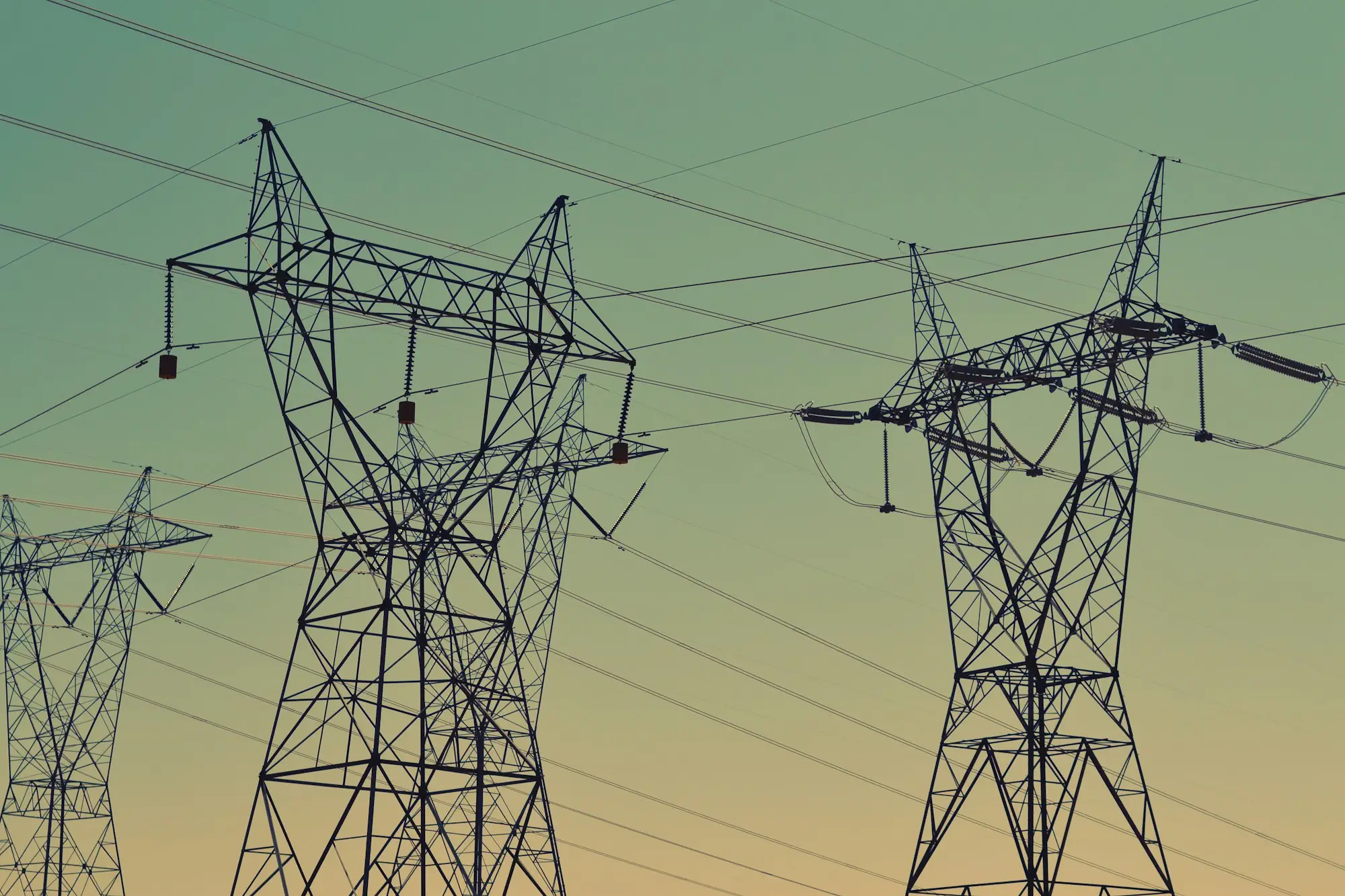
Equipment backlogs illustrate the severity. Large power transformer lead times now run 24 to 48 months. Generator step-up transformers can take up to four years. Medium and high-voltage switchgear extends to 30 months or longer. Wood Mackenzie estimates a 30% supply deficit in power transformers in 2025. The cumulative global shortage is projected to peak at 1,698.8 GVA in 2028 — equal to 47% of that year's annual supply.
BYOG: The Grid Workaround That Has Become a Strategy
With grid interconnection timelines measured in years, developers are increasingly bypassing the queue. "Bring your own generation" — BYOG — has moved from contingency to commercial strategy. Hyperscalers including AWS, Microsoft, Google, and Meta are colocating data centres next to existing natural gas infrastructure, primarily in Texas near the Permian Basin and increasingly in Ohio and Pennsylvania's Marcellus-Utica shale region.
Citi Banking's Ashwani Khubani, Global Head of Power Corporate Banking, observes: "Gas Turbines are costing 2-3x what they used to cost and there is a shortage of substations/transformers and switchgear equipment." He adds plainly: "We believe the market has not understood the real issues with the supply chain."
Natural gas turbines dominate the announced BYOG pipeline at 77 GW globally. Gas reciprocating engines — modular, fast to deploy, stackable in 5 to 20 MW blocks — are gaining traction for campuses that cannot wait for heavy-duty turbines. Solid oxide fuel cells from Bloom Energy offer a compelling alternative: roughly 100 MW deliverable in approximately 120 days, with a compact footprint and lower local emissions. Each technology carries real tradeoffs in cost, efficiency, and supply chain dependency.
Energy Security: The Second Driver the Market Keeps Underpricing
The Middle East conflict, referenced throughout the report as beginning February 28, 2026 between the U.S. and Iran, has sharpened the global energy security calculus considerably. Global EV sales grew 20% in 2025, surpassing 20 million units. Europe saw a 30% rise; China sold more than 13 million, representing 50% of new car sales. The IEA's Southeast Asia Energy Outlook 2026 identifies energy security as the region's top concern.
The connection to power infrastructure is not incidental. Unlike imported oil and gas, renewables are domestically sourced. But the equipment to build them — transformers, switchgear, cables — runs through the same constrained supply chain driving the AI build. Germany's €8 billion climate push, India's accelerated wind clearances, and ASEAN's 45% renewables target by 2030 all add demand to a supply chain already under strain.
Labor and Regulation: The Constraints No One Fixes Fast
The U.S. faces a shortage of at least 222,600 skilled trade workers. Electricians, line workers, HVACR technicians, pipefitters, and construction managers are all in deficit — and BLS projections show the shortfall persisting through 2034. That timeline is not a rounding error. It is a structural feature of the investment thesis.
Regulatory friction compounds the problem. FERC is pushing to cut interconnection approval timelines to approximately 90 days. ERCOT is moving to batch study frameworks for loads above 75 MW. PJM's reliability backstop procurement is underway, though Citi's utilities team notes the design "has a lot of challenges." Meanwhile, 13 U.S. states have introduced moratoriums on data centre development, and bipartisan pushback on utility bill affordability is accelerating heading into midterm elections.
Five Key Takeaways for Advisors and Investors
1 The equipment bottleneck is structural, not cyclical. Lead times of two to four years for critical electrical hardware mean that even well-capitalized developers cannot build their way out of constraint quickly. Companies holding transformer production capacity — Hitachi Energy, Siemens Energy, GE Vernova — are operating in a seller's market that Citi projects persists through at least 2028.
2 Natural gas infrastructure is a multi-year growth story. Citi's midstream coverage has sanctioned approximately $38 billion in power-demand-tied projects over three years. Annual growth capex over the next five years is forecast to exceed double the prior five-year period. Pipeline capacity is effectively full; demand is outpacing infrastructure by nearly 2x.
3 Energy security is accelerating clean-tech adoption outside the U.S. Global Chinese clean-tech exports — batteries, EVs, solar — rose approximately 30% in 2026. ESS battery demand is growing at a forecast 28% CAGR through 2030. The structural tailwind is real and broadening.
4 Speed-to-power reshapes who wins in real estate. Across Europe, decommissioned coal sites with embedded grid connections are commanding significant premiums. Power-ready land is a scarce asset. In the U.S., Texas remains the most data-centre-friendly environment despite its own grid constraints.
5 The investment opportunity is broad and deep — but requires selectivity. Citi Wealth identifies four pillars: grid and infrastructure modernization, nuclear power, renewables, and battery and storage solutions. The U.S. offers a more diversified and, in Citi's view, durable exposure than South Korea or Taiwan, extending well beyond semiconductors into the full power infrastructure value chain.
The pace of AI buildout has materialized far stronger than expected. The constraint is no longer compute. It is power.
Footnote:
Yuen, Anthony, et al. "Overcoming Gridlock 2.0: Solving Power Bottlenecks to Drive AI and Energy Security." Citi Research Must C Series, Citigroup Global Markets Inc., 28 June 2026. Redacted public version distributed 1 July 2026.