
At the All-In Summit1, Venture Capitalist, Bill Gurley delivers what may be the most consequential speech of his career. The man who famously called out regulatory capture from the same stage three years earlier now turns his attention to something far larger: the systematic failure to investigate the origin of COVID-19. The argument he builds is methodical, historical, and quietly devastating.
Searchers, Blockers, and the Anatomy of Failure
Gurley opens not with viruses but with buildings, planes, levees, and rockets. Surfside. The Boeing 737 Max. Hurricane Katrina. Fukushima. The Challenger shuttle. In each case, the pattern repeats: catastrophe strikes, searchers mobilize, blockers resist, and root cause eventually gets found. In each case, that root cause prevents the next one. He frames this through CAPA, the scientific community's Corrective and Preventive Action process, which he describes as five steps: "detect, investigate, confirm root cause, correct, and prevent." Prevention, he argues, is impossible without first establishing cause. "You can't skip root cause."
What unites these disasters is also the role played by journalism. Investigative reporters at the Miami Herald, The Seattle Times, the New York Times, and other newsrooms won Pulitzers by doing what large institutions refused to do. "The beat reporter was on the scene within two hours," Gurley notes of the Surfside coverage. Thirty-seven people eventually staffed that investigation. Monica Richardson, the Herald's executive editor, accepted her Pulitzer by declaring: "We will continue to investigate the collapse to find answers to how this happened to ensure a tragedy like this never happens again."
Fifteen Million Deaths. No Root Cause.
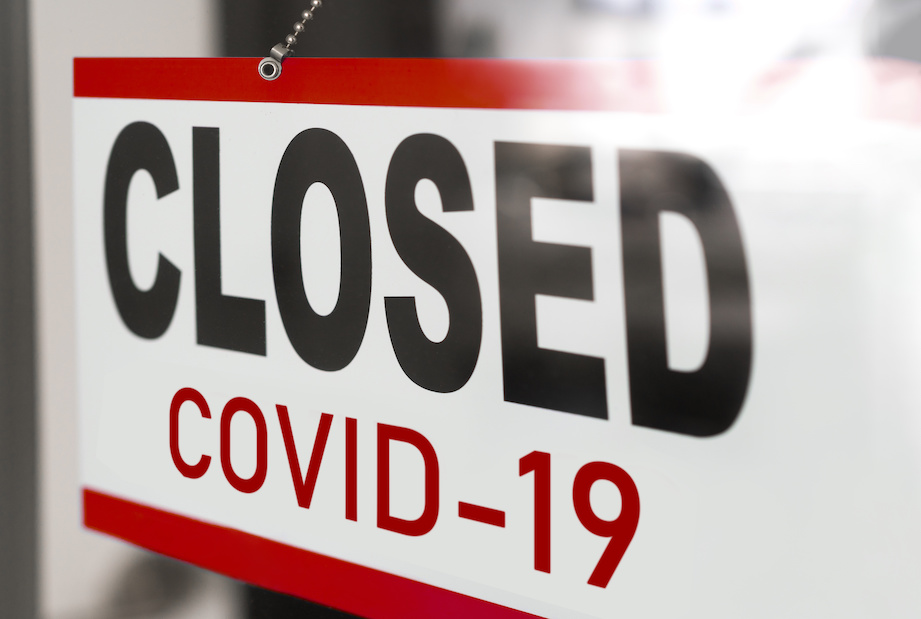
COVID-19 killed fifteen million people, displaced countless more, cost the global economy forty-five trillion dollars, and disrupted the formative years of an entire generation of children. Against the five historical catastrophes Gurley catalogued, the cumulative toll of those events represents roughly 1/3000th of what COVID alone produced. The math is not comforting.
What is more troubling is the institutional silence that followed. "There's no committed newsroom with over thirty investigators on COVID," Gurley states flatly. "None of the major papers did that." No bipartisan congressional committees. No independent commission with someone of Richard Feynman's calibre and independence. No science-funded third-party investigation. No mass victims lawsuit. "Six years later, we don't know."
The Blockers with Credentials
Into that void stepped five figures Gurley identifies as having acted not as experts but as blockers: Francis Collins, Anthony Fauci, Peter Daszak, Jeremy Farrar, and Ralph Baric. Each was an outspoken gain-of-function advocate before COVID arrived. Each had publicly argued the science justified making viruses more dangerous. "If you've told the world we should definitely do this and the pros outweigh the cons," Gurley says, "there's zero chance you can be impartial when it comes to figuring out what happened." He draws the analogy directly: they behaved precisely as the FAA and Boeing behaved after the 737 Max, and as NASA did after Challenger. The instinct to circle the wagons, he argues, is not always malice. It is institutional.
What is harder to excuse is the Proximal Origins paper and the coordinated effort to characterize any inquiry into lab origins as conspiracy theory. Zeynep Tufekci, a Princeton professor and one of five women Gurley names as genuine searchers, recently posted what she called "incontrovertible proof of a conspiracy to cover up" the possibility of a lab mishap, "orchestrated from the highest levels of the scientific establishment." Katherine Eban, another of the five, calls it "manufactured consensus."
The DEFUSE Proposal and What It Means
Three years after COVID, the DRASTIC research group uncovered a document called the DEFUSE proposal. It connects EcoHealth Alliance, Peter Daszak's nonprofit, to the Wuhan Institute of Virology with a proposal to insert a furin cleavage site into a bat coronavirus to make it more transmissible. "Most people don't know about this thing," Gurley says. When he queried AI tools using CAPA principles, the responses were unambiguous: primary document evidence, highest tier evidence class, and a direct investigational lead.
Where This Leaves Us
Gurley's ask is not prosecution. It is root cause. "I don't think you wanna attack the blockers," he says. "We should make it about root cause and prevention." He calls on newsrooms to staff up, on institutions to release documents, and on independent commissions to convene. "If your view on what caused COVID is because of who you vote for, please reconsider that." The next pandemic will not wait for consensus.
5 Key Takeaways for Advisors and Investors
- Systemic risk goes uninvestigated at a cost. Forty-five trillion dollars in economic damage and no forensic accounting of cause is a material gap in risk modeling for any long-duration portfolio.
- Institutional capture is not a political story. Whether the FAA, NASA, or scientific advisory bodies, regulatory capture suppresses the information markets need to price tail risk accurately.
- Investigative journalism is a market signal. When newsrooms fail to staff complex investigations, information asymmetry widens and decision-making degrades across sectors.
- Prevention depends on root cause. The lesson from Katrina, Fukushima, and the 737 Max is that corrective action without confirmed cause is theatre. Pandemic preparedness built on unverified assumptions carries the same flaw.
- The DEFUSE proposal warrants attention. As a primary source document tied to the highest-probability investigative lead on COVID origins, it belongs in the analytical framework of any serious risk discussion, regardless of political affiliation.
Footnote:
1 Gurley, Bill. "Bill Gurley on COVID Origins, Regulatory Capture, and the Search for Root Cause." All-In Summit 2026, presented at All-In Summit, September 2026. YouTube, uploaded September 2026, https://www.youtube.com/watch?v=A4Q7zAayW20.