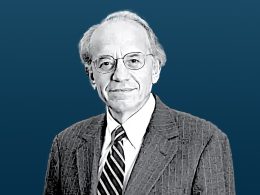





There is a persistent, measurable, and largely self-inflicted tax that investors continue to pay on their own returns. It is not a fee. It is not a market cycle. It is timing — the simple, costly habit of buying high and selling low. Morningstar's 2026 edition of its annual "Mind the Gap" study1, authored by Jeffrey Ptak, CFA, Managing Director, puts a hard number on it, and the number matters.
Over the decade ended December 31, 2025, the average dollar invested in US mutual funds and ETFs earned 8.7% per year. The funds themselves returned 9.9% annually over the same span. That 1.2-percentage-point "investor return gap" — driven entirely by the timing and magnitude of investors' purchases and sales — erased roughly 12% of the funds' aggregate total return before it could reach investors' accounts. In dollar terms, that shortfall translates to approximately $3.8 trillion in estimated timing-related effects, against a hypothetical buy-and-hold outcome of nearly $35 trillion.
To be clear, this gap is not simply the story of impulsive retail investors chasing momentum. Ptak notes that "even laudable practices like investing a portion of every paycheck or regularly rebalancing can open a gap between investor results and reported total returns." The gap is structural as much as behavioral. But that does not make it neutral. It makes it worth understanding.
Where Investors Left Money on the Table
The divergence across category groups is instructive. US equity fund investors came closest to capturing what the market offered, earning 12.8% per year against a 13.3% aggregate return — a gap of just 0.4 percentage points. Allocation fund investors posted a similarly narrow miss at 0.7 percentage points. In contrast, alternative fund investors gave up 1.6 percentage points annually, municipal-bond investors surrendered 1.1 points, and sector equity investors trailed by 1.2 points.
The large-blend category — the institutional anchor of most diversified portfolios — recorded a gap of precisely zero. The average dollar earned 14.0% per year, matching the fund's aggregate total return exactly. The message is not subtle: simple, broadly diversified, widely held strategies penalize mistimed trading least.
The ETF Paradox
One of the study's most pointed findings concerns ETFs. These vehicles earned higher dollar-weighted returns than open-end funds (9.5% versus 8.5% annually), but their timing gaps were wider — negative 1.6 percentage points per year for ETFs compared with negative 1.2 for traditional open-end funds. International equity ETFs saw the widest gap in absolute terms, at negative 2.5 percentage points annually.
This is the ETF paradox: the very tradability that makes ETFs attractive also creates the conditions for timing errors. Ptak is measured but direct on this point, noting that investors "should be mindful of the potential trade-offs involved in easily traded ETFs, one of them being larger timing costs." The tool designed for flexibility, in other words, rewards those who use it the least.
Volatility Is the Real Culprit
Of all the factors examined — fees, management style, tracking error, fund type — return volatility shows the strongest and most consistent relationship with timing gaps. The least-volatile quintile of funds produced a gap of just 0.4 percentage points per year. The most-volatile quintile generated a gap exceeding 2.0 percentage points annually.
Fees, by comparison, matter far less than the conventional wisdom suggests. The cheapest funds had a narrower gap than the priciest, but the difference was modest. Ptak's conclusion is unambiguous: "It's likelier that other factors — such as where and how investors utilize a low-cost or pricey fund — have a stronger bearing on investor success than fees alone." The context of the investment — retirement plan versus brokerage account, systematic contribution versus discretionary trade — shapes outcomes more than the expense ratio printed on the fund's fact sheet.
Crypto ETFs: A Cautionary Case Study
This year's report includes a supplemental case study on three newer ETF types: buffer ETFs, leveraged single-stock ETFs, and crypto ETFs. The results are mixed and revealing.
Buffer ETF investors fared well, with dollar-weighted returns exceeding aggregate total returns over both the three- and five-year periods — a function of flows clustered around outcome-period start dates, approximating buy-and-hold discipline by design. Leveraged single-stock ETF investors posted lofty headline returns but still failed to beat the unleveraged reference stocks over the three-year period.
Crypto ETFs were a different matter entirely. From their January 2024 launch through December 31, 2025, the average dollar in bitcoin ETFs gained approximately 22% annually — nearly 14 percentage points less per year than the ETFs earned in aggregate. Updated data through June 30, 2026 is more damning still: the average dollar had lost around 5.8% per year, more than 14 percentage points below the ETFs' 8.5% aggregate annual return. The pattern is familiar: investors piled into iShares Bitcoin Trust ETF after bitcoin had already rallied sharply, then redeemed during drawdowns, effectively locking in losses.
Five Key Takeaways for Advisors and Investors
1 Simplicity closes the gap. Broadly diversified, stand-alone strategies — particularly US equity and allocation funds — consistently produce narrower timing gaps. Fewer moving parts mean fewer opportunities to make the wrong move at the wrong time.
2 Volatility is the behavioral trigger. More than fees, management style, or fund type, return volatility drives mistiming. Advisors helping clients hold volatile strategies should frame the commitment in advance, not after the drawdown has already arrived.
3 ETFs reward restraint. The intraday tradability of ETFs is a feature that functions best when it is not used. Advisors should treat ETF accessibility as a structural risk factor for timing costs, not an advantage to exploit.
4 Systematic beats discretionary. Dollar-cost averaging, systematic withdrawal plans, and rules-based rebalancing narrow the gap by removing the human decision point. Where the investor cannot be trusted to hold the line — and that is most investors in most markets — the system should hold it for them.
5 Crypto demands a frank conversation. The bitcoin ETF data is not a commentary on crypto as an asset class. It is a commentary on investor behavior in the presence of extreme volatility and narrative-driven momentum. The gap in crypto ETFs is among the largest documented in the study. Advisors with clients in these vehicles have a specific responsibility to set expectations before, not after, the next drawdown.
The 1.2-percentage-point annual gap documented in "Mind the Gap 2026" is neither new nor surprising. It has appeared in every rolling 10-year period Morningstar has assessed. What is notable about this edition is the scope and specificity of the evidence — and the consistent conclusion it supports. The enemy of investor returns is not the market, the manager, or the fee. It is the investor's own transaction. Discipline, systematization, and simplicity remain the most durable solutions available.
Footnote:
1 Ptak, Jeffrey. Mind the Gap 2026: US Stock Fund Investors Made History; Crypto Mavens Stumbled. Morningstar Portfolio and Planning Research, 6 Aug. 2026, https://www.morningstar.com/content/cs-assets/v3/assets/blt9415ea4cc4157833/blt852a4301adc2f5db/6a7373d51f7b5ae2da78e1e8/US_Mind_the_Gap_2026.pdf. Accessed 10 Aug. 2026.