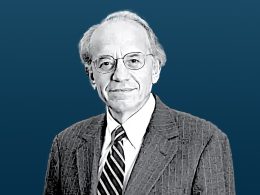



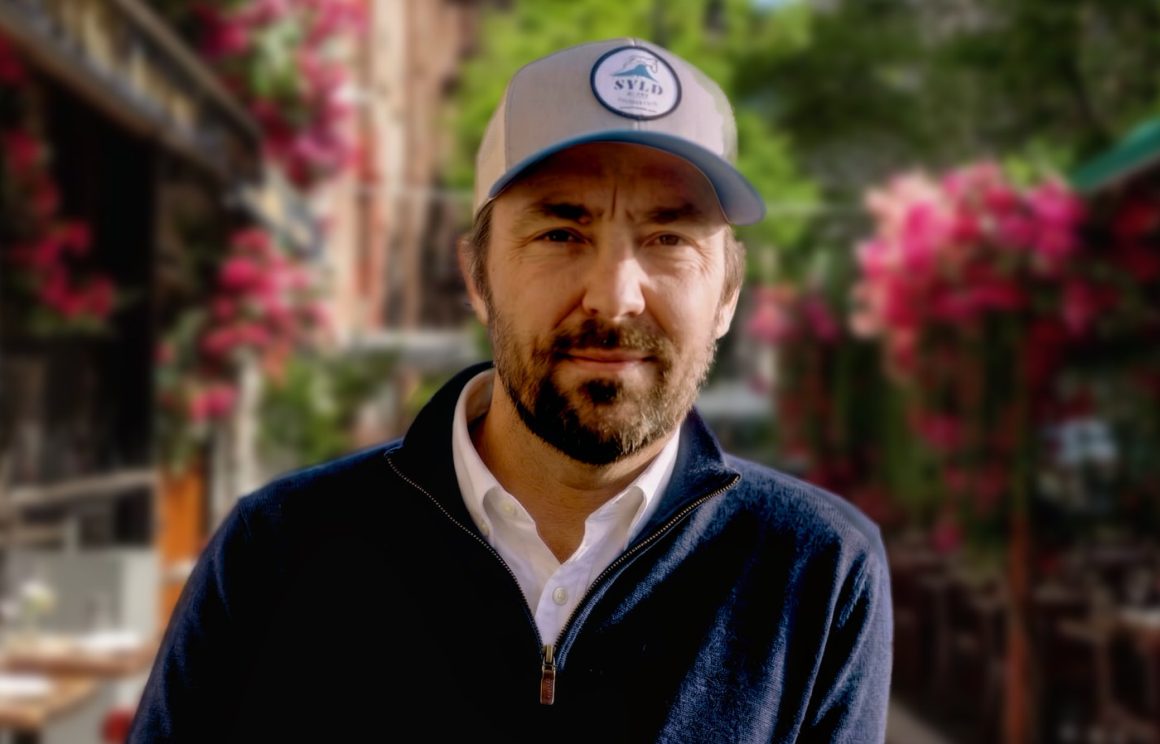

Meb Faber, Co-Founder and Chief Investment Officer of Cambria Investment Management, joined hosts Pierre Daillie and Mike Philbrick on Raise Your Average to diagnose what has structurally changed in markets — and what advisors and investors must do about it.
Nearly everyone owns an S&P 500 index fund. That fact, which once felt like a sign of financial progress, now looks increasingly like a systemic vulnerability. Pierre Daillie frames it in the opening: "Everybody is affected by that concentration, whether they know it or not." Mike Philbrick adds the math — more than 60% of global stock market capitalization is U.S. equities, meaning every dollar allocated to global equities sends 60 to 65 cents straight into the same crowded trade. The feedback loop is self-reinforcing. The setup is fragile. And the regime, Meb Faber argues, has already shifted1.
A Regime Change in Progress
Faber doesn't hedge the call. "I think it is a regime change." The post-2009 period, he acknowledges, has been extraordinary — but its rewards were narrowly distributed. "If you owned S&P 500 or Nasdaq, you did about 15% per year. Amazing. If you owned some diversified portfolio, you did 7% a year — so great, but not 15." That gap produced a specific kind of suffering: not catastrophic loss, but the grinding social pain of watching a concentrated neighbour outperform for over a decade. "I think that the worst struggle we have as investors is not building our portfolios — it's our damn neighbour outperforming us."
The rotation, he argues, is already underway — and largely invisible to U.S.-centric investors. "S&P still did 17% last year, but foreign markets did 30-ish. You had some deep value stuff do 50-plus. You had markets, obviously, like precious metals go through the roof." The early months of 2026 have accelerated the trend. The behavioural shift, as always, follows the price action with a lag. Advisors who couldn't get clients to discuss international allocations for years are now fielding client-initiated questions — a reliable signal that something structural is moving.
The Anatomy of the Underweight
Most U.S. portfolios, Faber says, share the same two critical gaps: no meaningful ex-U.S. exposure, and no real assets. "The average individual is chock-full U.S. market cap, U.S. tech concentrated. Particularly X-U.S. equities, which should be at starting point a third of your portfolio, just market cap weight. And God forbid, real assets really — precious metals, commodity equities, REITs, TIPS."
He cites Vanguard's own expected-returns model, which pointed to ex-U.S. bonds as a top allocation, with dry amusement: "I don't know a single advisor in the U.S. that owns foreign sovereigns. They may own a sliver of emerging market debt for hot sauce, but come on."
On fixed income, the complacency runs deeper. After years of zero and negative yields, the mere availability of income has dulled investors to relative value. Cambria's research — modelling risky bond categories across history — shows that buying when credit spreads are thin is the fixed-income equivalent of buying expensive equities. "It's just like buying expensive stocks trading at 200 times earnings — it's a terrible idea." As of the recording, Cambria's spread-aware bond fund was 100% in cash. Faber notes this quietly, almost as an aside: "That's one that I kind of scratch my head — no one's really talking about."
The Three Ingredients — and the Behaviour Tax
Pressed for a simple mental model, Faber is direct. The foundation of any robust portfolio requires three things: "You need to have some each of global stocks, bonds, and real assets." Beyond that, his preferences run to value tilts and trend-following — "the premier diversifier to a buy-and-hold portfolio is trend. You can call it managed futures, you can call it whatever you want."
But no model portfolio survives contact with investor behaviour. In Cambria's Global Asset Allocation research, 15 famous portfolios — risk parity, 60/40, endowment, global market — all arrived at similar long-run outcomes via very different paths. The catch: "On any given year, the spread between the best performing portfolio and the worst was average 20%. And that is a mile." When the neighbour is printing 20% while a diversified portfolio sits at flat or negative, the pressure to abandon discipline becomes nearly unbearable.
The solution, Faber argues, isn't a better portfolio. It's a more honest reckoning with loss. He cites a Cambria piece titled To Be a Good Investor, You Gotta Be a Good Loser: "There's only two states of market — you're either in an all-time high or you're in a drawdown. That's it. And you only spend about a quarter, maybe less, at all-time highs." Until investors make peace with that reality, even a correctly constructed portfolio will be abandoned at the worst possible moment. The Bogle inversion says it plainly: don't just do something — stand there.
The Concentration Problem and the Tax Trap
For clients sitting on years of embedded gains in concentrated single-stock positions, Faber opens with a counterintuitive congratulation. "First of all, congratulations if you have a concentrated position. You held it, you made money. You won the lottery." But the celebration should trigger action, not paralysis.
The common behavioural failure, he notes, is binary thinking. "Everyone gets stuck in this binary thinking — do I sell it or do I keep it? They're never like, should I sell 10%?" His prescription is graduated and systematic: trim incrementally, rebalance progressively, and avoid the all-or-nothing trap that produces regret regardless of outcome.
For the tax dimension, his enthusiasm is genuine. "Tax alpha's the easiest alpha. We all spend all the time — what are stocks doing, what's the Fed doing, what's gold doing? But really it's like — hey, can I not pay 2% taxes on this stupid investment? That's way better." In the U.S., 351 exchange transactions — which allow holders of concentrated positions to swap into a diversified ETF without a taxable event — represent, in his view, the premier solution. Cambria has completed four and has another scheduled. For taxable compounders more broadly, the instinct to chase dividend yield actively works against the goal: "If you're a taxable investor, the last thing on the planet you want is dividends."
What the Next Year Holds
Faber's forward view is characteristically historical rather than predictive. He expects the ongoing outperformance of non-U.S. assets to produce real behavioural change among allocators who have acknowledged the shift intellectually but not yet acted on it. Below the surface of a modestly declining S&P 500 index, the internal damage is already significant — the average constituent is experiencing drawdowns of 30% or more even as the headline number flatters. "There's always something getting whacked. It just becomes a little more apparent when it's the big dudes."
His broader anchor is perspective. In his new book Time Billionaires, Faber traces market history back to 1600 — every boom, every bust, every recovery. The lesson is not that everything will be fine, but that everything has always been chaotic, and the portfolios that endured were the ones built to survive uncertainty rather than optimise for the last cycle. "Having enough of the elements that'll zig and zag — that, I think, is the key unlock."
Key Takeaways
1. The regime has shifted — act accordingly. Foreign equities, deep value, and real assets are already outperforming. The behavioural lag means most portfolios remain unconstructed for the new environment.
2. The three-ingredient portfolio is the starting point. Global equities, global bonds, and real assets form the foundation. Value tilts and trend-following are the refinements. Behaviour management is the job.
3. Credit spreads are dangerously thin. Buying risky bonds when spreads are compressed is no different from buying expensive equities. Most investors aren't looking at this — they should be.
4. Tax alpha is the most underutilised return driver in the business. 351 exchanges, direct indexing, asset location discipline — the after-tax return differential dwarfs most active management debates.
5. To be a good investor, you have to be a good loser. Markets spend most of their time in drawdown. The ability to stay systematic through underperformance is the single most important skill — and the one most consistently abandoned under pressure.
Meb Faber is Co-Founder and Chief Investment Officer of Cambria Investment Management and host of The Meb Faber Show.
Footnote:
1 Faber, Meb. "The Party Always Ends: How to Build a Portfolio for the Morning After." Apple Podcasts, 22 Apr. 2026, podcasts.apple.com/sg/podcast/the-party-always-ends-how-to-build-a-portfolio/id1270978994?i=1000760708131.
Copyright © AdvisorAnalyst.com