



by Northern Trust Economics Team
Middle Eastern oil exports are approaching pre-war levels, but oil prices certainly aren’t. Brent remains above $100 a barrel, as the concern increasingly is not just how much oil is flowing today, but how much is left in reserve if supplies are disrupted again.
At the start of October, the Group of Seven nations pledged to release 100 million barrels of crude oil and diesel to cool prices. So far, markets appear unimpressed.
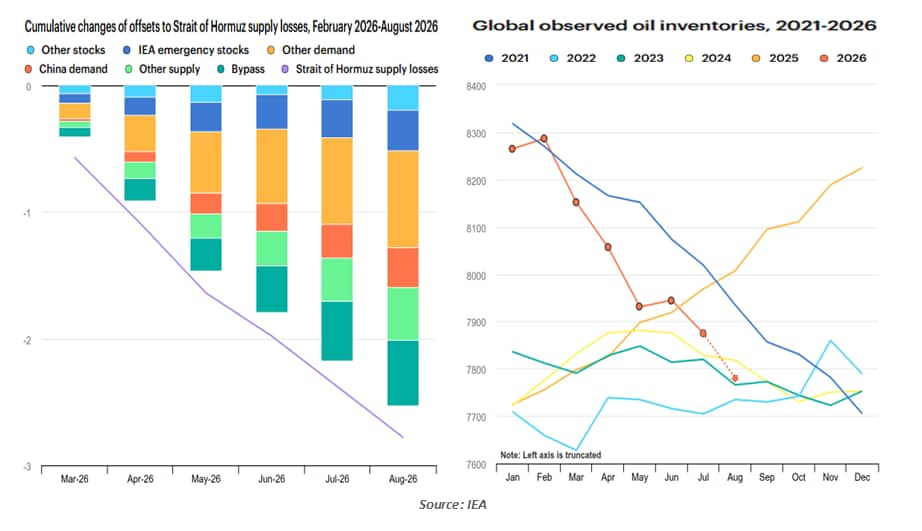
Since the Middle East conflict began, governments and energy companies have drawn heavily on stockpiles to compensate for disrupted supplies. According to the International Energy Agency, observed global inventories fell by 507 million barrels between February and August, an average draw of 2.8 million barrels a day. August alone accounted for a depletion of 95 million barrels. U.S. Strategic Petroleum Reserve crude stocks are around their lowest level since the start of available data in 1982. Commercial inventories have also been drawn down globally.
Depleted inventories leave oil markets vulnerable to further shocks.
The pressure is even greater further down the barrel. Lost Middle Eastern and Russian refined product exports, stretched refining capacity and elevated freight costs have pushed diesel and jet fuel prices sharply higher. Diesel, which accounts for nearly 30% of global demand, surpassed $200 a barrel in the U.S. in early September, nearly double pre-war levels; Europe and Asia were not far behind. Jet fuel prices have also been hovering around $200 per barrel.
Saudi Aramco’s CEO has warned that inventories could take up to two years to replenish, leaving markets vulnerable to another interruption. President Trump announced a plan for Russia to supply about 30 million barrels of diesel to the global market over the coming weeks and months. But the additional supply is unlikely to move the needle. The world consumes roughly 855 million barrels of diesel every month.
This creates a difficult trade-off. Drawing on reserves can buy time and take some heat out of prices today. But every barrel released means a little less insurance against tomorrow’s disruption.
Copyright © Northern Trust Economics Team