


by AdvisorAnalyst Editorial Team
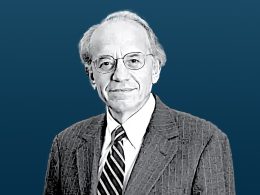
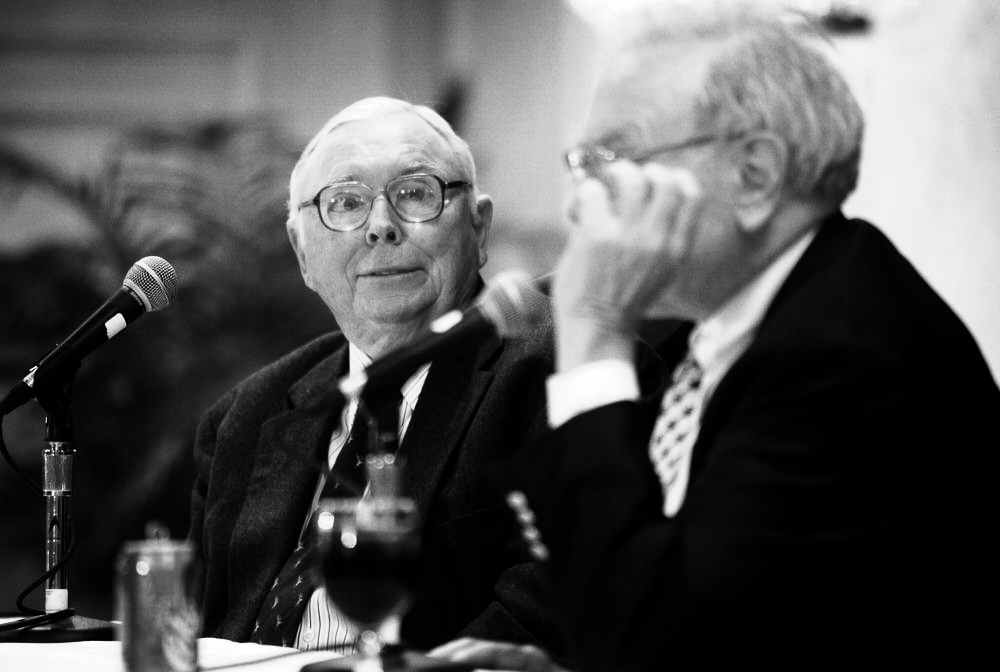
Picture the same scene, repeated across seventeen years of Wesco Financial annual meetings in Pasadena. A small room. Maybe two hundred people. A man who sees no reason to be anything but direct.
One attendee captures it well in 1999. The Wesco meeting, he writes, is "more of a free investment seminar held in a classroom" than anything resembling a corporate event. Charlie Munger, approaching eighty, delivers what amounts to a complete philosophy of mind, money, and business. Whitney Tilson, who attends and documents many of these sessions, puts it plainly: Munger "doesn't pull any punches."
This anthology, spanning 1994 to 2011, is the record of that philosophy in full1. It's not a single argument. It's a latticework, to use Munger's own word, of interlocking ideas drawn from mathematics, psychology, biology, engineering, economics, and history. And the through-line never changes: most people reason badly because they reason narrowly. That failure carries a real price.
The Latticework Doctrine
Munger's organizing principle appears in its clearest form in his 1995 USC speech on "Elementary, Worldly Wisdom." The central claim sounds almost too simple. "What is elementary, worldly wisdom?" he asks. "Well, the first rule is that you can't really know anything if you just remember isolated facts and try and bang 'em back. If the facts don't hang together on a latticework of theory, you don't have them in a usable form."
The prescription follows: "You've got to have models in your head. And you've got to array your experience, both vicarious and direct, on this latticework of models."
The danger of a thin model library gets vivid quickly. "If you just have one or two that you're using, the nature of human psychology is such that you'll torture reality so that it fits your models, or at least you'll think it does." Think of the chiropractor who treats everything as a spine problem. The economist who models every human as rational. The investor who forces every situation into one valuation framework. As Munger puts it: the man with only a hammer sees every problem as a nail.
His preferred models come from engineering first. "Obviously, the models that come from hard science and engineering are the most reliable models on this Earth." From there, biology. Then psychology. Then microeconomics. And finally accounting, which Munger values precisely because he insists on knowing its limits. He tells the story of Carl Braun, who threw out his accountants and built his own system for oil refinery construction, because standard accounting was, in Braun's word, "asinine." Braun had another rule, cited with equal admiration: the five W's. Every communication had to tell "who was going to do what, where, when and why."
The Psychology of Misjudgment
No theme runs more persistently through this anthology than the unreliability of the human mind, specifically under the conditions most people face when they're making financial decisions.
In 1994, years before behavioral finance becomes fashionable, Munger delivers an eighty-minute lecture cataloguing twenty-four standard causes of human misjudgment. Tilson summarizes the key findings in 2002. On psychological denial: "Reality is too painful to bear, so you just distort it until it's bearable." On commitment bias, Munger reaches for anatomy: "The human mind is a lot like the human egg, and the human egg has a shut-off device. When one sperm gets in, it shuts down so the next one can't get in."
On social proof and herding, he reaches for corporate history: "Big-shot businessmen get into these waves of social proof. Do you remember some years ago when one oil company bought a fertilizer company, and every other major oil company practically ran out and bought a fertilizer company? And there was no more damned reason for all these oil companies to buy fertilizer companies, but they didn't know exactly what to do, and if Exxon was doing it, it was good enough for Mobil, and vice versa. I think they're all gone now, but it was a total disaster."
The most stinging remark about educated minds comes at USC. "I'd been educated at Cal Tech and the Harvard Law School and so forth. So very eminent places miseducated people like you and me." Psychology of misjudgment, he argues, is "a terribly important thing to learn" that could be taught to any intelligent person in a week but is taught to virtually no one.
The Racetrack, the Punchcard, and the Case for Concentration
Munger's investment philosophy, developed across the USC speech and sharpened over more than a decade of Wesco meetings, rests on one foundational analogy: the racetrack.
"The model I like to sort of simplify the notion of what goes on in a market for common stocks is the pari-mutuel system at the race track. If you stop to think about it, a pari-mutuel system is a market. Everybody goes there and bets and the odds change based on what's bet."
The implication is clean. The good horse and the bad horse are both visible to everyone. Price adjusts. Edge, if it exists at all, comes from finding the one occasion where pricing is genuinely wrong, and then acting with size.
"The wise ones bet heavily when the world offers them that opportunity. They bet big when they have the odds. And the rest of the time, they don't. It's just that simple."
This logic produces the famous twenty-punch-card framing Munger attributes to Buffett: "I could improve your ultimate financial welfare by giving you a ticket with only 20 slots in it so that you had 20 punches, representing all the investments that you got to make in a lifetime." The point isn't artificial scarcity. It's the forcing function of real conviction. At the 1999 Wesco meeting, attendees learn that Berkshire holds 60 percent of its common stock in just three positions. Wesco holds 95 percent in three.
The conventional money management industry earns sustained contempt. "If you invested Berkshire Hathaway-style, it would be hard to get paid as an investment manager as well as they're currently paid, because you'd be holding a block of Wal-Mart and a block of Coca-Cola and a block of something else. You'd be sitting on your ass. And the client would be getting rich." The incentives run the wrong direction, and "as usual in human affairs, what determines the behavior are incentives for the decision maker."
The Scandal That Wasn't Fiction
No piece in the anthology lands harder than "The Great Financial Scandal of 2003," a prescient fictional fable written in 2001 and distributed at that year's Wesco meeting. An engineering firm called Quant Tech, founded on rigorous honest accounting, falls into systematic earnings manipulation through the vehicle of stock option accounting. The CFO gives the scheme a private name: "dollop by dollop." The logic is frank: "If we mix only a moderate minority share of turds with the raisins each year, probably no one will recognize what will ultimately become a very large collection of turds."
God's chief detective, tasked with finding the most responsible parties, bypasses the securities analysts, the politicians, and even the corporate officers. He settles on the senior accounting partners who designed the false convention in the first place. They sit in "the lowest circle of Hell," reserved for traitors, because "they occupied high positions in one of the noblest professions, which helps make society work right by laying down the right rules. They were very smart and securely placed, and it is inexcusable."
Munger makes the same point in plain language at the 2001 Wesco meeting, no fiction required: "IBM just raised its return expectations for its pension fund to 10%. Most companies are at 9%. We think 6% is more realistic. They may believe it, they're honest people, but subconsciously they believe it because they WANT to believe it. It makes earnings good so they can promote the stock. The reason accountants don't say anything is best summed up by the saying, 'Whose bread I eat, his song I sing.'"
Febezzlement and the Fee Problem
The most unconventional economic thinking in the anthology appears in Munger's speeches to charitable foundations. He develops the concept of "febezzlement," the functional equivalent of embezzlement, built by extending Galbraith's earlier "bezzle" idea. The argument: investment management fees paid from portfolios that feel richer due to rising markets are functionally indistinguishable, in their economic effects, from undisclosed theft. "As long as the market keeps going up, the guy who's wasting all this money doesn't feel it. And to the guy who is getting the money for investment advice, the money looks like well-earned income, when he's really selling detriment for money."
He extends this into a broader case: economics systematically ignores virtue and vice effects. Double-entry bookkeeping was "a big virtue effect in economics," he argues, making business more controllable and more honest. And then, delivered without irony: "The cash register did more for human morality than the congregational church."
Five Key Takeaways for Advisors and Investors
1 The latticework is the edge. Investors who draw from multiple disciplines make fewer category errors than those who work from a single model. The risk of a narrow toolkit isn't just missed opportunities. It's actively distorted conclusions.
2 Concentration is not the risk; it's the product of conviction. Berkshire and Wesco demonstrate across decades that holding very few positions, sized heavily when the odds are genuinely favorable, outperforms diversification designed to comfort managers rather than serve clients.
3 Psychology is the primary source of mispricing. Denial, commitment bias, social proof, and incentive-driven self-deception produce systematic errors. Recognizing these tendencies in yourself and in markets is, for Munger, the core practical skill of the craft.
4 Incentive structures determine outcomes. Whether it's Federal Express solving a logistics problem by switching from hourly to shift pay, or an entire profession of accountants blessing false earnings because the clients writing the checks prefer them, the behavior of any system reflects what it rewards.
5 High management fees in rising markets are a febezzlement problem. Advisors who recommend high-turnover, high-fee structures to clients in bull markets are, functionally, transferring wealth from clients to managers under conditions the client can't easily detect. Munger's observation that a Berkshire-style manager would eventually face a client asking "why am I paying this guy half a percent a year on my wonderful passive holdings?" has only grown more pointed with time.
Footnote:
Bledsoe, Yanan Ma, comp. The Best of Charlie Munger: 1994-2011. A Collection of Speeches, Essays, and Wesco Annual Meeting Notes. Self-published compilation, 2 Oct. 2012. PDF. Includes materials originally published by Whitney Tilson on The Motley Fool, and speeches delivered by Charles T. Munger at the University of Southern California (1995), UC Santa Barbara (2003), and Wesco Financial Corporation annual meetings (1999-2011).