




The Strait of Hormuz has been closed for ten weeks. Oil prices are elevated. The US savings rate is near a three-year low. Inflation is running above target. And yet — markets are near highs, payrolls are growing, and Goldman Sachs just cut its US recession probability.
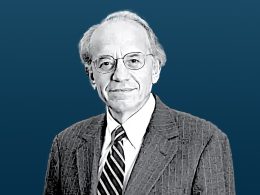
That is the central tension at the heart of Jan Hatzius's May 2026 Global Views report. The title says it plainly: Bending, Not Breaking.1 The world is absorbing shocks that, by historical standards, should have done more damage. Understanding why — and where the fragility still lives — is what every advisor and investor needs to get right now.
Why the Oil Shock Hasn't Broken Things
The starting point is the Strait of Hormuz. A ten-week closure of one of the world's most critical energy chokepoints would, in most scenarios, trigger a deep global slowdown. It hasn't. Hatzius identifies three reasons.
First, oil prices didn't spike as far as feared, partly because of "unusually high pre-war inventories" and partly because markets believed large enough price hikes would force a US policy response. Second, physical shortages — jet fuel being the clearest example — were absorbed through what Hatzius calls "relatively painless forms of demand destruction," including a "large shift to renewables in China and reduced flight schedules on lower-value routes globally." Third, the macro backdrop stayed friendly: "fiscal policy, the AI boom, and — with a brief interruption in March — financial conditions have been supportive all year."
The baseline now assumes a gradual Strait reopening finishing in late June, with Brent oil edging down to $90 per barrel by year-end. But Hatzius is direct about the asymmetry: "the risks remain tilted toward more adverse outcomes, higher oil prices, and greater economic damage."
The US: Solid, But Softening
Goldman Sachs cut its 12-month US recession probability from 30% to 25%. The economy earned that improvement. Private domestic final sales grew at a real 2.5% in Q1. April nonfarm payrolls beat expectations with a 115,000 gain. Unemployment held at 4.3%. Jobless claims fell sharply.
But the upgrade is modest — and for good reason. Recession risk "remains 5pp above the pre-war level and 10pp above the unconditional long-term average." The consumer faces real headwinds in the second half. The boost from strong tax refunds is fading. Higher gas prices, slowing wage growth, and reduced healthcare subsidies are all "likely to persist." With the personal saving rate "already down to 3.6%, the lowest level in three years, weaker income and cash flow is likely to translate into weaker consumer spending."
Unemployment is also likely to drift higher — for structural reasons. US productivity has accelerated from a 1.5% pre-pandemic trend to 2.1% since, and "the improvement is likely to continue as the AI impact broadens." More output per worker means fewer jobs for any given level of GDP growth. Hatzius also pushes back against the idea that the "breakeven" pace of payroll growth is near zero. His estimate is around 50,000 per month — and the data supports it.
The Inflation Complication Nobody Is Talking About
The most technically important section of the report involves two distortions that are quietly pushing core PCE inflation higher — and both are tied to AI.
When companies like Microsoft bundle new AI features into existing software packages and charge more for the combined product, "the official statistics don't adjust for the expanded offering and thus incorrectly treat this as a pure price increase." At the same time, software and accessories carry a weight in PCE that is 30 times higher than in CPI — because the underlying survey appears to capture some small-business demand alongside consumer demand. Together, these distortions are "likely to boost the year-on-year rate of core PCE inflation by 0.4pp later this year." Add an estimated 0.3pp pass-through from energy prices, and the timeline for renewed disinflation gets pushed back.
The longer-term picture is more encouraging. Rent inflation should continue to slow. Nominal wage growth is running at 3.6% year-on-year, and unit labor costs grew just 1.2% in Q1. Goldman's baseline has sequential core PCE returning to 2% later in 2026 — but the year-on-year rate "is unlikely to get back to target until mid-2027."
The Fed, the ECB, and a New Chair
Goldman now expects the Fed's next two cuts — each 25 basis points — in December 2026 and March 2027. That's more dovish than market pricing, but the path is complicated by the coming Fed leadership transition. Hatzius notes that incoming Chair Kevin Warsh's argument that trimmed-mean PCE — running 0.8pp below core PCE — is "a better measure because it is less sensitive to one-time price shocks seems more promising." Most sitting Fed officials are reluctant to say so publicly. But Hatzius believes "many probably agree with it tacitly and might be persuaded to do so more openly alongside a new Chair."
In Europe, Goldman expects the ECB to hike twice — in June and September — but views any near-term moves as likely to be unwound in 2027. The Bank of England stays on hold in the baseline; Bank Rate at 3.75% is "clearly in restrictive territory."
China and the CNY Opportunity
China's export sector is holding the economy at 5.0% GDP growth year-on-year in Q1, with a 2026 forecast of 4.7%. But the economy "remains very unbalanced." Goldman's FX team estimates the CNY is more than 20% undervalued against the US dollar and has set a 12-month target of 6.50 — a significant appreciation call.
Why Equities Are Still Holding
The final section of the report confronts an obvious question: with all these risks, why are equity markets performing? Hatzius's answer centres on AI and long-duration value. Strong Q1 earnings and an improving long-term productivity outlook mean that "earnings and dividends a decade or more in the future represent roughly 75% of fundamental value" in the US market. The AI revolution isn't just a near-term story — it's repricing the terminal value of corporate America.
But Hatzius doesn't stop there. "A market where the baseline is positive but the risks are so asymmetrically negative argues for combining long risk position with an exposure to equity volatility or significant hedges."
5 Actionable Takeaways for Advisors and Investors
1. Don't position for a recession, but don't rule one out. US recession risk is down to 25% — but that's still meaningfully above normal. Consumer spending headwinds in H2 are real. Stay constructive but build in some cushion.
2. Treat the current inflation data with caution. The AI software pricing distortion adds roughly 0.4pp to core PCE this year. This is noise, not signal. Advisors should help clients understand that the inflation picture is better than the headline numbers suggest — but the Fed can't say that yet.
3. Expect Fed cuts later than the market does. December 2026 and March 2027 are Goldman's call. Portfolios positioned for aggressive near-term easing will likely be disappointed.
4. Take a serious look at CNY appreciation. Goldman's FX team sees more than 20% undervaluation and a 12-month target of 6.50. For clients with international exposure, this is a high-conviction opportunity.
5. Hedge the tail. Long equities still makes sense given AI-driven earnings growth. But deep out-of-the-money equity puts deserve a place in portfolios. The baseline is fine. The downside scenarios are not.
Footnote:
1 Jan Hatzius, "Global Views: Bending, Not Breaking," Goldman Sachs Global Investment Research, May 11, 2026.*
Copyright © AdvisorAnalyst