




by Editorial Team, AdvisorAnalyst
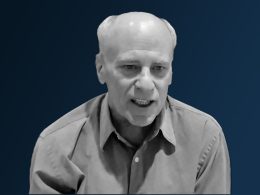
Meb Faber arrived in Omaha the week the Berkshire faithful descend on their patron's modest cottage, a ritual of pilgrimage that doubles as the world's most concentrated lecture on long-term investing. It was the right setting for Faber, co-founder and CIO of Cambria Investment Management, to take systematic aim at the investment orthodoxies that Berkshire Week tends to reinforce — including some attributed to Buffett himself.
Speaking with Jared Schwitzke and Gio1 of the Compounding Wisdom podcast, Faber runs through the full architecture of his thinking: global diversification, valuation cycles, shareholder yield, tax efficiency, and the cognitive failures that quietly destroy returns for ordinary investors. The conversation starts with a statistic few in the room had heard before.
The Gap That Compounds Forever
Before challenging Buffett's advice, Faber acknowledges the record. "My buddy Chris Bloomstran has a statistic that he says Berkshire Hathaway since inception relative to the S&P could decline 99% and still be outperforming the S&P since inception," Faber says. "Unbelievable, and I think it's actually like 99.5%, but I'm just rounding."
That framing — compounding as arithmetic destiny — set the table for the critique. Buffett has long told ordinary investors to simply buy the S&P 500 and hold. Faber's assessment: Buffett didn't follow that advice himself. "He did all sorts of fairly sophisticated trading. Even now in his late retiree years, he was gassing up the plane and going to Japan and buying stocks in companies over there. So he didn't really follow his own advice." Faber's read: Buffett advocates simplicity for people who cannot execute complexity — it's directionally sound, but not optimal. "If you're gonna close your eyes, hold your nose for 20, 50, 100 years, go for it, but most of us don't live that way."
The Home Country Bias Problem
The S&P concentrates not only in size but in geography. Faber's position on US-only investing is unambiguous: it is historically a "horrible, terrible, no good, very bad idea." The US now represents two-thirds of world market cap while generating only 25% of world GDP. The concentration, in Faber's framing, is not a feature — it's a late-cycle artifact.
"The long history of US versus ex-US markets is one of waxing and waning," he says. "We've just had a massive cycle, 17 years since the GFC, where the S&P has just creamed everything. So pat yourself on the back, drink some champagne, celebrate, but say, 'Look, I maybe shouldn't expect 15% returns forever in the US stock market.'"
His illustration: South Korea. "Close your eyes. There's no way you can possibly fathom how much the South Korean market is up in the past year. The answer is almost 200%, a triple." The mechanism is mean reversion — markets that go from "really depressed, no one wants them, they're cheap, they're hated" to "slightly less terrible" can generate explosive returns.
The Japan parallel is pointed. In the 1980s, Japan was the largest stock market in the world. "The narrative today about US tech companies — no one else can compete — it wasn't that long ago they said that about Japan." Japan's subsequent 30-year stagnation turned catastrophic overvaluation into opportunity. Today, Faber sees Japan and other international markets as attractively valued precisely because the prior narrative collapsed.
The Valuation Distinction: Business vs. Stock
Faber's treatment of AI and technology cycles is disciplined and historically grounded. The 1990s bubble, he argues, is the operative template. "At the peak of that bubble, you had companies like Cisco and Microsoft that did great for the next 10 to 20 years in business terms, and yet the stocks went nowhere because they just got too expensive." The lesson is explicit: "You have to make a distinction between the business and the stock."
His railroad analogy extends the point across centuries. The railroads were the defining technology of their era, generating P/E ratios of 50 and 60 before an 80% collapse. "The point there is not that you're gonna have a crash. Everyone's always crash fearful. But the point is, you have this resilience over very long periods, and this creative destruction of capital markets — it's great. It's a feature."
Shareholder Yield: The Dividend Myth
Faber's sharpest technical argument concerns how investors misread corporate cash return. Dividends are not income in the sense most investors believe. "If you are a $100 stock and you get a 5% dividend, that stock's gonna go down to 95. There's no free lunch in investing."
More consequentially, dividends have been surpassed by buybacks as the dominant mechanism of cash return since the late 1990s. "In the US, companies buy back more stock than they pay out in dividends. So if you don't account for that, you're ignoring half of the way the companies distribute their cash flow to shareholders." He illustrates the trap precisely: a stock paying a 4% dividend while issuing 5% in new shares annually has a negative yield. "How many people know that, who are buying the stock for that yield? Very few."
The shareholder yield framework — combining dividends and net buybacks — corrects this. It also screens for capital allocation discipline. "You want the cannibals," he says, invoking Munger, "the companies eating themselves, reducing the share count."
Tax Alpha Swamps the Rest
Faber's most underappreciated argument may be the simplest. "Your tax alpha is much, much easier and much more important than just trying to beat the market." The ETF structure — with its in-kind creation and redemption mechanism — eliminates the capital gains distributions that actively managed mutual funds impose annually on holders. "The SPDR ETF since the '90s has never paid a capital gains distribution. Thirty years." While investors debate valuations and interest rates, they leave tax alpha on the table.
On the proliferation of new ETFs — more ETFs than stocks now exist — Faber is sceptical but structured. He credits Bogle for enabling low-cost investing and the ETF for improving on the mutual fund structure. But the democratisation of the wrapper has produced "a lot of junk." His operating principle: "It's the best time ever to be an investor. It's also never been easier to totally implode your portfolio."
The Psychological Architecture of Failure
Running through every topic is a consistent behavioural thesis. The number one investor failure is not picking the wrong stock — it is getting taken out of the game. "We often say the best compliment you can give someone in our world of investing is that you make it to the finish line." Leverage, panic selling, hyperactive trading — all routes to the same outcome.
His framework for the current generation of retail investors is frank: they are learning markets through the casino. "Hey, let me teach you about hyperactive trading," he says, describing what Robinhood and prediction markets are implicitly selling. The lesson they should be absorbing instead: "Invest in the broad stock market, own parts of these businesses, and if you zoom out over 25 years, you're gonna 10X your money."
On humility as the investor's non-negotiable attribute, he cites Druckenmiller — "arguably the greatest investor alive" — who "talks about all his terrible losing trades. He says, 'I have so many scars, you wouldn't believe it.'" Faber's read on Buffett's annual letters echoes this: "He's always talking about his mistakes first. That's what he leads with. Very different than most managers."
5 Key Takeaways for Advisors and Investors
1. Buffett's simple advice is not his actual strategy. The "buy the S&P" instruction is directionally sound for passive long-term holders, but Buffett's actual record was built on sophisticated, global, valuation-driven investing. Advisors can use this distinction to frame active allocation decisions without discrediting the source.
2. Home country bias is a cycle, not a conviction. Seventeen years of US outperformance since the GFC has embedded structural overweighting of US equities across most portfolios. Historical patterns — including Japan's dominance in the 1980s — suggest this is a late-cycle positioning risk. International and value exposures deserve a structural case, not just a tactical one.
3. Dividends alone are an incomplete signal. The shareholder yield framework — dividends plus net buybacks minus share issuance — provides a more accurate picture of corporate cash return. A high-dividend stock that simultaneously issues equity may have a negative effective yield. Advisors should screen both sides of the capital allocation ledger.
4. Tax alpha is the most accessible source of outperformance. The ETF structure's tax efficiency — particularly the absence of capital gains distributions — compounds significantly over decades. For most clients, optimizing the tax wrapper is a more reliable lever than security selection or market timing.
5. Staying in the game is the primary performance objective. Leverage, panic at drawdowns, and hyperactive trading are the primary destroyers of long-term wealth — not poor stock selection. Advisors who build portfolios and behavioural frameworks that keep clients invested through volatility deliver more durable outcomes than those optimizing for the last basis point of return.
Footnote:
1 "Meb Faber: Warren Buffett Didn't Follow His Own Advice | #631 - The Meb Faber Show." Meb Faber Show, 25 May. 2026.