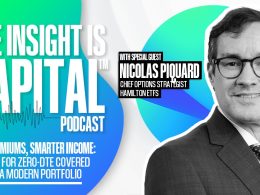


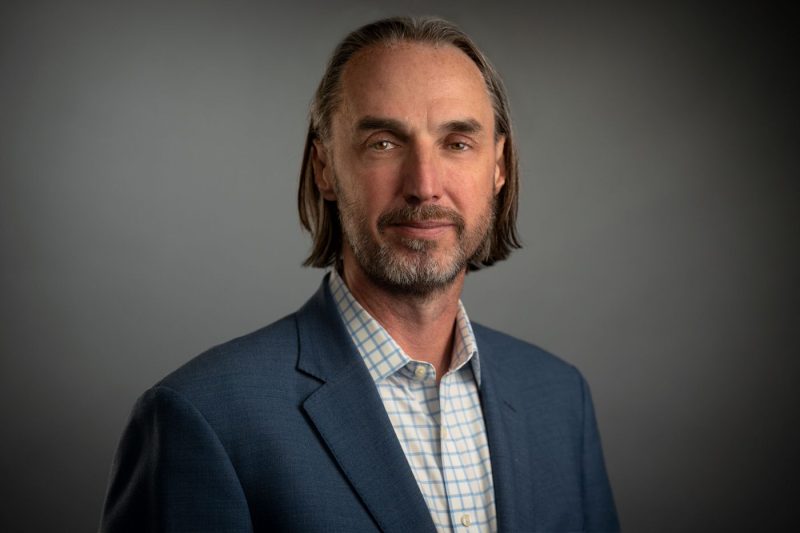

Recording on the first day of spring1, with the Iran conflict entering its fourth week, Jeffrey Sherman is not interested in reassurance. The Deputy Chief Investment Officer of DoubleLine Capital — a firm built around the intersection of macroeconomics, fixed income, and asset allocation — arrives at this conversation with the measured urgency of someone who has watched markets reprice slowly, and then all at once.
The first thing Sherman establishes is the one thing history reliably teaches and investors habitually forget: "War is inflationary." Oil prices — both WTI and Brent — have surged $35 to $40 a barrel. Distillates like diesel and jet fuel have practically doubled. And the damage is not episodic. Iran's targeting of energy infrastructure, including the Ras Laffan LNG facility that may take three to five years to restore, means the supply disruption is structural. "Even if it stopped today," Sherman says, "you have probably at least enough damage for three to six months before we resume where we were." The administration's timeline has already slipped — from a "very short campaign" to Kevin Hassett's revised "four to six weeks." Sherman's read: "In another week or so, it'll be six to eight weeks."
The inflationary mechanics are straightforward, but the secondary effects are where Sherman's analysis sharpens. Higher energy prices redirect household spending away from discretionary consumption, which functions as a growth suppressant. "The longer the oil prices stay high, irrespective of the ongoing conflict, the slower the global growth environment." He invokes Powell's famously pilloried word with deliberate care: the price shock is transitory in the sense that it won't spiral indefinitely, but it establishes a new, sticky price floor. Meanwhile, the deficit is accelerating — the CBO confirmed a $1.05 trillion increase in just the first five months of fiscal 2026. "The bond market is saying that we shouldn't be on the low end of that range either."
The Trade That Broke
The most pointed question Sherman addresses — the one every risk asset investor is quietly asking — is whether this is another dip to buy. His answer is structural and unambiguous. "What's been the most popular trade to do? It's called TACO." Trump Always Chickens Out: the thesis, coined by the Financial Times, that any policy-driven market disruption would reverse under corporate pressure, rewarding those who bought the dip. It has worked, reliably, for years.
"This is different. And so I just don't think this is a TACO trade today."
War policy, unlike tariff policy, does not respond to equity market feedback. History — specifically the history of U.S. military engagements in the Middle East — suggests that operations framed as short and decisive tend to grind. The reflex that built so many portfolios may be exactly the wrong instinct now.
Labour, Credit, and the K-Shaped Reality
Sherman's view of the labour market is deliberately unsensational. The headline payroll prints have been ugly — 92,000 jobs revised away in the most recent report — but he reads the picture through Powell's preferred lens: ratios, not levels. The unemployment rate at 4.3% is, in most historical cycles, near a low. Claims data is not yet alarming. "If you have a job, you generate income and you generate income, you spend money, that's the economy." Wage growth above 3% still exceeds pre-pandemic equilibrium. The economy is muddling, not collapsing.
What it is doing, unmistakably, is distributing pain unequally. Lower-income households have now absorbed three consecutive regressive shocks: inflation, tariffs, and now an oil price spike. "The lower end gets hit by outsized effects," Sherman notes. Markets observe aggregates; the human cost concentrates below the headline.
In credit, the picture is bifurcated in ways that matter for portfolio construction. Investment-grade spreads have widened roughly 15 basis points off the tights; high yield is about 55-60 wider. But the divergence inside high yield is the real signal. BB and single-B credit — "high quality junk," as Sherman calls it — is still trading between 150 and 175 over, which is not a distress level. Triple-C, however, is approaching 12% yields, and the leveraged loan market in that cohort is trading above 20%. "I think you're lucky if you get one cash flow at that, maybe two." The riskiest credit has quietly migrated to private markets over the past five years — which is a feature of the structure, until the structure is tested.
Private Credit: The Slow Motion Train Wreck
That test may be arriving. Sherman's most pointed warnings concern the liquidity architecture of semi-liquid private credit vehicles — interval funds, BDCs, and the emerging category of public-private ETF hybrids. "I just don't believe that you should have a semi-liquid vehicle. I just think it's either liquid or it's illiquid. You cannot mix these things together." When investors can't redeem, they sell public assets instead. Those sales push down public prices. Those lower prices are used to mark the illiquid holdings. Those marks trigger more redemption requests. "It creates this strange cycle — it's what we call the margin vortex." He describes the dynamic with the precision of someone who has watched it before: "I call it the slow motion train wreck." The train has not yet derailed. But leverage sits behind the assets, banks sit behind the leverage, and the software sector — the highest-concentration exposure in leveraged loans — is already showing stress.
The Playbook
Sherman's constructive advice is unglamorous and consistent. Short-duration, high-quality credit over cash — "one minute of Bitcoin vol is our annual vol in a low duration strategy." Agency and non-agency mortgages: he flagged triple-B non-agency paper at 225 over as "way better than you're buying in a corporate market." CLOs at the top of the capital structure. Explicitly underweight leveraged loans. For broader diversification: equal-weight equity to reduce mega-cap concentration; gold on any meaningful pullback; and emerging market local currency bonds as the preferred vehicle for the de-dollarisation and commodity tailwind trade — "you can build a portfolio of stuff like 7% yield today," with currency providing a potential path to double-digit returns. His closing instruction is blunt:
"You gotta rebalance every once in a while. I know no one wants to pay taxes. You gotta deal with it."
DoubleLine, he notes, currently owns the least below-investment-grade exposure in its 17-year history. "Not because we forgot how to buy it. It's all a function of valuation."
5 Key Takeaways for Advisors and Investors
1. The TACO trade is broken for this cycle.
The reflexive "buy the dip on policy risk" strategy worked because tariffs and regulatory threats reversed under market pressure. War doesn't. Advisors should resist the institutional muscle memory of fading geopolitical dislocations and reassess how much of their clients' equity exposure is predicated on policy reversibility.
2. Energy is a tax, not just an inflation print.
Higher oil prices don't just show up in CPI — they redirect household spending, suppress discretionary consumption, and slow growth. The longer prices stay elevated, the more this functions as a drag on corporate revenues and consumer credit quality, particularly at the lower end of the income distribution.
3. Private credit liquidity risk is structural, not theoretical.
Semi-liquid vehicles that blend public and private assets carry an embedded contagion mechanism: gating triggers public asset sales, public sales reprice the illiquid marks, repriced marks trigger more redemption requests. Advisors with client allocations to interval funds, BDCs, or public-private ETF structures should stress-test those positions against a sustained redemption cycle now, not during one.
4. Quality and short duration are not a compromise — they're the trade.
With bond portfolios yielding 5% and cash at 3.5%, a short-duration high-quality credit strategy offers a meaningful pickup without demanding a macro view. In an environment where the range of outcomes is wide, removing duration and credit risk simultaneously is a position, not a retreat.
5. Diversification means owning what hasn't worked — not more of what has.
The world is overweight US risk because US risk has performed. That concentration is now a vulnerability. Emerging market local currency bonds, equal-weight domestic equity, gold, and real assets are not exotic hedges — they are the parts of a diversified portfolio that most advisors have systematically underweighted for a decade. Rebuilding those positions, even gradually, is the rebalancing discipline this environment demands.
Jeffrey Sherman is Deputy Chief Investment Officer at DoubleLine Capital. This conversation was recorded on March 20, 2026, as part of the Insight Is Capital podcast series hosted by Pierre Daillie.
Footnote:
1 "DoubleLine's Jeffrey Sherman: This Isn't a TACO Trade." AdvisorAnalyst, 5 Apr. 2026.