



by Hubert Marleau, Market Economist, Palos Management
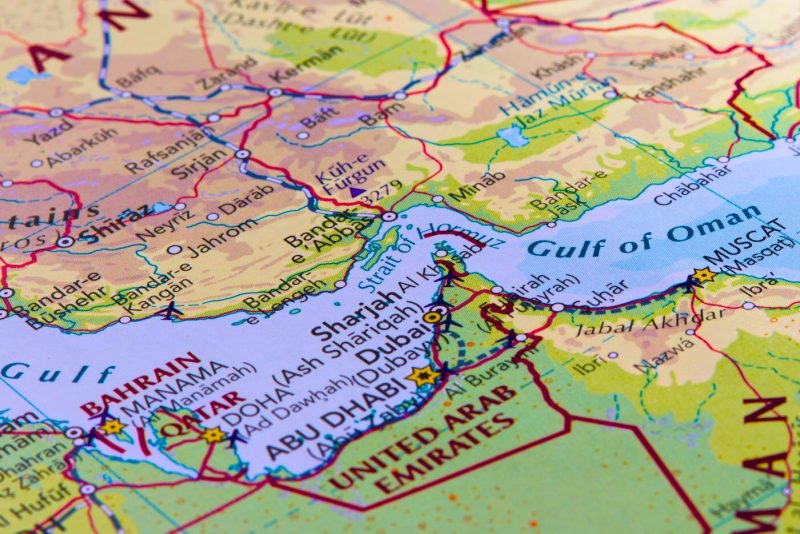
The S&P 500 closed at 6373 on Friday with more than half of its members in correction territory, tumbling 8.7% from the high of 6978 registered on January 28, about the time that realpolitik, real tension and real threats between the U.S.and Iran began, soon to turn into a deadly conflict that closed the Strait of Hormuz, preventing 20% of the global supply of oil from reaching scheduled destinations. The benchmark is now 15% lower than my target of 7500 for 2026, and the “goldilocks market” is over because investors have finally woken up to the damaging effect of the war not only on the supply of fossil energy, but also on urea, ammonia and sulphur in agriculture, and of helium in the production of chips from electronics to automobiles.
Investors are disappointed that they are not getting what they want - an end to the war not another delay. Unfortunately, President Trump has extended his deadline for Iran to strike a deal based on a 15-point proposal, to April 6, thereby reneging on his promise that the conflict would last only 5 weeks, ending on April 3. This warlike, so-called “excursion” brings up a crucial question: How bad is this war, in terms of length and breath, going to get? On the one hand, Iranian officials have called the US proposal to end the conflict "unfair" while U.S. ones are saying that the talks are going “very well.” This is both crazy and nerve-wracking; indeed, there is no evidence that the cost/benefit ratio is positive, which explains why Trump is having difficulty in reassuring investors that everything is copacetic.
As a consequence, consumer sentiment, even among wealthy people, has dropped in March to low readings comparable to the government shutdown last fall, the tariffs on Liberation Day, along with those of last April were announced, and when Russia invaded Ukraine in 2022.
Both sides need an acceptable exit ramp. The WSJ said it well: “We stumble on, trapped between a potentially nightmarish near future, in which global energy and agricultural supplies are pinched beyond recognition, and a muddle-through option where the US president declares victory and walks away. To put it mildly, those binary outcomes have very different implications for markets and the global economy.” In this regard, it makes little sense for anyone to figure out something that seems to have turned emotional. Thus the best place to calculate what the risks is in the bond market, gold market and in oil futures:
First, the backwardisation pattern of the global oil complex, where long-forward prices are substantially below spot, tells me that the war will soon end.
Second, the wobbly market has flushed out the gold bugs in a highly contrarian fashion, neglecting the positive correlation that the price of bullion usually has with geopolitical crises and market angst - another situation that tells me that this war is temporary.
Third, the swap market is predicting that inflation will run around 5.0% in the near future, but will decline sharply to 1.5% in a year’s time.
Put simply, what we don’t see is really important, namely productivity - a strong disinflationary factor - and it so happens that the US economy, by accident or otherwise, is in the middle of a productivity renaissance that is lowering long-term inflation expectations and raising long-term growth prospects as exhibited in the current shape of the yield curve.
Let us devoutly hope therefore, that we can get this war behind us as sooner, rather than later, as the gold, bond and futures markets anticipate. In this regard, interestingly, Yardeni Research is still projecting the S&P 500 at 7700 by the end of the year, convinced that stocks are merely experiencing a correction in a bull market. It may be audacious but perhaps right: the fear gauge is signalling that a washout has occurred and that valuations are simply back where they should be.
Copyright © Palos Management