


The title is deliberate. A Crude Awakening1 — published by The Carlyle Group in March 2026 — is not a report about oil prices. It is a diagnosis of a structural vulnerability that has been quietly compounding for half a century, and that the blockade of the Strait of Hormuz has now made impossible to ignore. Written by Jeff Currie, Carlyle's Chief Strategy Officer of Energy Pathways and former Global Head of Commodities Research at Goldman Sachs, alongside strategist James Gutman, the paper opens with a provocation that frames everything that follows: the world believes it has reduced its dependence on oil. That belief, Currie and Gutman argue, is precisely the wrong conclusion to draw from the data.
The Unprecedented Scale of the Disruption
The numbers that open the report are staggering in their clarity. Polymarket, as of the report's publication, places the probability that the Strait of Hormuz remains closed through March 31st at 85%. At a net flow of 18.5 million barrels per day, thirty-one days of closure equals 575 million barrels of stopped oil — "1.4 times the entire US Strategic Petroleum Reserve," as the authors note, against a maximum rated drawdown of just 4.4 million barrels per day. That reserve, in other words, could cover barely a fifth of the disruption even at full capacity.
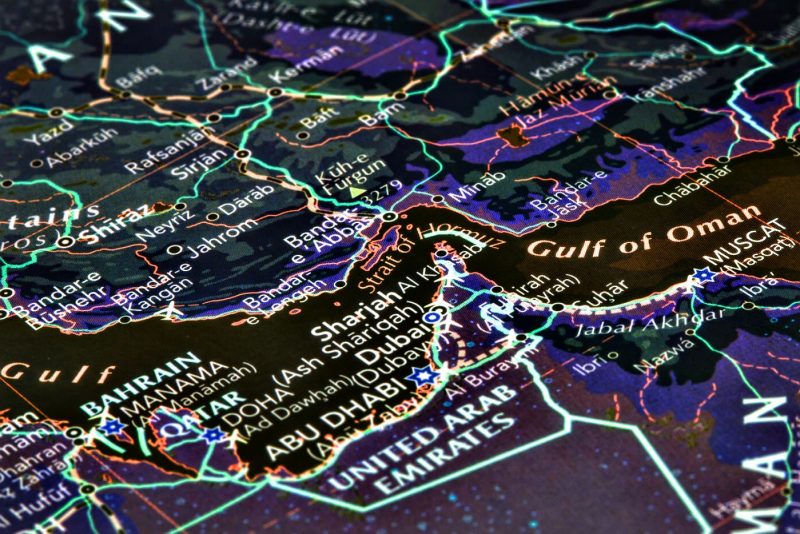
But the authors are insistent that this framing — counting barrels — is itself the wrong lens. The Strait is not an oil chokepoint. It is a commodity system chokepoint. The same passage carries roughly nine billion cubic metres of LNG per month (20% of global trade), 3.5 million tonnes of fertilizer, and over 200,000 tonnes of aluminium. QatarEnergy has declared force majeure on LNG; Iranian ammonia capacity is offline; urea prices have surged $130 per tonne. Currie and Gutman describe the cascade with surgical precision: "oil feeds gas, gas feeds ammonia, ammonia feeds urea, naphtha feeds crackers, crackers feed polymers." Shut Hormuz, they write, "and you lose the nitrogen that grows food, the aluminium that builds aircraft, and the gas that keeps the lights on from Seoul to Stuttgart."
The second-order effects are already in motion. China has suspended petroleum product exports and is accelerating strategic reserve fills. Russia has curtailed westbound LNG. India is weighing whether to commit to CIPS payment architecture to maintain access to sanctioned crude. The pattern, the authors observe, is identical across the entire commodity complex: "hoard first, trade second."
Oil Is the Rare Earth of the Macro System
The conceptual heart of the report is Currie and Gutman's reframing of oil's role in the modern economy — and it is a reframing that cuts against fifty years of conventional wisdom. Yes, the American economy consumed 0.6 barrels of oil per $1,000 of GDP in 1973. Europe today consumes 0.2 barrels. That is the efficiency gain most analysts cite as evidence of reduced exposure. The authors invert it entirely.
"Oil's share of the global economy has fallen steadily for fifty years," they write. "That decline has made it less expensive per unit of GDP but more irreplaceable in function — oil is the rare earth of the macro system." The remaining barrels, they argue, are precisely the ones for which no substitute exists: petrochemical feedstocks, aviation fuel, marine bunkers, agricultural inputs. "Remove them and you do not get 'demand destruction' — you get production shutdowns."
The analogy to rare earths is not decorative. When China restricted rare earth exports, the threat was never the cost of neodymium itself — it was that without it, certain products could not be manufactured at any price. Oil and gas, Currie and Gutman contend, now occupy the same structural position across a vastly broader surface area of the global economy.
The Hoarding Premium: 1979 Revisited at Scale
The report draws a direct and empirically grounded parallel to the 1979 Iranian Revolution. The physical shortfall at the time was 1.5–2 million barrels per day net of Saudi offsets — roughly 4–5% of global supply. But precautionary hoarding doubled the effective demand impact to 3–4 million barrels per day at the peak of the panic, per Kilian (2009). Prices rose from $13 per barrel in mid-1979 to $34 per barrel by mid-1980, a response, the authors note, "wildly disproportionate to the physical loss."
Scaled to today's 103 million barrel per day market, a comparable hoarding response implies 2–3 million barrels per day of precautionary demand over the next three to six months. The authors believe the response should be larger still, given that geopolitical anxiety around crude flows is structurally higher today, and the United States is far less incentivised to defend the global oil trade than it once was. "The security premium is not about physical barrels," they write. "It is about the precautionary demand that activates when participants cannot hedge geopolitical tail risk. The distinction between 'real' and 'behavioral' shortages is false. The security premium is the hoarding premium."
The Credit Channel Runs Backwards
Here the report diverges most sharply from the 1970s precedent — and the divergence is deeply bearish for the broader macro environment. In the 1970s, rising oil prices generated OPEC surpluses that were recycled through Western banks, expanding global credit in a process the authors describe as resembling quantitative easing. Today, they argue, the transmission runs in reverse. MENA invests domestically. De-dollarisation is accelerating. The flow of petrodollars into Western credit markets is shrinking, not growing.
The fiscal starting point compounds the problem. Federal debt now stands at 120% of GDP versus 32% in 1974. Transfer payments exceed 9% of GDP and are indexed to inflation — meaning every percentage point rise in CPI automatically expands the deficit, forcing additional Treasury issuance precisely when the market demands higher yields. "Government borrowing crowds out credit creation in the private sector far more aggressively than it did fifty years ago," the authors write. "The income shock may be smaller than the 1970s. The credit shock is likely larger."
The Portfolio Architecture Is Wrong
The financial dimension of the report is where Currie and Gutman pivot to a direct message for capital allocators. Energy has compressed to 3% of US equity market capitalisation. Technology and services now command 53%. In the 1970s, energy equities at 25% of the S&P 500 provided a natural portfolio hedge — as oil rose, energy stocks rose with it. At 3%, that offset has "all but vanished."
The authors argue that Hormuz is simultaneously testing the market's long-held assumptions about energy as a declining asset and technology as a perpetual compounder. Their preferred repositioning framework is what they call HALO — Heavy Asset Low Obsolescence — companies in the old economy that carry physical assets with long operational lives and limited technological obsolescence risk. "Old economy and asset-heavy companies, or HALO, are well-positioned to ride out the storm of anticipated and unanticipated inflation," they write.
The valuation arithmetic reinforces the point. Technology trades at roughly 36 times forward earnings; energy at roughly half that. The authors expect a convergence.
Key Takeaways for Advisors and Investors
1. Re-examine energy underweights.
At 3% of the S&P, energy provides almost no natural hedge against the very scenario currently unfolding. Advisors with clients in diversified equity portfolios should assess their effective exposure to commodity-driven inflation.
2. HALO over asset-light.
The rotation from asset-light to asset-heavy sectors has historical precedent at every major geopolitical inflection point. This is not a tactical trade — Currie and Gutman call it a regime change.
3. Hoarding demand is real demand.
The 2–3 million barrel per day precautionary demand estimate is not speculative; it is a scaled application of empirically documented 1979 behaviour. Advisors should treat the behavioural multiplier as a structural feature of the current shock, not noise.
4. Do not anchor to SPR relief.
Even a fully coordinated Strategic Petroleum Reserve release cannot address a 20%-of-global-supply disruption. Policy cannot substitute for open sea lanes.
5. Credit conditions will tighten, not ease.
Unlike the 1970s, there is no petrodollar recycling mechanism to cushion the credit impact. Advisors should prepare clients for higher-for-longer yields in the context of widening fiscal deficits.
6. Just-in-case is now structural.
Even if Hormuz reopens quickly, the authors argue that the supply chain repricing is permanent. Security premiums will be embedded in every commodity that must transit a contested chokepoint.
The world, Currie and Gutman conclude, is mid-transition toward what they call The New Joule Order — toward electrification, localisation, and diversification. But it has not arrived. And until it does, the vulnerabilities exposed by thirty-one days at the Strait of Hormuz will not disappear when the ships sail again. They will simply wait.
Footnote:
1 Currie, Jeff, and James Gutman. A Crude Awakening. The Carlyle Group, Mar. 2026.