


Emerging Markets Radar (July 2, 2012)
Strengths
- China may lower the bank reserve requirement ratio “soon,” China Securities Journal reports on its front page this week. It seems further reserve requirement ratio reduction is the market consensus.
- Singapore’s industrial production increased 6.6 percent year-over-year in May, rising for the first time in three months as increased production of pharmaceuticals and petroleum offset a decline in electronics.
- Korea’s industrial production rose 1.1 percent year-over-year in May, the most in four months as a weaker currency supported exports.
- The Philippines is spending more on roads and schools, though it resulted in a budget deficit of $469 million in May.
Weaknesses
- China’s benchmark power-station coal price at Qinghuangdao port declined the most in more than three years amid inventories that are almost a third higher than 12 months ago, which is probably pointing to weak power generation.
- Korean manufacturers’ confidence dropped to 84 for July, a four-month low.
- The Czech Republic’s central bank cut interest rates by 25 basis points from 0.5 percent from 0.75 percent previously, in an effort to spur the slowing economy.
Opportunities
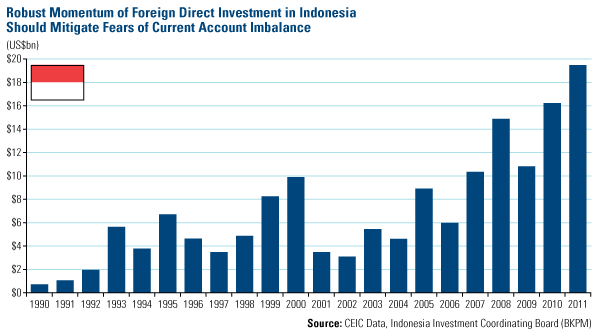
- Indonesia has been able to attract increasing foreign direct investment (FDI) in the last decade, and the momentum may continue due to vast business opportunities in the country. The money inflow from FDI should help mitigate currency risk.
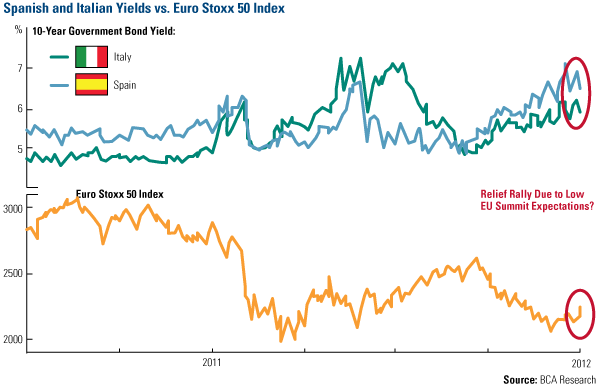
- Eurozone made a step toward genuine economic and monetary union by introducing a deposit insurance scheme for the European banks, sparking a strong positive response from the financial markets. Spanish and Italian yields contracted, while equities rallied.
Threats
- The cement sector was met with profit warning by H share listed companies due to a decrease of cement prices and a margin squeeze, indicating over capacity and weak construction demand in the first half of 2012. For the cement price to rebound, it needs more infrastructure projects.
- Hungary is on the verge of replacing its special banking tax with a so called transaction tax, with the government sharing in banks’ income generated from fees and commissions.