



The TSX is closing out another strong year. It is beating most North American markets, including its U.S. peers, and is up about 14% at the time of recording. On In the Money, host Amber Kanwar asks Sam Baldwin, Senior Portfolio Manager and Co-Head of Canadian Equities at Guardian Capital LP1, the obvious question: what takes the market higher from here? His answer is not more of the same.
Ninety Percent From One Sector
Baldwin starts with a number that puts the rally in context. "So in the second quarter in Canada, banks contributed 90% of the index return, and everything else was the other 10%, the net impact."¹ To him, that degree of concentration says less about the banks than about everything else. "So we sometimes get these points in markets where the leadership is very narrow, and quite frankly, in the case of the banks, expensive. And that means that if money is getting drawn into these areas, there's probably some other things being left behind."
He then lists the annual returns since 2019: roughly 23%, then 5%, then twenty-something, a 6% decline in 2022, and then gains of 12%, 22%, 32% and 14% this year. "So that's not normal," he says. Kanwar's reply, "It feels normal," explains why investors can get caught out. Baldwin points to the long-run record: "But the average return over, say, a 60-year period is about 8 to 9% for returns in Canada."
Asymmetry, Not Market Timing
The team does not answer stretched leadership by moving to cash. "I think people should think of us as being fully invested," Baldwin says, because "cash timing is very hard because it's three decisions."² Instead, the portfolio moves toward what he calls pockets of asymmetry, or coiled springs: positions with less downside than upside. The reasoning is simple. "Even if low expectations come in a little bit above, that's an upside surprise, whereas the converse is potentially painful for expensive stocks."
An Outside-In Lens on a Familiar Market
His approach goes back to an internship in Taipei in the summer of 1997, when the Asian financial crisis began. Later, on a London team managing Asian equities, he covered India, Australia and China, picking six to eight stocks per country. "Find, yeah, it's a treasure hunt," he recalls.
He brings that same view to Canada. Investors who grew up in this market, he argues, take its structure for granted, and "people almost can't see through the top of the index." His counterpoint: "But there are industries and companies in Canada that are as good at what they do as any other company in the world. They just happen to be Canadian."
The Banks Look Like Peak on Peak
Baldwin calls Canada's banks "among the highest-quality banks in the world," but argues that "there's been a lot of earnings power on display already, leaving it a tough act to follow." He goes further: "Then you've got the highest earnings valuations that I've seen in my career. And so that's what you might call a peak on peak as opposed to a trough on trough dynamic."
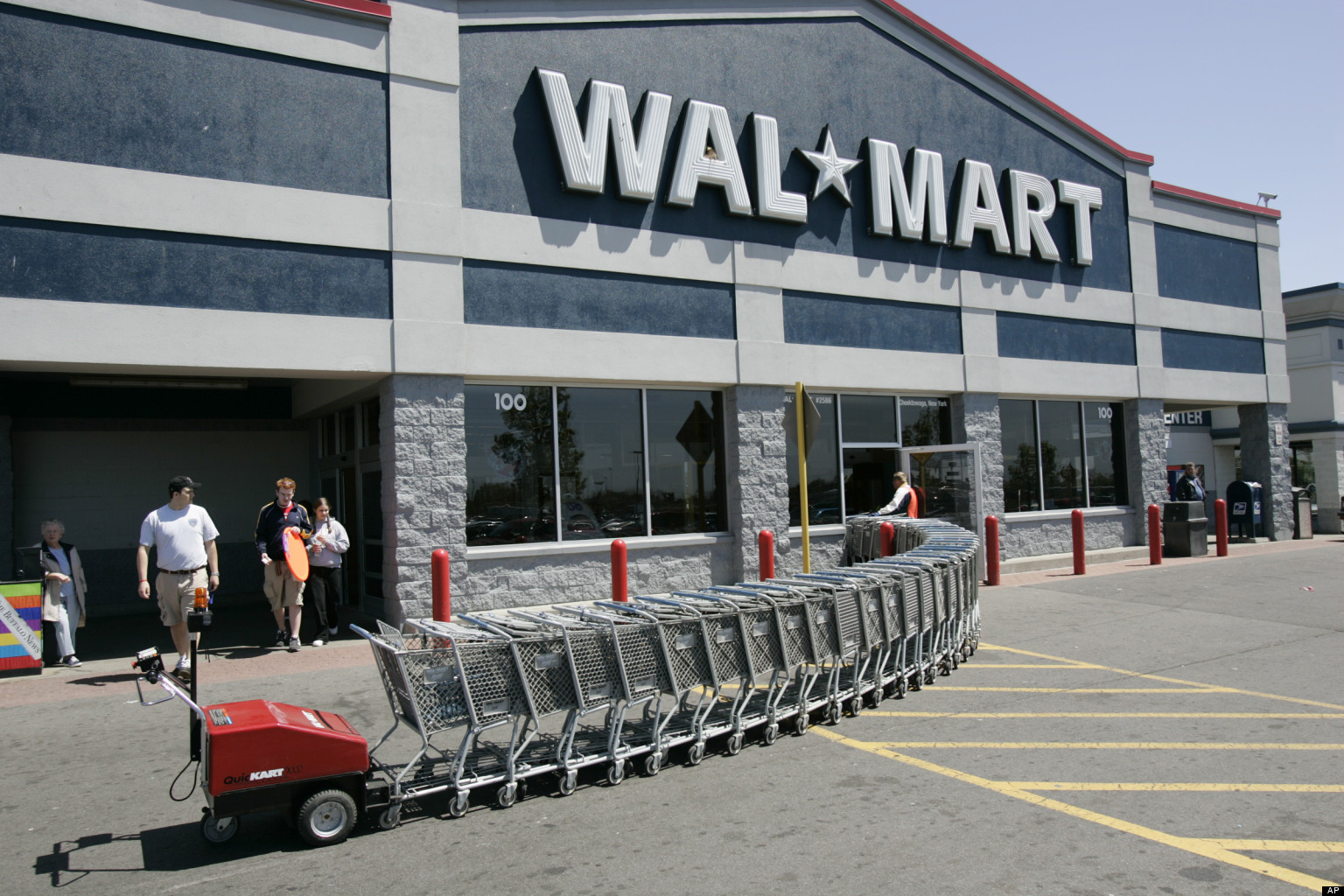
He does not predict a crash. He uses an analogy instead. Around 1999, Walmart re-rated to about 35 times earnings and then grew earnings 10% to 15% a year while the stock went nowhere for a decade. "And so sometimes what stocks need to do is just grow into their multiple."
Suncor and the Steep Treadmill
Energy gets more credit from Baldwin. The team owns both Suncor and Canadian Natural Resources, and Suncor is the clearest example of his approach. He calls it "quite a special company, especially in Canada because they do have full integration, and their downstream is incredibly profitable at any oil price."³ That fits a rule the team applies to cyclical companies: "So we do like to own companies that, if they're cyclical, we can see them getting through the bottom of a cycle."
The recent strength in oil has improved Suncor's position further. Baldwin expects the company to be net debt-free by year-end, and "they're allocating all their surplus free cash flow to buybacks."
The team didn't buy Suncor because oil was rising. It took a positive view at the turn of the year, when most investors were talking about a supply glut and peak U.S. shale. The case rested on years of delayed and canceled spending: OPEC's 2014 price war, then COVID, then ESG pressure. Since then, Middle East supply has been sharply reduced and inventories have fallen steeply. Even so, Baldwin values Suncor and Canadian Natural at $75 oil, which he sees as the mid-cycle cost of bringing on new supply globally, and both still look attractive at that price.
Reserve life adds to the case. Unlike shale basins, these assets don't have high decline rates, and the world needs more supply. In his words, "the global supply base depletes at a rate of a Brazil and a Norway together every year, then that's a pretty steep treadmill." Long-life reserves, no debt and capital going to buybacks, with growth possible if a pipeline gets built, add up to "a pretty good blend of defense and offense."
He also challenges a common assumption about hedging. "So gold gets all the glitter, I guess, for being an inflation hedge," he says. In 2022, when central banks raised rates hard, energy protected portfolios better than gold did.
Serious Companies, Volatile Stocks
MDA Space shows how the team handles volatility. The team bought in the summer of 2023 and trimmed heavily in the run-up to the SpaceX IPO. "This is a serious question, so I'll answer it seriously," Baldwin says. MDA is a 50-year-old company with no failed missions, margins of about 20% and real free cash flow. Many space peers, by contrast, "do look like science projects." He calls MDA "the furthest thing I would say from a meme stock."
On Shopify, the core strategy bought a partial position of 2% to 2.5% during the AI-disruption selloff early in the year. "Their growth rate was twice what it was when they were half their size," he notes.
Element Fleet, down about 50%, gets candid treatment. The company misexecuted its U.S. sales strategy by chasing the largest clients, and it has since replaced its sales leadership. With a free cash flow yield in the double digits, "we think it's back to coiled spring territory." He is honest about the risk: "The key risk you take is timing."
Three Compounders for the Next Leg
CGI is the largest position. Baldwin argues that "CGI is in the business of selling productivity"⁴ and that AI is the latest in a line of technology shifts that each caused a temporary pause in client spending. He sees enterprise AI work building backlog and CGI winning when clients consolidate vendors.
Brookfield, which the team added to again recently, is made up of "very astute compounders of capital" and raised $25 billion in the quarter. He sums up the main headwind plainly: "What hasn't been cooperative is the interest rate environment."
Fairfax, he jokes, "bounced because they knew we were going to be talking about it." The team first bought it in 2022 as a "capital-lighter defensive growth company." At the time, its short-duration bond portfolio let it lift interest and dividend income from about $500 million to $2 billion within a few quarters. He still sees Fairfax as a relative winner if rates rise.
The Discipline Is the Edge
Baldwin warns against what he calls "lily pad hopping," where investors abandon patient positions just before they pay off. "If we get the company right and we get the valuation right, then the key risk we're taking is timing." After six unusually strong years, the team is trimming expensive leaders and building positions in overlooked Canadian names.
Five Key Takeaways for Advisors and Investors
- Narrow leadership is a warning. Banks produced 90% of the TSX's second-quarter return. Owning the index now means owning that concentration at high valuations.
- Recent returns are not the norm. Six years of mostly double-digit gains compare with a 60-year average of 8% to 9%. Set client expectations against the long-run number.
- Look for asymmetry instead of timing the market. Staying fully invested while shifting toward low-expectation, high-quality names avoids the three separate decisions that cash timing requires.
- Energy can hedge inflation better than gold. Long-life, low-decline producers like Suncor, with integrated downstream operations, held up better than gold in 2022 and still look attractive at $75 oil.
- Trim when stocks run and add when they pull back. MDA, Brookfield and CGI show how resizing positions as valuations move can improve returns, provided investors can wait.
Footnotes:
¹ "Are Investors Chasing the Wrong Canadian Stocks? - In the Money with Amber Kanwar." In the Money with Amber Kanwar, 19 Nov. 2026, inthemoneypod.com/podcast/sam-baldwin, 00:12:36.
² "Are Investors Chasing the Wrong Canadian Stocks?," 00:14:01 to 00:16:00 (historical TSX returns and cash timing).
³ "Are Investors Chasing the Wrong Canadian Stocks?," 00:27:05 to 00:30:25 (Suncor, Canadian Natural Resources and energy as inflation protection).
⁴ "Are Investors Chasing the Wrong Canadian Stocks?," 00:41:30 to 00:52:44 (CGI, Brookfield and Fairfax).