



by Carl Tannenbaum, Chief Economist, Northern Trust
A friend of mine was nice enough to take me to a soccer match during a recent trip to London. Yes, I know the rest of the world calls it “football,” but I couldn’t use that term without creating confusion among some of our readers.
Midway through the second half, my friend observed that the home side was playing reasonably well. But they were trailing by three goals to zero at the time. “You must be watching a different game than I am,” I told him.
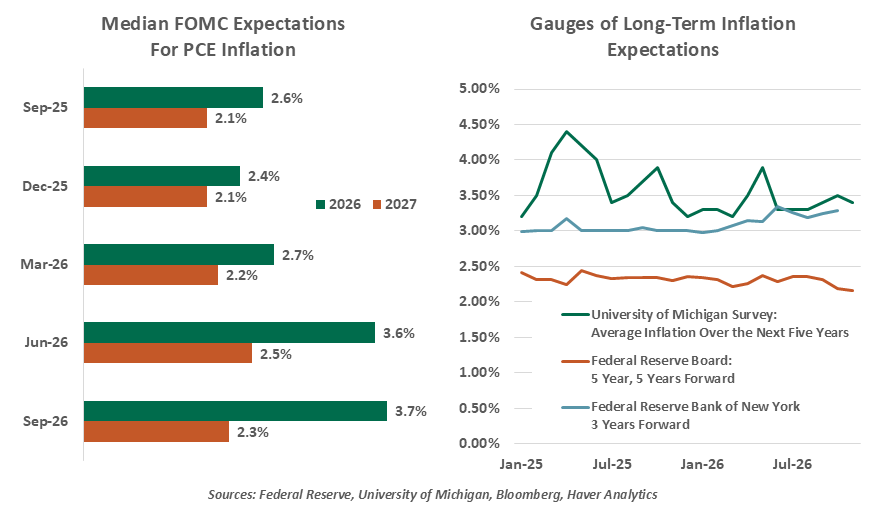
I am wondering whether the Federal Reserve is watching a different game than the rest of us. Officials have been predicting that inflation will decline in an orderly way for some time, but it has remained stubbornly high. The Fed Chair has stated that inflation expectations remain well-anchored, but surveys suggest otherwise. The gap in perception between households and the central bank is wide enough to drive a truck through.
As we try to reconcile the two, a bit of background is in order. To economists, inflation is a rate of change; there is therefore no reason to get overly excited about one-time price shocks, as their impact on the price level eventually fades. By contrast, the average consumer feels aggrieved for a long time when costs jump. Inflation lingers longer in the mind than it does in the data.
We have experienced a series of price shocks since the beginning of 2025. Tariffs have raised the prices of imports; the war in Iran has had a pronounced impact on fuel and shipping costs; and the sheer power of the AI buildout has placed pressure on a range of inputs. The serial nature of these developments has made it appear, in our minds and in the data, as if we have more persistent inflation.
The Fed’s forecasts, however, reflect a different perspective. While projections of inflation for 2026 have moved steadily upward, predictions for next year have been fairly steady. This outlook justified stable monetary policy for the first eight months of the year; rates were finally increased in September, but they were held constant the following month.
The miscalculation of inflation’s persistence in the post-COVID period is a cautionary tale. Then, as now, specific supply shocks eventually had broad impacts. An increasing fraction of items in the consumer price index are presently rising by more than 3%, a sign that the problem is broadening.
Short-term increases in inflation can be downplayed if long-term inflation expectations are well-behaved. Our impressions can become self-fulfilling if we seek wage increases to cover the increasing cost of living. One of the Fed’s primary gauges, derived from market prices, reflects low and stable expectations. But isolating the level of inflation compensation resident in bond yields is not a precise science, so this indicator may be contributing to a false sense of security.
Other long-term measures of expectations are considerably higher. To be sure, surveys have their own biases and limitations, but they proved prescient in 2021. With hourly earnings failing to keep pace with current and forward inflation, there may be more pressure in the pipeline.
Once again, inflation is proving more persistent.
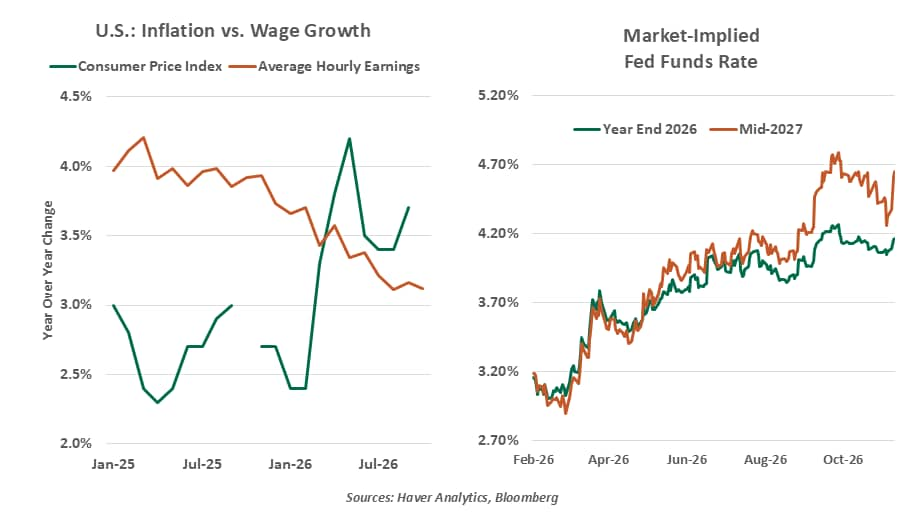
All of this suggests that the Fed may need to raise rates again in upcoming meetings. Markets are anticipating three more 25 basis point hikes by the middle of next year.
Affordability was a central issue during the recent midterm elections, and voters are expecting the new Congress to do something about it. But the reality is that legislative measures are unlikely to bend the cost curve very much. The Federal Reserve will have much more influence on inflation in the year ahead.
Any debate over the course of a game is ultimately resolved by the final score. The Fed will be judged in a similar manner.
Copyright © Northern Trust