




by Ross Koesterich, CFA, JD, Portfolio Manager, BlackRock
Key takeaways
- As rates grind higher, headline market resilience is masking significant weakness beneath the surface, with 10 of 11 sectors flat or negative in September. Market stability in this environment is being driven by a handful of tech and AI related stocks.
- Rising yields are hurting the most rate-sensitive areas of the market, including small caps, consumer and housing related.
- Technology remains the market’s key support, with strong AI-driven earnings growth fueling semiconductor and large-cap tech performance. That said, many large tech companies are financing massive AI-related capital expeditors with debt, which may make them more sensitive to further increases in rates.
It could have been worse. With yields approaching the highest level in 20 years, U.S. stocks appear to have taken higher rates in stride. Large cap U.S. equities were only slightly lower in September. However, the resilience was almost entirely due to strength in tech, and specifically semiconductor names, with the rest of the stock market struggling.
Resilience is mostly skin deep
I last discussed rates and equities back in August. At the time, I highlighted the non-linear relationship between stocks and bonds. While the level of rates and small changes tend to have little impact on stock’s performance, large abrupt moves have historically coincided with negative stocks returns.
Since early August, U.S. 10-year yields have risen by more than 0.65% and by roughly 1.35% since the March low. While focus has been on the inflationary impact of higher oil, higher rates have been almost entirely driven by higher real or inflation adjusted rates.
Curiously, large cap stock indices have barely moved thanks to a roughly 5% gain in the tech sector. Despite existential warnings from some quarters of the AI industry, investors have renewed their enthusiasm for AI related names, particularly semis and memory, on the back of surging earnings and the rollout of consumer-related agentic AI.
However, below the surface it has been a tough month: 10 of 11 equity sectors were flat or down in September. The worst damage was concentrated in the most rate sensitive sectors: consumer, utilities, housing and small caps. The Russell 2000 and the S&P 500 consumer discretionary sector both lost -9% versus their August highs. As typically happens, the worst carnage occurred in housing related stocks, with an index of U.S. homebuilders down approximately -16% from its summer peak.
What to avoid
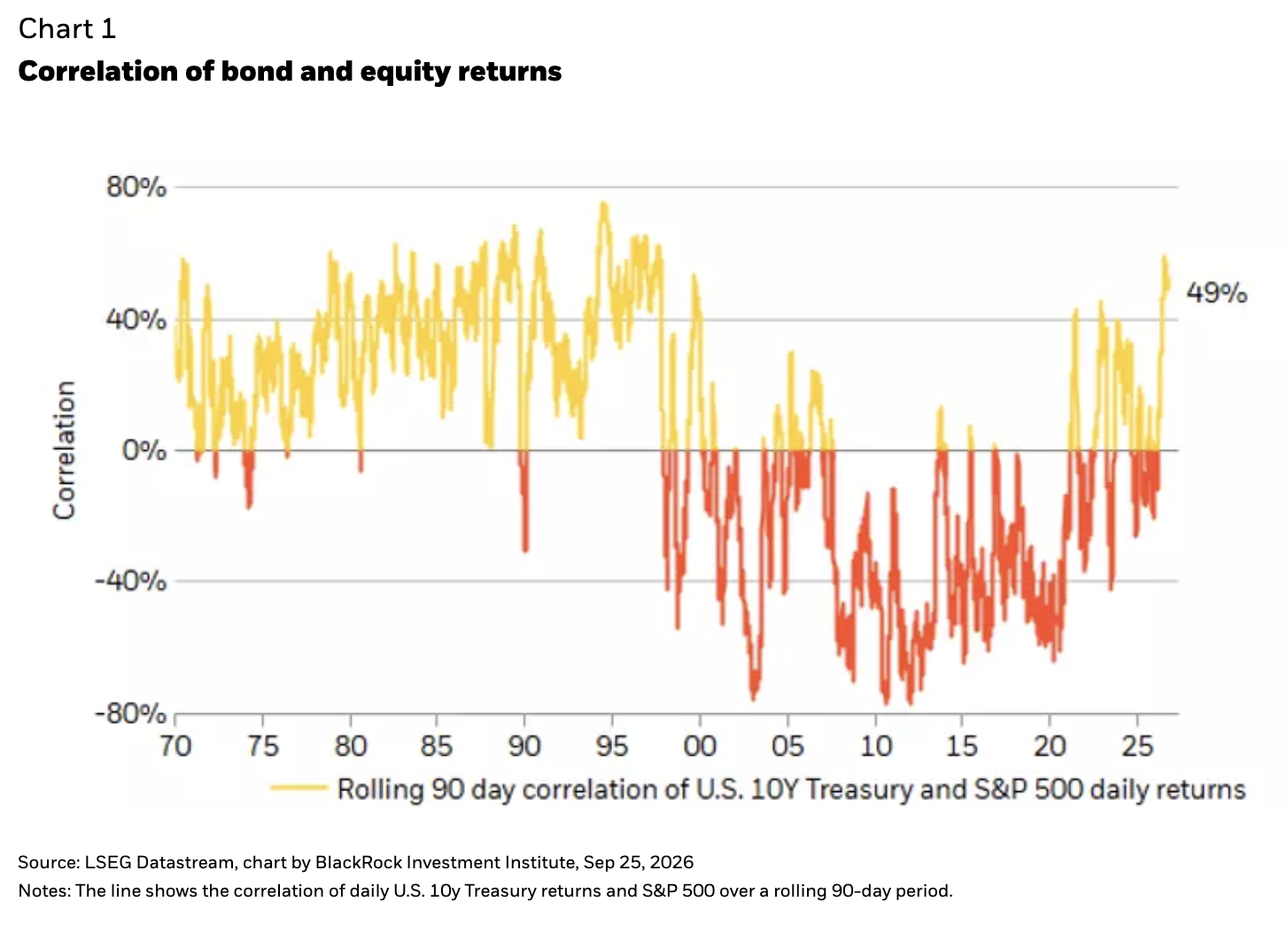
While headline indices have managed to avoid a more significant decline, investors should still treat the move in rates as a major driver of stocks. To my mind, this suggests three strategies. First and foremost, consider bonds as a good source of income, not as a hedge. With stock-bond correlations at 25-year highs (see Chart 1), I’d avoid using long-term bonds as a tool to mitigate equity risk.
 From a sector perspective, the parts of the market that have been hit the hardest are exactly the ones you’d expect. To the extent rates remain elevated, continue to underweight consumer and housing related names, along with small caps.
Finally, the market has gotten by thanks to earnings gains in the tech sector. While strong earnings can continue to power these names, the sector is resilient, but not immune to higher rates. While the sector has historically been distinguished by high free-cash flow, select names, particularly the hyper-scalers, are now selling lots of bonds to finance a $1 trillion capex spending spree. In short, I believe the market can live and still move higher with a 5% 10-year U.S. Treasury yield. While not my base case, 6% would be tougher.