





by Eric Winograd, & Geoff Cornell, AllianceBernstein
Higher government bond yields seem to be driven by factors beyond inflation expectations.
For insurance investors, bond yields play a defining role in long-term planning, with the effects of their levels and movements rippling across balance sheets. Liabilities may move inversely to asset values, and today’s investment decisions have implications far into the future. That makes bond yields critical variables for prudent insurance investors. There are also insights in the “why” behind higher rates.
That brings us to a major economic story—the sharp rise in long-term interest rates globally. Unusually, the increase in the US came even as the Fed was cutting policy rates. Some investors might assume inflation is at play. Yes, the inflation rate is sticky and above target, but it’s not running away. And much of its current level can be pinned on a series of global economic shocks, from COVID through the Iran conflict. The Fed’s hike doesn’t address those, and we don’t think a prolonged tightening cycle is warranted.
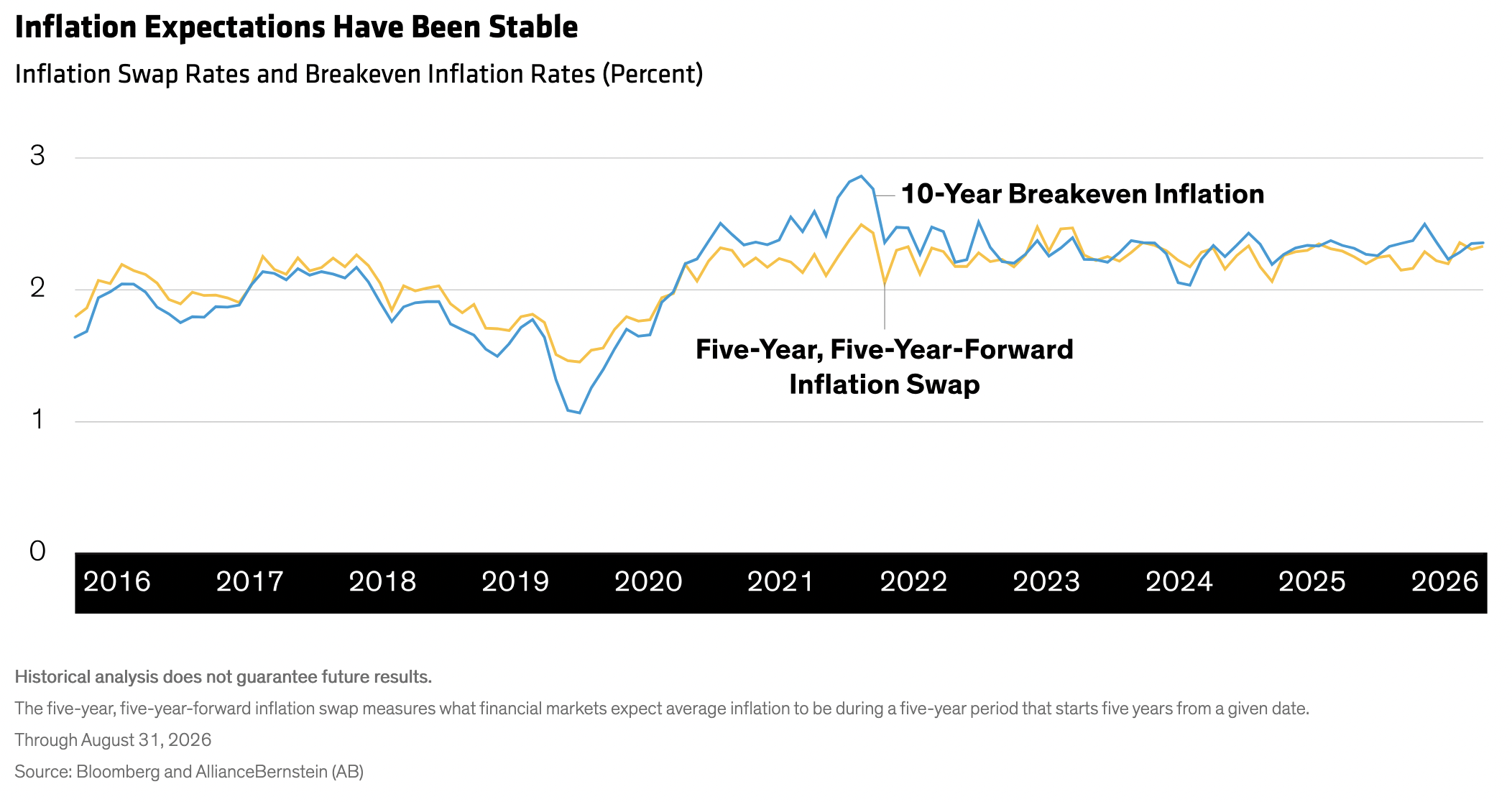
The market seems to agree with that assessment—breakeven inflation rates are steady (Display). Instead, it’s real bond yields that have climbed. In unpacking what might be behind today’s higher rates, we also open a window into some of the key forces that continue to shape the global economy and markets.
Economic Growth Expectations Are Higher
If inflation isn’t behind higher rates, the next item on some investors’ lists might be rising growth expectations, and we do think they’ve risen.
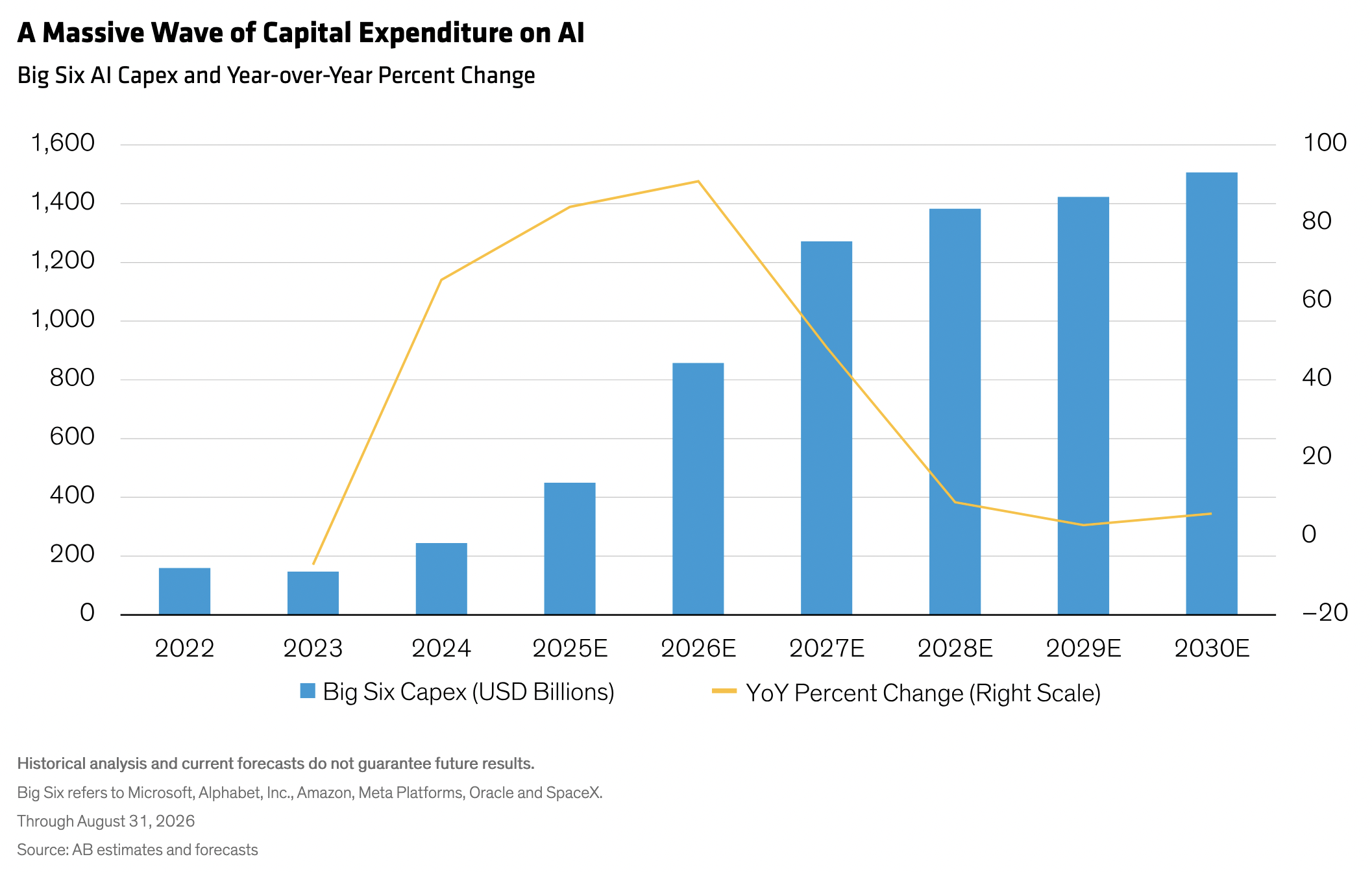
Technology investment has surged as a share of GDP, and AI-related spending is forecast to continue rising (Display). That’s a good reason to expect higher growth, and so is a manufacturing rebound. That rebound may not be a direct result of AI capex, but all the things funded by that capex have to be built somewhere, so there’s good reason to expect a knock-on manufacturing effect.
So, growth expectations should rise, especially if productivity gets a boost from AI investment. Pandemic era aside, productivity was below 1.5% for most of the past 15 to 20 years. Over the past two and a half to almost three years, it has edged up closer to 2%. We think that’s another reason to think that growth will pick up and part of the reason yields are moving higher.
Stronger economic growth affects longer-term interest rates through the neutral rate: the level of interest rates that should prevail over the long run. The faster the economy grows, the higher the neutral rate will likely be. It’s a major reason the Fed decided to raise rates. Because the neutral rate may be higher than policymakers thought, rates should be higher over time.
But AI investment isn’t all good news. This year’s boom in corporate debt issuance, particularly by hyperscalers, is competing with Treasuries for investors’ dollars. Hyperscaler issuance was about 8% of Treasury issuance last year; this year, it’s on pace to exceed 25% by year end and could rise further. There’s a finite pool of investor capital, and investors choose the most appealing assets. If they buy more hyperscaler debt, they have fewer dollars available to buy Treasuries, which is likely contributing to higher Treasury yields.
AI’s Possible Role in the Populist Policy Resurgence
AI is also reshaping the economy in other ways, including by widening inequality, which has implications for public policy. Labor’s share of GDP has fallen to its lowest level in the post-WWII era, while the corporate profit share has reached its highest—a trend that could disrupt the political order. Populism, which straddles the traditional left and right of the political spectrum, is increasingly driving the narrative.
A rise in populism matters to investors because politics drives policy, and populism has historically made policy volatile. When people are less satisfied with labor’s share of national income, the political system often swings sharply from left to right, creating a growth headwind. How can a business lay out a five- or 10-year plan without a clear view of what the regulatory, tax or trade regime will be? That uncertainty requires a higher risk premium in the market—another factor in higher rates.
“Unpredictable” is also an adjective turning up in how policymakers are interacting with markets recently. The US Department of the Treasury has intervened in the Japanese currency market using its own money for the first time in many years. It has also adjusted its Treasury issuance and buyback calendars. The long-standing mantra for issuance and buybacks had been “regular and predictable,” because predictability reduces risk premiums. Today’s more volatile policy may lead investors to demand more risk compensation.
Bigger Government Debt Burden, Heavier Debt Servicing
Populist policies, historically more common in emerging markets, are increasingly shaping political campaigns and policy decisions, which ultimately drive economic outcomes. But fiscal discipline isn’t part of the populist playbook, which rarely calls for governments to spend less or raise taxes. That stance translates into persistent budget deficits.
The US, for example, is running a budget deficit of roughly 6% of GDP. That’s about double the historical average of 2.5% to 3% outside of periods that featured wars and recessions. We don’t expect the budget deficit to narrow, given the political unpopularity of spending cuts and tax increases. Given that, basic math says that consistently big deficits will continue to increase outstanding debt.
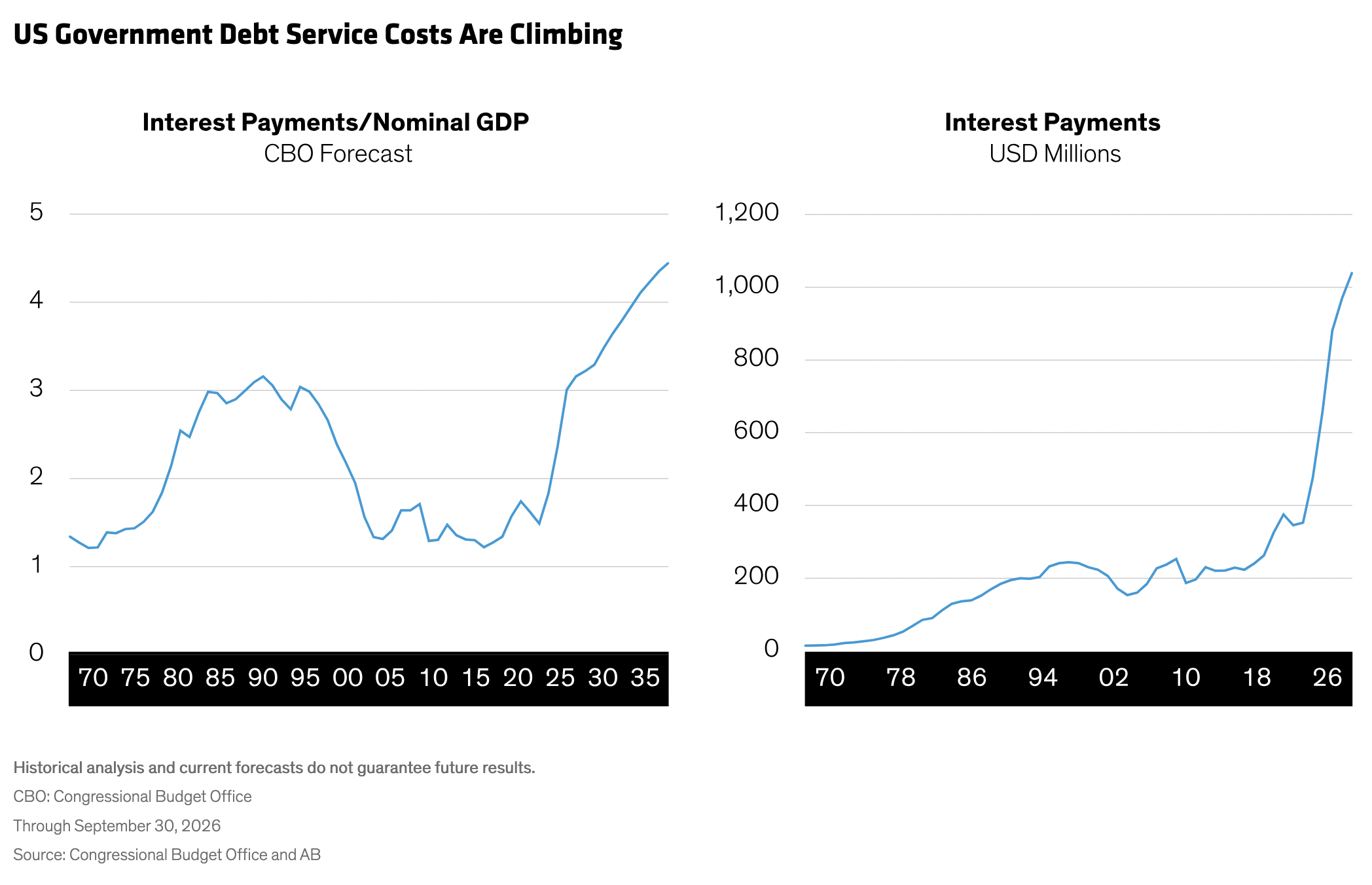
This summer, total debt outstanding for the US Treasury topped $40 trillion—another round number that attracts headlines. As a percentage of GDP, that works out to roughly 120%, and the ratio is highly likely to continue rising. With more debt outstanding, a larger share of annual government spending is earmarked for the required interest payments. Total interest payments are on track to reach 4.5% of US GDP and $1 trillion per year (Display). And as interest rates on government debt rise, those numbers will rise, too.
The Big Picture: Expect Higher and More Volatile Rates
To bring this all together, expectations for stronger economic growth explain some of the increase in real bond yields, but probably not all of it. Higher yields also reflect the extra compensation investors are demanding for greater uncertainty around policy and government intervention in markets as well as intensifying fiscal risks. There really isn’t a single “correct” risk premium: it changes with market conditions and ultimately reflects the yield investors require to hold long-term debt.
The Fed’s recent policy-rate hike is helpful, in that it has reinforced its commitment to reining in inflation. Also, stable inflation expectations suggest that the market doesn’t expect inflation to be a persistent driver of higher long-term yields. By contrast, a higher neutral interest rate could end up being more durable if AI investment, productivity gains and stronger growth continue. Heavy hyperscaler borrowing and rising government debt burdens are also key factors.
Prudent insurers generally match assets to liability cash flows, seeking to immunize portfolios from duration and yield-curve mismatches. The forces we see suggest a macro backdrop with higher and more volatile rates than in past decades. That means insurers should expect longer-term uncertainty and apply sound asset-liability management policies to avoid unwelcome surprises.
Authors
Eric Winograd, Director—Developed Market Economic Research and Chief US Economist
Geoff Cornell, CFA, Chief Investment Officer—Insurance, AllianceBernstein