



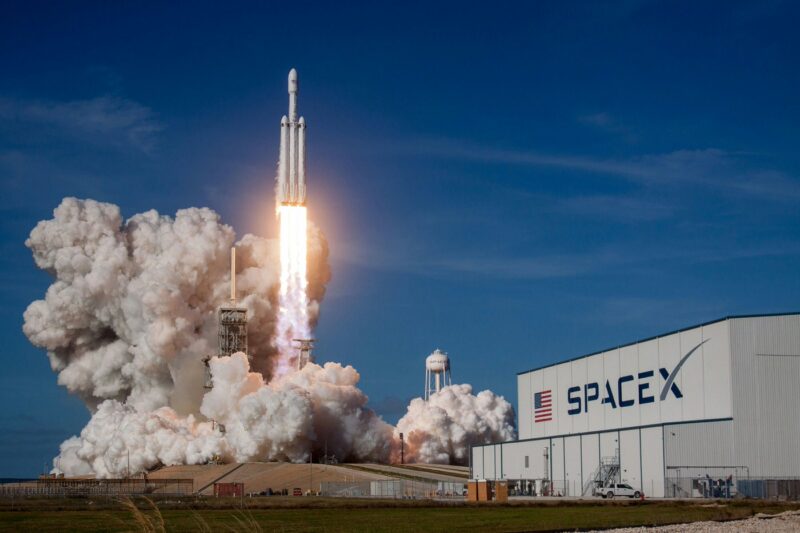

A nine-week winning streak for the S&P 500 ended last week, and the proximate causes — a sharp earnings reaction from Broadcom and stronger-than-expected labor market data in both the US and Canada — were quickly overshadowed by a bigger structural story: how index providers are rewriting their own rulebooks to accommodate the largest IPO in history. On last week's Views from the Desk, host Zayla Saunders and co-host Hilly Cutler sit down with Matt Montemurro, Head of Fixed Income and Equity Index ETFs at BMO, to unpack what changed last week, why it matters, and how it will ripple through portfolios that investors may not even realize hold exposure to SpaceX.
Saunders frames the moment bluntly, noting she had "read a really interesting stat this weekend" about market concentration: the "Parabolic 7 plus three other tech companies drove 80% of the S&P 500's gains year to date through May 31st." Cutler responds that the market has been "very concentrated" and that talk has shifted "from Mag 7 maybe to Mag 10," a widening that several pending mega-IPOs could accelerate.
The Core Tension: Representation vs. Benchmark Integrity
Montemurro frames the SpaceX inclusion debate as a direct conflict between two founding principles of index construction. Broad market indices are designed to balance two core objectives, he explains: "accurately representing the investable universe and to act as a performance benchmark." In SpaceX's case, "things I think start to get a little bit blurry and they start to conflict." Traditionally, he notes, "inclusion of non-profitable companies would violate the spirit of capital allocation," but "it's being argued that the IPO is too large to ignore," with a targeted valuation of $1.77 trillion that would make it "a top 10 US company with higher market caps than Meta and Tesla."
That scale prompted each major index provider to run its own consultation process. As Montemurro puts it, "each index provider executed a market consultation to get feedback on early inclusion or the potential of waiving specific rules that would enable entry to SpaceX and then some subsequent IPOs that are expected."
Why the Old Rules Existed
Before detailing what changed, Montemurro revisits why eligibility thresholds existed in the first place. Historically, requirements centered on "trading history, float percentage, financial viability to minimize implementation risk," because "price discovery in the early days following an IPO can lead to significant volatility." The guardrails were designed "to allow valuations to stabilize, to ensure sufficient liquidity to help index tracking funds replicate exposures efficiently with minimal implementation friction." Above all, he says, providers wanted to avoid passive funds becoming "instant liquidation mechanisms for early investors and insiders."
The Provider-by-Provider Breakdown
Montemurro lays out where each major index stands. Nasdaq has granted inclusion: companies ranking in the top 40 by market cap become eligible "on the 15th trading day after IPO," putting SpaceX's entry around July 7th. Nasdaq has also "waived the minimum float rule and replaced it with a float adjustment factor that's capped at three times for securities with a float less than 33% of their market cap."
FTSE Russell moves fastest. Inclusion is permitted "five days after IPO," roughly June 22nd, with "all float requirements" waived and index weight based purely on float shares — what Montemurro calls likely "the earliest inclusion and the largest initial weighting."
MSCI made no new rule changes for this episode, having already updated its IPO policy back in 2007. Inclusion comes "after 10 days of trading post IPO," around June 29th, with the standard three-month trading-history requirement waived for IPOs "defined as large."
S&P stands alone in declining to move. "S&P inclusion no," Montemurro states. "They opted to maintain their structural rules which would delay SpaceX's inclusion in the S&P 500 to the earliest around June 2027" — a delay that also pushes back any GICS communication-sector products tied to the index.
The practical consequence, Montemurro says, is that "an investor using a broad MSCI, Nasdaq or FTSE index would have different exposure than someone investing in the S&P for the foreseeable future." Saunders confirms the implication directly: two investors holding what they consider equivalent broad US equity exposure "could have very different exposures depending on the underlying index."
Sizing the Impact — and the Risk
Asked whether loosened rules effectively force passive investors into more risk, Montemurro doesn't dodge: "it could be argued that by loosening the rules here, passive capital allocation is being moved toward, in this case, unprofitable companies versus selling profitable companies." But providers have tempered that exposure through staggered inclusion and float-adjusted weighting rather than full market-cap weighting on day one.
Estimated passive demand sits around $19 billion against a roughly $75 billion IPO — a figure Montemurro notes "would have almost been doubled" had S&P participated. Initial Nasdaq weight estimates run "around a 70 basis point weight, ranging between 50 and 100 basis points," with material upside as the 180-day lockup expires and "20 to 40% of some of the insider shares are going to be released."
Even S&P-only investors aren't insulated. "If it gets added to an index and it's a 1% weight, you're going to see selling 1% spread across the rest of that index," Montemurro explains, meaning Mag 7 names face selling pressure to fund SpaceX purchases across competing benchmarks regardless of which index an investor tracks.
On the BMO product side, Montemurro confirms exposure runs through ZQQ, ZNQ, and the ZEQL suite immediately post-IPO, COM expected by December, and ZSP/ZUE and ZXLC not until S&P inclusion potentially arrives in June 2027.
Five Key Takeaways for Advisors and Investors
- Index exposure to SpaceX is no longer uniform across "broad US equity" products. Nasdaq, FTSE Russell, and MSCI have all created pathways for early inclusion; S&P 500 has not, delaying exposure potentially to 2027.
- Initial weights are deliberately capped, not market-cap-based. Float adjustment factors and staggered inclusion schedules mean exposure starts small (an estimated 50–100 bps on Nasdaq) and grows only as lockups expire and float increases.
- Expect volatility clustering around inclusion dates. Montemurro flags "five to 15 days" windows around each provider's inclusion date as periods of elevated price swings driven by passive-flow speculation.
- No portfolio is fully insulated. Even investors holding only S&P 500 exposure will see indirect effects, as other indices sell existing constituents — likely Mag 7 names — to fund SpaceX purchases.
- Performance comparisons need adjustment. Structural inclusion effects can distort fund-level performance comparisons between index families; advisors should account for SpaceX's presence or absence when evaluating relative returns.
Footnote:
1 "Podcast: SpaceX and Mega-IPOs: How Indices Are Adapting - June 8, 2026." BMO ETF Dashboard, 17 June 2026.
Copyright © AdvisorAnalyst