



The 60/40 portfolio didn't just underperform in 2022. It failed on its own terms. Both legs went down simultaneously — in the very year diversification was supposed to prove its worth. That fracture set off a restructuring of how Canadian advisors think about portfolio construction, and the ETF market has been absorbing the consequences ever since. Nearly one dollar in every eight flowing into Canadian ETFs today is going into an asset allocation product. Covered call strategies, buffered products, AAA CLOs, and precision thematic plays have moved from the margins to the mainstream. And beneath all of it, the mechanics of how ETFs actually trade, get priced, and find liquidity remain among the most misunderstood corners of the advisor toolkit.
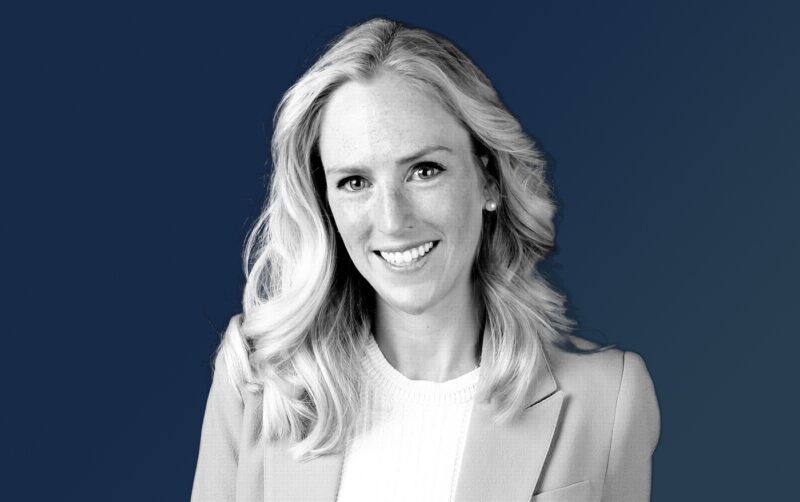
Nobody has a cleaner view of this transformation than Valerie Grimba1. As Head of Global ETF Strategy at RBC Capital Markets, she leads a desk that serves as designated broker to roughly 300 ETF mandates and acts as authorized participant across more than 90% of the Canadian ETF market. Her team processes overnight basket files for upwards of a thousand ETFs, recalibrates market making models before the 9:30 open, and trades live inventory all day. When flows shift, she sees it first.
The Plumbing Nobody Explains
Most advisors who use ETFs daily have only a surface understanding of how they actually function. Grimba's desk exists in the gap between what advisors see on screen and what makes that screen possible. "Instead of behind the scenes, we say, 'behind the screens,'" she says. "An advisor, anyone using an ETF will put in their ticker, see the bid and the offer and just think that's it. But there is a lot that's happening below the surface."
The designated broker role is legally mandated — every ETF must have one. RBC's obligation is contractual and unconditional: "No matter what the conditions, we'll be out there, we will give you a bid, we will give you an offer." Beyond those 300 mandated relationships, the desk provides market making across an additional 700 to 800 Canadian-listed ETFs on a voluntary basis.
When stress hits the market, that infrastructure becomes visible. During Liberation Day last year, when the S&P bounced nearly 9% intraday on tariff relief news, ETFs didn't buckle — they absorbed. "We actually found that SPY and other S&P 500 ETFs could act as that release valve for the pressure in the system," Grimba says. "The ETF was able to step in and absorb that pressure and actually in many cases buffer the move to a certain extent."
2022 Changed the Conversation Permanently
For Grimba, the post-2022 period represents a genuine structural shift in advisor behaviour, not a temporary rotation. "2022 broke all the rules," she explains. "Traditional ballasts are not working in the way that they were expected to work. And they still since 22 haven't been functioning as ballast, as capital preservation within a portfolio."
What emerged in its place was an entirely new branch of the ETF ecosystem, anchored in derivatives-based strategies. The US now has over 500 ETFs with derivative overlays. "The ETF used to be a very blunt force object — you could just buy the index," Grimba notes. "But now we can get so much specificity within an ETF that it becomes this almost surgical precision tool that you can use to access very specific targets and goals within a specific strategy."
The most striking flow story is in asset allocation ETFs — XEQT, FBAL, ZEQT, and now CAGE from CIBC. "I've been calling it the Pac-Man of ETF flows," Grimba says, "because it's just this little thing that every day is coming in and taking in those inflows." The audience spans DIY investors, advisors using them for low-touch accounts, and — perhaps most surprisingly — ultra-high-net-worth direct investors using them as a core position around which they build single-stock satellites.
What Advisors Are Still Getting Wrong About Covered Calls
Covered call ETFs have attracted enormous flows, but Grimba is candid about the due diligence gap. The spectrum of products using the same label is far wider than most advisors realize. Strike price selection, percentage of the portfolio being overwritten, active versus quantitative management, moneyness — each variable changes the risk-return profile materially. "In the past we would have advisors call in, they just searched by yield highest to lowest and worked their way down the list," she says. "But the reality is, like all things in finance, there's always a trade off. And so if you're getting something, you are always trading something off to receive what you are getting."
Duration Is Still a Trap. Here's Where the Money Is Actually Going.
On fixed income, Grimba is unambiguous: long duration remains dangerous. "TLT has been a widowmaker for the past five years," she says. "People have tried and TLT has spurts but before it gives it all back up again." Three areas are attracting real inflows instead: aggregate bond products for risk-reward simplicity, actively managed unconstrained fixed income, and AAA CLO ETFs — an instrument previously accessible only to institutions, now democratized through the ETF structure. "In their 40-year history they have never defaulted because they're securitized loans," she noted, with the standing caveat: know what you're buying.
The Liquidity Misconception That Never Goes Away
The single most persistent error Grimba's desk corrects is the conflation of trading volume with liquidity. An ETF trading 1,000 shares a week is not illiquid if its underlying basket is. "Only 24% of respondents" to an ETF.com poll correctly identified underlying security liquidity as the key driver. "It really is how liquid is the underlying basket in the ETF — and that is how liquid the ETF is," she said. ETFs have three layers of liquidity: natural buyer-seller interaction, the market maker book, and the creation-redemption mechanism — the last of which allows RBC to manufacture new shares on demand when supply is insufficient. "We can go out, we can create or we can destroy those shares," she explains.
"Use a limit order. When you're trading ETFs you can use a limit order, within the direction you're going — it lets us know as market makers that there's more either supply or demand in the market."
5 Key Takeaways for Advisors and Investors
- Low volume does not mean illiquid. ETF liquidity is determined by the liquidity of the underlying basket, not on-screen trading volume. A thinly traded ETF holding highly liquid securities can be transacted at scale — always use a limit order and consider reaching out to a trading desk for large blocks.
- Covered call ETFs are not interchangeable. Two products with identical names can behave completely differently depending on strike selection, overwrite percentage, and whether management is active or quantitative. Sorting by yield highest to lowest is the wrong framework. Understand the trade-offs before allocating.
- Duration risk is not solved yet. The 40-year bond bull market is over and TLT has proven it repeatedly. Advisors still holding significant long-duration fixed income are fighting the last war. AAA CLOs, unconstrained active fixed income, and aggregate bond ETFs are where informed capital is repositioning.
- Asset allocation ETFs have crossed the threshold from retail curiosity to institutional core. Ultra-high-net-worth investors are using single-ticker all-in-one products as portfolio cores. The growth is structural, not cyclical — inflows actually accelerate during volatility as investors seek a default position.
- The new ETF toolkit requires more due diligence, not less. The proliferation of buffered products, covered call overlays, CLO ETFs, single-stock ETFs, and thematic precision plays gives advisors unprecedented capability — but each instrument carries trade-offs that must be understood and explained. As Grimba put it: "You should be able to understand the strategy well enough to explain it to your neighbor or family member."
Footnote:
1 Insight is Capital Podcast. "She Watches Billions in ETF Flows Every Day. What's Going On Behind the Screens?" AdvisorAnalyst, 9 June 2026.
Copyright © AdvisorAnalyst