


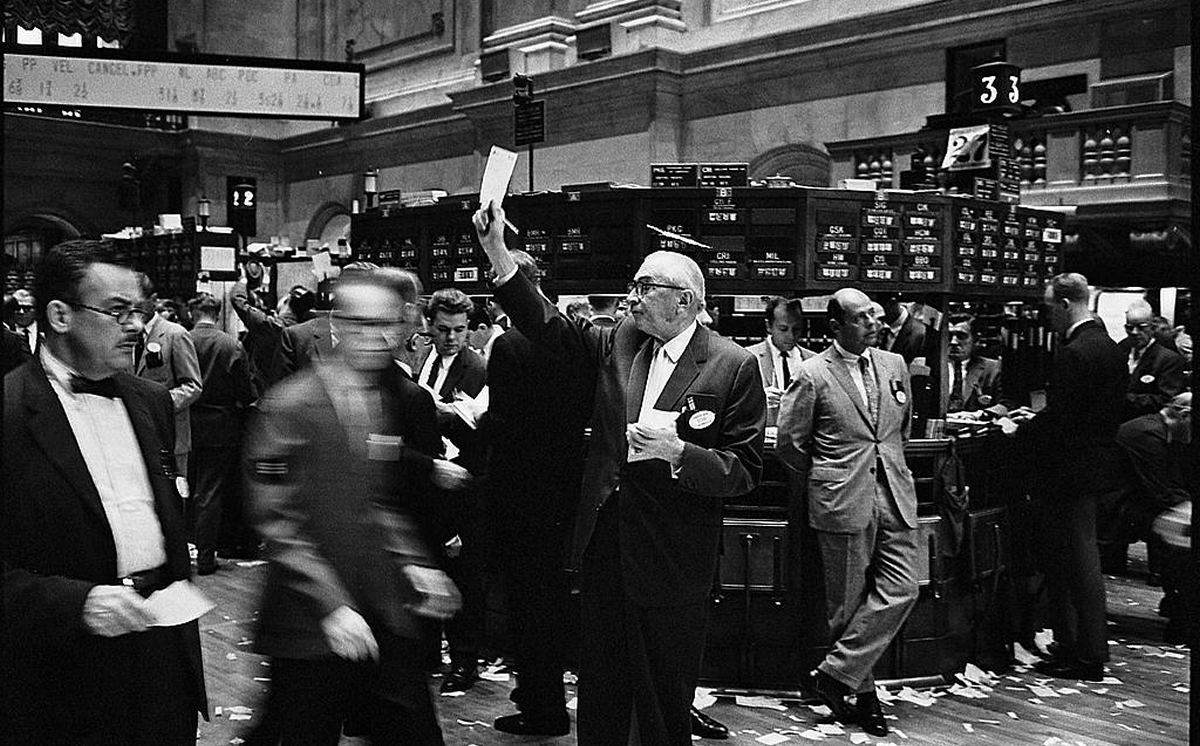


Eugene Fama and Kenneth French laid the foundation for modern factor investing through their pioneering work on asset pricing in the late 20th century. Fama, a longtime professor at the University of Chicago Booth School of Business, is widely regarded as the “father of modern finance” and was awarded the Nobel Prize in Economic Sciences in 2013 for his empirical analysis of asset prices. French, a professor at Dartmouth College, collaborated closely with Fama, co-developing the influential multi-factor models that expanded on traditional market-based theories and continue to underpin quantitative investing today.
Building on this academic foundation, ETF manufacturers effectively “went to town,” packaging these insights into hundreds of investable products designed to capture specific factor exposures. Factor investing, as implemented today, focuses on systematically targeting drivers of stock returns—such as value, quality, momentum, size, or volatility—through ETFs rather than selecting individual securities based on company-specific developments. In its traditional form, this approach assumes that these factors remain relatively stable over time, allowing investors to combine them into diversified portfolios where periods of underperformance in one factor are offset by outperformance in another, smoothing overall returns.
More recently, however, this static framework has evolved into a more dynamic application. Rather than treating factors as fixed building blocks that simply “chug along,” investors increasingly use factor ETFs as comparative tools—evaluating them on a relative basis to identify shifts in leadership and changing market regimes. Platforms such as SIACharts enable advisors to analyze these factors head-to-head, isolating trend direction and performance differentials. Under a higher-conviction, more concentrated methodology, this allows for active tilting toward outperforming factors, repositioning portfolios in response to observable strength rather than relying solely on long-term diversification assumptions.
Spotting Factor Shifts: Canadian ETF Insights
One of the most widely followed factors is momentum, which is based on the principle that stocks that have performed well recently tend to continue performing well in the short- to medium-term, while underperforming stocks continue to lag. Momentum strategies typically look at the past 3 to 12 months of price performance and overweight the top performers while underweighting the laggards. ETFs like MTUM (iShares MSCI USA Momentum) or broader trend-following strategies provide easy access to this factor. Momentum works particularly well in trending markets, where investor behavior amplifies price movements, creating a self-reinforcing cycle. However, it can be vulnerable in volatile or reversal-heavy periods, so keeping an eye on these types of comparisons might provide the data needed to spot changing trends.
In the attached chart, we have plotted a head-to-head comparison of the BMO Low Volatility Canadian Equity ETF (ZLB.TO) against the iShares S&P/TSX Capped Information Technology Index ETF (XIT.TO). Here, the ZLB.TO ETF represents the conservative side of the equation, with holdings in Loblaws, Hydro One, Fortis, Quebecor, Metro, Emera, and many other utilities and consumer staples stocks. On the other hand, XIT.TO has major positions in Constellation Software, Shopify, Celestica, CGI, Descartes, Open Text, BlackBerry, and other high-volatility stocks, providing a good benchmark for the Canadian momentum factor side of the equation.
In the point-and-figure chart, scaled at 2%, we are looking at direction and trend levels, where we have drawn four colored arrows (red and green) to illustrate market sentiment over the long term. The red arrow from 2013–2020 highlights the period where higher momentum was rewarded while the safer side of the market underperformed. Post-COVID, the green arrow shows an investor preference for the lower-volatility side of the equation, only to give way in 2023 to investor sentiment that favored higher risk, which in hindsight really rewarded the higher-momentum names in technology. Almost a quarter into 2026, we can see on the chart that we might be in the early days of a factor reversal. Once again, the BMO Low Volatility ETF—the numerator in this comparison chart—is rising faster than the higher-momentum ETF XIT.TO, where the negative trend line has switched to positive and carries a SIA SMAX comparison score of 7 out of 10 in favor of the BMO ETF.
Commodities as a Factor: Aligning Portfolios with Macro Strategy
Another factor that has become increasingly relevant in today’s market environment is commodities, which can act both as a sector tilt and a macroeconomic hedge. Commodity exposure includes investments in natural resources such as energy, metals, and agriculture, often captured through ETFs like XLE (Energy Select Sector SPDR Fund), GDX (VanEck Gold Miners), or DBC (Invesco DB Commodity Index). These assets tend to perform well during periods of inflation or supply shocks, providing a buffer against the erosion of purchasing power and offering a way to benefit from macroeconomic dislocations. Commodity factors are inherently volatile, often experiencing large swings driven by geopolitical events, global demand shifts, and production constraints. For this reason, they are best used as part of a diversified factor portfolio rather than as a standalone position. Their inclusion allows investors to align equity exposures with broader economic realities, balancing growth and trend-driven factors with tangible real-asset protection.
For this factor review, we used the Invesco DB Commodity Index Tracking Fund (DBC) and compared it on a point-and-figure chart against the S&P 500 Index (SPX.I). We have placed four arrows (red and green) to illustrate broad trends that could be applied to portfolio management techniques. Post-2016, commodities (numerator) underperformed relative to the denominator, the S&P 500. Between 2021 and 2023, this trend cooled off, with commodities outperforming the S&P 500 as equities took a secondary role during an inflationary period following massive covid-era quantitative easing. The next red arrow highlights the period where equities regained leadership, with the S&P 500 rallying over several years during a technology boom. Finally, the green arrow with a black circle may be defining the 2026 theme, where commodities are once again taking the lead, with hard assets like copper, gold, and silver reaching new highs, compounded by geopolitical tensions in Iran.
The intention here is not to predict the future but to demonstrate how keeping these comparison charts handy can help advisors position client assets for a truly dynamic approach that responds to market realities as they unfold.
Disclaimer: SIACharts Inc. specifically represents that it does not give investment advice or advocate the purchase or sale of any security or investment whatsoever. This information has been prepared without regard to any particular investors investment objectives, financial situation, and needs. None of the information contained in this document constitutes an offer to sell or the solicitation of an offer to buy any security or other investment or an offer to provide investment services of any kind. As such, advisors and their clients should not act on any recommendation (express or implied) or information in this report without obtaining specific advice in relation to their accounts and should not rely on information herein as the primary basis for their investment decisions. Information contained herein is based on data obtained from recognized statistical services, issuer reports or communications, or other sources, believed to be reliable. SIACharts Inc. nor its third party content providers make any representations or warranties or take any responsibility as to the accuracy or completeness of any recommendation or information contained herein and shall not be liable for any errors, inaccuracies or delays in content, or for any actions taken in reliance thereon. Any statements nonfactual in nature constitute only current opinions, which are subject to change without notice.