


by Frank Holmes, CEO, CIO, U.S. Global Investors
Markets hate uncertainty, and right now there’s plenty to go around. The outbreak of the U.S.-Iran conflict, following by Iranian retaliation against oil infrastructure across the Persian Gulf, has sent crude prices surging and shipping rates soaring to record levels.
I get the urge to reach for the sell button. When you see crude oil jumping to seven-month highs in a matter of days, it’s natural to want to head for the exit. But if decades of investing through geopolitical crises have taught me anything, it’s this: don’t panic.
The data, history and consensus view from the world’s leading investment banks all point in the same direction. This conflict is likely to be intense but short-lived, and the investors who keep their composure will be the ones best positioned when the dust settles.
The Facts on the Ground
The U.S. and Israel launched joint airstrikes across Iran on February 28, and Iran’s supreme leader was confirmed killed. Iran retaliated by striking oil and gas facilities in Saudi Arabia, the UAE, Qatar and Kuwait, taking capacity offline and effectively shutting down transit through the all-important Strait of Hormuz.
Indeed, Hormuz is the jugular of global energy. Roughly a quarter of the world’s oil consumption passes through it, and vessels are now having to avoid the waterway due to the risk of attack and insurers cancelling war risk cover.
The disruption is already showing up across the supply chain.
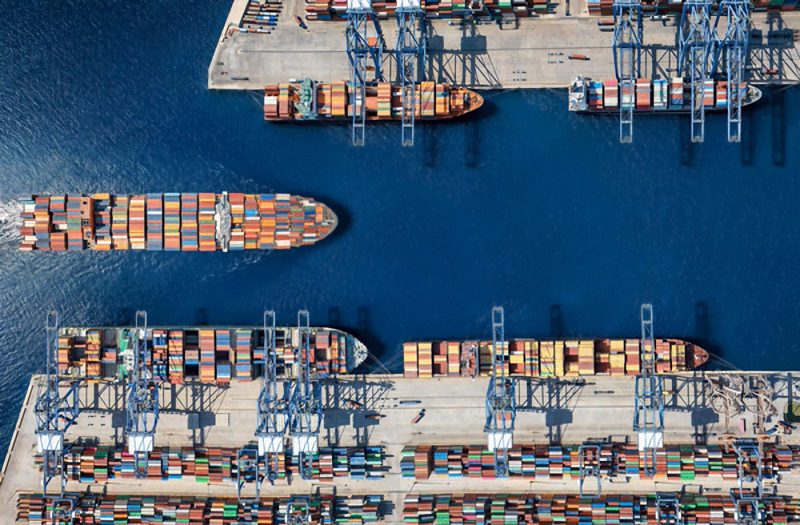
For instance, the cost of hiring a supertanker to ship 2 million barrels of crude from the U.S. Gulf Coast to China has reportedly hit an unbelievable $29 million, a new record, according to the Baltic Exchange in London. Shipping oil from the Arab Gulf to India has exploded from between $50,000 and $100,000 to an eye-watering $477,000 per day. Meanwhile, Maersk and CMA CHM have rolled out emergency surcharges and, in CMA’s case, suspended bookings for hazardous goods across a huge portion of the region.

Why I Believe This Will Be Short-Lived
Despite the dramatic headlines, I believe the evidence strongly favors a brief conflict.
For one, Iran is outmatched. According to CLSA, U.S. military spending exceeds Iran’s by a factor of 126 to 1. Without boots on the ground, this is more likely to resemble the limited strikes in 2024 and mid-2025 than a prolonged occupation like Iraq.

Two, there’s a powerful political incentive to wrap this up quickly. The Trump administration is acutely aware that energy prices are a kitchen-table issue heading into the 2026 midterms. A Morgan Stanley analysis noted that public approval for the strikes sits at only about 27%. A short, decisive operation lets the administration claim a national security win without saddling voters with $4-plus gasoline.
And three, the Strait of Hormuz is simply too important to stay closed for long. It’s a vital artery for seaborne oil with few alternative routes. Fitch Ratings expects the effective closure to be temporary, and the U.S. is already mulling Navy escorts similar to the taker wars of the 1980s. The global economy can’t function without this checkpoint, and every major power knows it.
What History Tells Us About Oil Shocks
This isn’t the first time geopolitical events have sent oil prices spiking, and the pattern is remarkably consistent. Oil prices had already been climbing on geopolitical risk premium before the first strikes, and that premium tends to fake once the immediate threat subsides. Iran and Israel exchanged missile strikes twice in 2024, and again in mid-2025. Each time, oil continued to flow and prices retraced.

Goldman Sach’s range of scenarios is instructive. They estimate oil price increases of between $1 to $15 per barrel depending on the extent and duration of Strait closures, with offsets like spare pipeline capacity and strategic petroleum reserves providing cushions. Even Bloomberg’s more alarming $108-a-barrel scenario assumes a prolonged closure, which, as I’ve already outlined, is the low-probability tail risk.
Where I See the Opportunities
I see the current developments as presenting both near-term challenges and significant opportunities, particularly across certain sectors where U.S. Global Investors focuses.
Shipping is the immediate beneficiary. The near-halt of transport in the Strait of Hormuz has repriced global freight markets overnight. This is a windfall for shipping companies, and the elevated rates are already locked in regardless of whether the conflict ends tomorrow or in a month.
Energy and commodities look well-supported. Even before the conflict, UBS saw further upside for broad commodities in 2026, driven by metals. The geopolitical premium on oil adds another layer. UBS specifically recommends actively managed commodity strategies given the elevated intra-commodity volatility. That makes for an environment that I believe favors active, nimble approaches over passing indexing.
Airlines face a short-term headwind but a medium-term opportunity. Yes, jet fuel costs are rising, and that puts pressure on margins. But many airlines, particularly European and certain Latin American and Asia-Pacific carriers, maintain hedging programs. More importantly, history shows that consumer travel demand rebounds after initial disruptions. If the conflict is as short as the consensus expects, airlines represent a classic recovery trade, similar to what we saw during the pandemic.
The Bottom Line
I’ve been in the business long enough to have lived through the Gulf War, 9/11, Iraq, the Arab Spring and countless other geopolitical shocks. Every single time, the temptation to sell everything and hide in cash was enormous, and every single time, the investors who stayed the course came out ahead.
JPMorgan put it well in their latest note. They write that, “through countless crises, wars, pandemics and recessions, investors who have stayed the course have recouped losses and benefited from growth, innovation and progress.” That doesn’t mean you should be reckless. As always, I recommend a 10% weighting in gold, which can enhance diversification and serve as a buffer against geopolitical risk.
As CLSA wisely cautioned, wars and financial shocks hit your highest-conviction trades hardest, because that’s where people take profits in a panic. The problem is that if you cut your strongest positions now, you risk being badly positioned for the snapback.
The fundamentals of the global economy have not changed. Travel demand is intact. Shipping companies are earning record rates. And energy markets are functioning, even if they’re under stress. The most likely outcome is that this conflict resolves in days or weeks, and oil eases back. The investors who held their nerves might be glad they did.
All opinions expressed and data provided are subject to change without notice. Some of these opinions may not be appropriate to every investor. By clicking the links above, you will be directed to a third-party website. U.S. Global Investors does not endorse all information supplied by these websites and is not responsible for their content.
Holdings may change daily. Holdings are reported as of the most recent quarter-end. The following securities mentioned in the article were held by one or more accounts managed by U.S. Global Investors as of (12/31/2025): AP Moller – Maersk A/S.