



by Sonal Desai, Ph.D., Chief Investment Officer, Franklin Templeton Fixed Income
The conflict in Iran carries substantial uncertainty on its duration, the endgame for Iran itself and the repercussions in the region and beyond. US President Trump has indicated that military activities might last as long as a month. The declared objective is to drastically degrade Iran’s military capabilities and potentially trigger a change of regime. Iran’s initial reaction has included wide-ranging attacks on other countries in the region, including not just US military bases but also civilian targets and oil facilities in Saudi Arabia, the United Arab Emirates, Bahrain, Kuwait, Jordan and Qatar. Whether the attacks escalate further or moderate remains to be seen.
How all this plays out will shape the economic fallout and the impact on financial markets. My initial read of the economic and market impact is as follows:
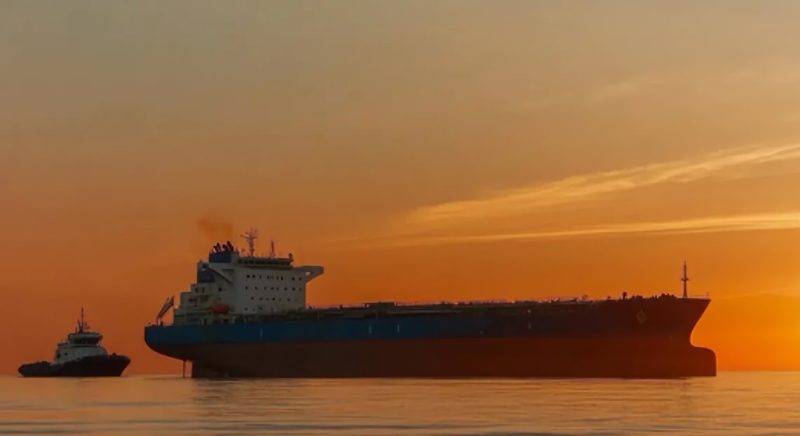
- The obvious primary channel of impact will be through oil prices. Shipping traffic through the Strait of Hormuz has been essentially halted. This constitutes a significant curtailment to oil supply, but in the short term we have some mitigating factors: (i) Oil markets entered this crisis in a situation of oversupply; (ii) there is some spare pipeline capacity that can compensate lower tanker traffic; (iii) the United States has a supply cushion in its Strategic Petroleum Reserve, which is currently at about 415 million barrels, or 60% of maximum authorized capacity—well below historical peaks due to the 2022-23 drawdowns; (iv) we’re coming to the end of winter in the northern hemisphere. Should the Strait of Hormuz remain closed for a month, commodity analysts’ estimates suggest oil prices would likely rise between US$10 and US$20 per barrel. We might see a sharper increase if Hormuz remains closed for longer, or if Iran destroys some of the oil infrastructure in the region.
- The most immediate impact will be on inflation and inflation expectations—two-year euro inflation swaps have already jumped. Similar considerations should lead investors to price a less dovish stance by the Federal Reserve (Fed), the European Central Bank and other major central banks. Correlations are often spurious, but it’s a bit disturbing that the US inflation trend since 2013 has tracked quite well with the period leading up to and including the two oil shocks; if that correlation were to hold, we’re due for a resurgence of inflation. However, the United States is in a much stronger energy position now than it was in the 1970s‒1980s; today the United States is the world’s largest oil producer.
Current Period Versus 1970s
PCE Inflation

Sources: BEA, BLS, Fed, San Francisco Fed, Atlanta Fed, Macrobond. Analysis by Franklin Templeton Fixed Income Research. As of March 2, 2026. PCE represents personal consumption expenditures.
- The US dollar (USD) is likely to strengthen in the near term. A less dovish Fed and an energy-rich US economy, together with risk aversion, are likely to temporarily halt if not reverse the previous outlook of a structurally weaker USD. Other currencies likely to benefit from safe-haven buying include the Swiss franc.
- US Treasuries could see some safe-haven inflows for many of the same reasons, but the impact of stronger safe-haven demand on yields should be balanced against fears of resurgent inflation and a less-dovish Fed. I do not expect a sustained long-end rally, though we may see some bear-flattening movement as the market prices out some interest-rate cuts. In addition, all my reasons for higher long-term yields remain in place (stronger US economy, faster productivity growth and persistent inflation pressures).
- The resilience of emerging markets (EM) will now be tested, and here we might see the strongest impact after a very strong start to the year in EM assets. This crisis will likely underline again the divide between oil exporters and oil importers, with the latter in a much more vulnerable position. EM assets will likely now feel the effects of USD strength and potentially higher US interest rates against the backdrop of higher oil prices.
- Risks to global growth will intensify the longer the conflict goes on; however, my view is that it would take a substantial and prolonged shock to oil supply and prices to trigger a global recession. Russia’s invasion of Ukraine pushed crude oil prices above US$100 per barrel for about three months and tripled gas prices, but the global economy proved resilient—and for the moment this remains my baseline. Much like in 2022, however, Europe appears much more vulnerable, and the United States conversely should prove more resilient than the rest of the world economy.
As we all hope for a quick end to the hostilities, my colleagues and I will continue to share our insights on the market impact and investment implications as the situation continues to evolve.
*****
WHAT ARE THE RISKS?
All investments involve risks, including possible loss of principal.
The allocation of assets among different strategies, asset classes and investments may not prove beneficial or produce the desired results.
Equity securities are subject to price fluctuation and possible loss of principal.
Fixed income securities involve interest rate, credit, inflation and reinvestment risks, and possible loss of principal. As interest rates rise, the value of fixed income securities falls.
International investments are subject to special risks, including currency fluctuations and social, economic and political uncertainties, which could increase volatility. These risks are magnified in emerging markets.
Commodity-related investments are subject to additional risks such as commodity index volatility, investor speculation, interest rates, weather, tax and regulatory developments.
There is no assurance that any estimate, forecast or projection will be realized.
WF: 9109908
Copyright © Franklin Templeton Fixed Income