

Land, Legacy, and the New Oligarchs of Montana
What unfolds in the most recent episode of Smead Capital Management's very popular A Book with Legs Podcast1 is not merely a literary discussion — it is a study in capital allocation, property rights, energy economics, regulatory arbitrage, and the emotional premium embedded in land.
Amy Gamerman’s The Crazies begins, as many Western stories do, with a land transaction. But what she uncovers is something much larger: a collision between generational ranchers and modern capital; between renewable energy and scenic preservation; between private wealth and public legacy.
The Spark: A Billionaire Who Heard “No”
Gamerman’s journey begins while profiling a Texas oil-and-gas billionaire, Russell Gordy, who “had amassed a collection of hundreds of thousands of acres” — including a Montana ranch that “set a record at the time in the state of Montana because it was the biggest land transaction that the state had ever seen” .
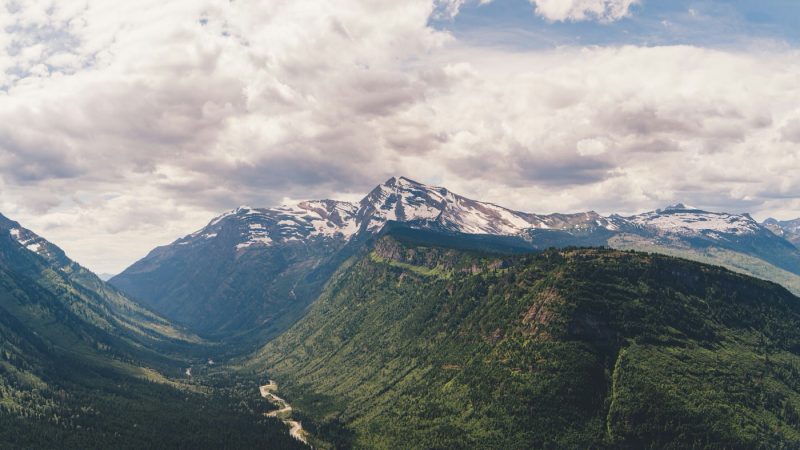
The jewel of his holdings stretched “from the banks of the Yellowstone River up into the Crazy Mountains” .
Then came the offhand remark that changed everything.
A neighboring rancher wanted to lease his land for wind turbines. The billionaire’s reaction was immediate. According to Gamerman, “his whole face clouded over and he started telling me how awful it was gonna be. It was gonna ruin all his views” .
She asked, half-joking: why not buy him out?
The answer: “I’ve tried. The man is not interested” .
For a man “not used to hearing the word no,” this was a different kind of market friction. And for Gamerman, it was narrative ignition.
The Checkerboard Legacy: Lincoln’s Long Shadow
To understand the fight, you must understand the land.
Much of the West’s property structure traces back to Abraham Lincoln’s transcontinental railroad vision. Congress granted alternating parcels of land to railroads — creating the “checkerboard” pattern that still defines Montana’s landscape today .
When railroads went bankrupt, they sold those parcels. Public land became private. Wilderness intermingled with deeded squares.
The result: a literal quilt of ownership.
This historical artifact sets the stage for modern conflict — particularly when wind resources, grazing rights, and public trust lands intersect.
Rick Jarrett: The Fifth-Generation Rancher
At the center stands Rick Jarrett — described by Gamerman as “the hero, the protagonist, antihero, whatever you want to call him” .
His family arrived shortly after the Crow were displaced. Over generations, the ranch shrank. Margins thinned. Cattle ranching became economically fragile.
“Cattle ranching, it’s a very difficult business to make a profit in” .
Jarrett’s motivation was simple: “I’m just borrowing this land from my grandkids. I want this land to be there for them” .
The irony? A “red meat Republican” who “didn’t really believe in climate change” would become a champion of wind energy — not for ideology, but survival.
Montana’s wind is, in Gamerman’s words, “screaming wind” .
Wind leases meant steady cash flow. A new revenue stream. A path to generational continuity.
Water: The Real Gold
In the American West, land ownership does not equal water ownership.
As Gamerman explains, water rights are “deeded,” and seniority determines priority . And Rick put it bluntly:
“You can steal a man’s wife, but you don’t fuck with his water” .
Water is capital. Water is power. Water is leverage.
Jarrett feared that once wealthy neighbors exhausted scenic lawsuits, they might target his water rights next.
In the West, control over water can mean control over destiny.
The Paradox of Russell Gordy
The billionaire antagonist — Russell Gordy — made his fortune in extractive industries: coal-bed methane, fracking, invasive energy production.
Gamerman captures the contradiction precisely:
“That land was business, right? And this land was part of his legacy for his family. And it was a real kind of split-screen way of looking at land with a true contradiction at the heart of it” .
Energy extraction elsewhere.
Energy opposition at home.
Capital often distinguishes between productive land and personal land. Between profit zones and aesthetic zones.
Marty Wilde: The Wind Prospector
If Rick is heart, Marty Wilde is volatility.
A brilliant, paranoid engineer, Wilde chased wind the way 19th-century miners chased gold. Gamerman describes him as “the modern incarnation of the gold prospectors” .
He understood federal subsidies, PURPA incentives, and development arbitrage. He erected meteorological towers to measure wind potential. He believed Montana held “million dollar wind.”
But Marty played loose with boundaries. When hired as a consultant to identify school-trust lands with wind potential, he quietly filed applications himself .
Was it self-dealing? Gamerman diplomatically says “there was something a little not kosher about it” .
That ambiguity defines him.
Then, at the story’s midpoint, tragedy strikes. Marty dies unexpectedly. His absence leaves what Monica Trenell later describes as “a black hole in the middle” .
The specter of his absence haunts the courtroom.
The Oligarchs Arrive
Rick and Alfred Anderson — a 90-something Norwegian rancher dreaming of a “$10,000 bull” to improve genetics — face lawsuits from wealthy landowners.
Among them: Las Vegas super-lawyer David Chesnoff, whose Yellowstone property locals call “Cabela’s on the Yellowstone” .
And members of the MacMillan family of Cargill — one of the world’s largest privately held agribusiness empires.
The lawsuit strategy? Delay.
Wind contracts are time-sensitive. Miss the deadline, lose the deal.
Monica Trenell calls the wealthy neighbors “the oligarchs” .
The asymmetry is stark: billionaires protecting views versus ranchers protecting viability.
Monica Trenell: The Crusader
If Rick embodies land legacy and Marty represents speculative energy, Monica Trenell represents moral drive.
A ranch kid turned Olympic rower, she once competed for gold and finished fourth — an outcome she describes as crushing .
Gamerman notes that defeat “really carved itself into her soul” .
When she takes Rick and Alfred as clients, the case becomes personal. “Their cause was tremendous. It became really personal to her. It was almost like a crusade” .
This is not just litigation. It is identity.
The Clovis Child: 13,000 Years of Context
Perhaps the book’s most profound moment comes from archaeology.
A 13,000-year-old skeleton — the Clovis Child — was discovered facing the Crazy Mountains. DNA later linked him to “80 or 90% of all indigenous people… in North and South America” .
A scientist told Gamerman:
“If you were ever going to call someone the Adam of the Americas, then this child was that Adam” .
If the child was Adam, Gamerman writes, “this place must have been Eden.”
Suddenly, the fight over wind turbines feels less like zoning and more like cosmology.
The Larger Pattern: Cycles of Dispossession
Gamerman frames the story as part of longer cycles:
“It begins long before this story of Rick Jarrett… because the story of the Crow people there before him is very, very relevant” .
Crow dispossession. Rancher contraction. Billionaire consolidation.
Land in the West repeatedly changes hands — but rarely without emotional cost.
Investment Takeaways: Beyond Montana
For advisors and investors, this story is more than regional drama.
It is a case study in:
- Property rights and regulatory arbitrage
- Subsidy-driven capital flows (renewables)
- Time-sensitive infrastructure finance
- Generational asset transfer risk
- Emotional premiums embedded in trophy assets
- Water as strategic capital
It also highlights the tension between ESG ideals and personal preference — between macro climate narratives and micro backyard realities.
Wind is virtuous — until it interrupts your view.
Final Reflection
Smead closes by reminding listeners that “Montana has a lot of power per voter… and all politics are local” .
The Crazies ultimately argues something deeper: the American West is not finished shaping America. It remains a battleground of extraction and preservation, survival and speculation, legacy and liquidity.
And in the Crazy Mountains — sacred to the Crow, fought over by ranchers and billionaires alike — the wind still screams.
Whether it powers turbines or fuels lawsuits depends, as always, on who controls the land.
Footnote:
1 Smead, Cole. Smead Capital Management. A Book With Legs Podcast. "Amy Gamerman - The Crazies." Smeadcap, 18 Feb. 2026.