



by Stephen Dover, Chief Market Strategist and Head of Franklin Templeton Institute at Franklin Templeton
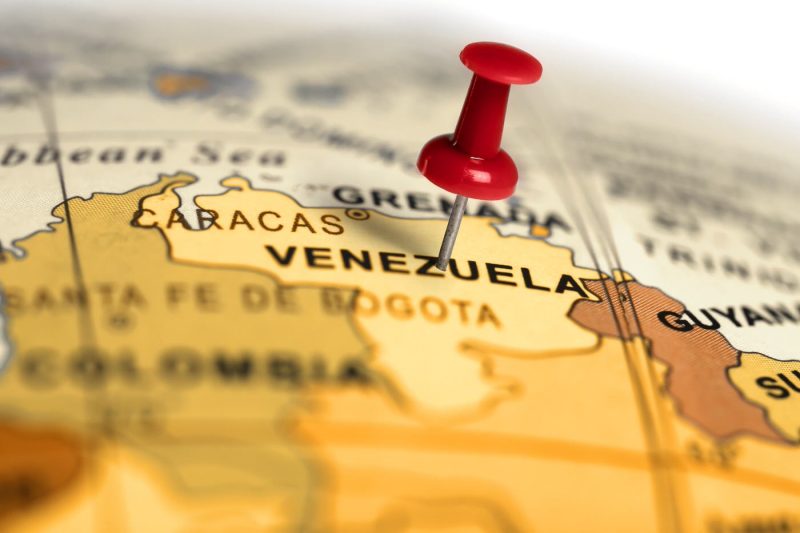
Early Saturday morning, United States (US) military forces captured Venezuelan president Nicolas Maduro and his wife. According to US official sources, both will be held pending legal proceedings in the US.
Much else, however, remains unclear. President Trump has stated publicly that the US will ‘run’ Venezuela, but he has provided few details about how. Delcy Rodriguez, who was Maduro’s vice president, was sworn in today as interim president and has already indicated her strong opposition to the US plans for ‘regime change’.
The situation is therefore uncertain and will likely remain fluid. Nevertheless, some initial implications for markets and investors are worth highlighting.
- US intervention is not unprecedented. The US has a long history of intervening in the Western Hemisphere. The US first formally declared its ‘hegemonic interests’ in the region via the Monroe Doctrine of 1823. It would therefore be incorrect, in our view, to consider today’s action as a fundamental change in US foreign policy, or to suggest that similar steps might be contemplated in the Middle East or elsewhere.
- Defense investment becomes more important. The Trump Administration has reinforced the perception that the US is willing to act unilaterally and to use force. Other countries, with territorial interests elsewhere, could be emboldened by the US use of power. This action will also likely add to the uncertainty of the dollar’s role as the "safe haven" while raising further questions about deterioration of international institutional pillars. Today’s US military action is therefore likely to reinforce the trend, well underway, for various countries worldwide to invest more in their national security. That has been one of our key investment themes since the Russian invasion of Ukraine.
- Limited short-term oil supply impact. Given the uncertainties about how Venezuela will be governed and given the checkered US history of ‘regime change’ in petro-countries (e.g., Iraq or Libya), oil markets are unlikely to anticipate a rapid increase in crude oil supply from Venezuela. Venezuela has the world’s largest reserves of crude oil (over 300 billion barrels), but the poor state of its ageing oil extraction and transportation infrastructure, coupled with the low quality of its ‘heavy’ crude, suggest that even the arrival of political stability will not quickly increase its crude oil output or exports (presently around 1 million barrels per day or roughly 1% of world output). Another factor to keep in mind is that most of Venezuela’s oil is exported to China.
- Potential long-term oil market impact stronger: Longer-term stability in Venezuela, coupled with a potential peace deal in Ukraine, could release more than 5 million barrels per day of oil onto global crude markets by the end of this decade. If so, that would amount to about 5% or more of global crude output, enough to keep oil prices depressed for longer, which would be a clear positive for global growth and a restraint on inflation.
In sum, today’s US military action is not unprecedented, nor is it likely to reflect a fundamental shift in US foreign policy. Alone, it cannot unlock Venezuela’s massive crude oil reserves. For that, durable political stability is necessary. Accordingly, the initial reaction to today’s military action across equity, fixed income and commodity markets is apt to be small. But the use of force will reinforce the view in many countries of the need to boost spending on national security. Finally, and over the longer run, a more stable, productive, and prosperous Venezuela will have the potential to offer the world significant supplies of oil. That would be significant for global growth, but it will take political stability and considerable investment to unlock that potential. Getting rid of the corrupt Venezuelan government may be good but as Colin Powell once said: "If you break it, you own it".
Authors:
Stephen Dover, Chief Market Strategist, Head of Franklin Templeton Institute, and
Larry Hatheway, Global Investment Strategist, Franklin Templeton Institute
*****
WHAT ARE THE RISKS
All investments involve risks, including possible loss of principal.
Equity securities are subject to price fluctuation and possible loss of principal.
Special risks are associated with investing in foreign securities, including risks associated with political and economic developments, trading practices, availability of information, limited markets and currency exchange rate fluctuations and policies; investments in emerging marketsinvolve heightened risks related to the same factors. Sovereign debt securities are subject to various risks in addition to those relating to debt securities and foreign securities generally, including, but not limited to, the risk that a governmental entity may be unwilling or unable to pay interest and repay principal on its sovereign debt. To the extent a strategy focuses on particular countries, regions, industries, sectors or types of investment from time to time, it may be subject to greater risks of adverse developments in such areas of focus than a strategy that invests in a wider variety of countries, regions, industries, sectors or investments.
The information provided is not a recommendation or individual investment advice for any particular security, strategy, or investment product and is not an indication of the trading intent of any Franklin Templeton managed portfolio.
WF: 8117108
Copyright © Franklin Templeton