

by Frank Holmes, CIO, CEO, U.S. Global Investors
August 22, 2017
Below is the second and final part of my exclusive interview with distinguished financial writer Alex Green of the Oxford Club and Investment U. You can read the first part by clicking here.
Do you look at cycles?
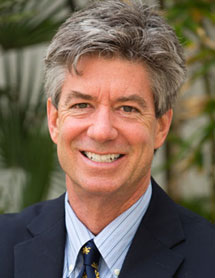 The thing about cycles is they’re so obvious when you’re looking in the rearview mirror. “This cycle peaked here, this one peaked there.” It’s difficult, though, when you’re looking forward. There’s nothing but a blank slate ahead of you to know when these cycles are going to start and when they’re going to end. So I’m not a great analyzer of cycles—I’ve never really met anybody who is—but you can learn a lot by looking back at them.
People think we’re just going to have this Goldilocks economy and rising share prices as far as the eye can see, but history shows that it’s going to end at some point. Every bull market’s followed by a bear market. That’s okay because every bear market’s followed by another bull market. I think predicting when this might happen, though, is a mug’s game.
The quant world has really shaken up the stock market. Quant traders tend to be highly leveraged, and when they pick stocks, they might be looking out only four or five days.
Well, I don’t do any of that myself, and when you’re looking at timeframes, four or five days is really short. It’s more like gambling than trading. Stock prices in the very short term are random. This is what a lot of day traders learned the hard way years ago. Obviously when the market’s in a broad uptrend, you can hop in in the morning and out in the afternoon and clip a few cents a share. And I’m not talking about the high-frequency traders, who are using a technological edge to just vacuum up nickels and dimes all day long. That’s a proven way to make money, provided you have the lightning speed necessary to take advantage of short-term discrepancies in the market.
But someone buying a stock on Wednesday, only to sell it on Friday? You might as well flip a coin. Of course, you can flip coins in a rising market and bet heads over and over again, and it looks like you know what you’re doing. But when the music stops, that could end very badly.
As a trader, I’m looking out weeks or months. As an investor, I’m looking years ahead. With the Gone Fishin’ portfolio, I’m looking out decades. I think that when you’re only considering the next few hours or days, you’re really a gambler, not a trader or investor.
You met with Sen. Mike Lee of Utah recently. What did you two discuss?
I did meet with Sen. Mike Lee and had lunch with him at the Paris Hotel in Las Vegas. He’s one of the more reform-minded senators. Like everybody else, I’m so frustrated with Washington. I’m neither a Democrat or Republican. I’m just somebody who’d like to see the free markets prosper, as well as individual liberties and international peace, so I support anyone who shares those values.
What Sen. Lee and I were talking about was this entitlement crisis we’re sleepwalking toward, this ticking demographic time bomb in our country. In 1950, there were 16 workers for every beneficiary of Social Security and Medicare. Today there are three workers for every beneficiary of those services, and in less than a decade, there’ll be only two. You simply can’t tax the next generation at some audacious rate in order to provide these cushy benefits that everyone’s counting on.
I think this is the biggest threat we face. It’s not terrorism or North Korea, or some hostile foreign power. It’s the unsustainable spending that’s going on in Washington. Most people are aware that government debt is $20 trillion right now, which is pretty hefty, but they might not know we have more than $107 trillion worth of unfunded liabilities for Social Security, Medicare and Medicaid. It’s just a stupendous sum.
If you confiscated the net worth of every billionaire in the country, it would barely cover 2 percent of $107 trillion. And yet these liabilities are growing by trillions of dollars a year. I think we face an unfortunate day of reckoning because Washington politicians realize that fiddling with entitlements makes people very angry, especially the people who vote the most, the elderly. Nobody wants to see their benefits delayed, don’t want their benefits cut, don’t want their taxes to go up.
Similarly, no politician wants to take the heat or lose a primary challenge or the next election because they stuck their neck out and did something about this. And so they’re all just kicking the can down the road.
And what about regulations?
Listen, you have to have regulators just as a basketball game needs to have a referee. Otherwise, chaos would break out. But if you watch a basketball game and every time one player touched another and the ref blew the whistle, it wouldn’t be much of a game anymore. That’s where we are, unfortunately.
I would very much like to see legislation that is pro-growth and pro-business. Think about how deregulation has done so much good. I never even took a commercial airline flight until after college. Nobody flew but rich people when I was young. But then they deregulated the airlines, and air travel became much more affordable. When I was in college, I never called home except late on a Sunday night when the rates were lower. Now every kid on campus is walking around gazing into their smartphone, and calls are essentially free as part of the service they pay for.
Compliance costs for all these regulations, coupled with high corporate taxes, are not good for economic growth. They’re not good for hiring or wages or corporate profits. That means they’re not good for the stock market either. I do hope that, before the 2018 elections roll out, somebody in Washington realizes we need to do some of the things that need to be done—lower taxes, fewer regulations and more pro-growth policies.
You regularly write many different newsletters. Can you describe some of them for us?
Most people start with Investment U. You can sign up for our free e-letter. I write two columns a week in that forum, and I generally talk about what’s happening in the markets, why it’s happening, and analyze various issues that face investors today. That’s completely free.
And then if people would like to hear my investment recommendations based on my view of what’s happening in the world, they can join the Oxford Club, which is less than $100. This would entitle you to get a monthly newsletter I write called The Oxford Communiqué.
Beyond that, I have trading services if someone wants to specialize in momentum stocks or value stocks. I have a trading service based on insider buying called The Insider Alert. Insiders obviously have access to material, non-public information that is relevant to the future prospects of the business.
Again, you need to become an Oxford Club member first, and then if you enjoy what we’re doing, you could consider those trading services.
I wish to thank Alex for his time and insight! Be sure to check out his weekly letters, alerts and other services, which I find indispensable in understanding the markets.
All opinions expressed and data provided are subject to change without notice. Some of these opinions may not be appropriate to every investor. By clicking the link(s) above, you will be directed to a third-party website(s). U.S. Global Investors does not endorse all information supplied by this/these website(s) and is not responsible for its/their content.
This post was originally published at Frank Talk.
Copyright © U.S. Global Investors