



by Jesse Felder, The Felder Report
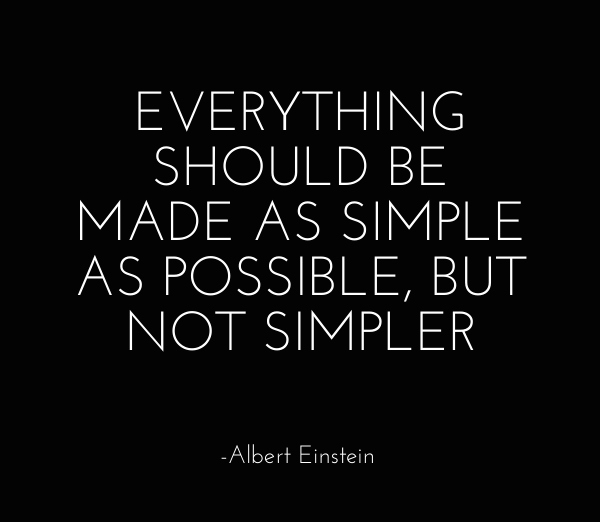
Simple is good, especially when it comes to investing. In the markets, it generally pays to “keep it simple stupid.” Trying too hard to be “very intelligent” or just overcomplicating things is an all too common failure among investors. However, there are no short cuts to investing success and making things simpler than they should be can be just as much of a failure as overcomplicating things. And this is where I think many investors could be erring today.
“It is remarkable how much long term advantage people like us have gotten by trying to be consistently not stupid, instead of trying to be very intelligent.” - Charlie Munger
There are some very basic minimum standards to successful long-term investing that just can’t be whittled away no matter how much investors would like them to be. The most important one is simply the act of thinking. Thinking about potential risk versus potential return. Thinking about market history and long-term cycles. Thinking about the potential costs of herding and lack of liquidity. Thinking about simple supply and demand. An investment methodology that bypasses or eschews this sort of thought is not investing at all.
“What could be more advantageous in an intellectual contest – whether it be bridge, chess, or stock selection than to have opponents who have been taught that thinking is a waste of energy?” -Warren Buffett
Still, more investors than ever have now been emboldened by a 3-year trend, as strong as any ever seen in history, into believing that thinking in this sense is a waste of time. I’m mainly referring to the growing popularity of “passive investing” and “trend-following,” not in their purest sense but in how they are commonly practiced today. In many ways, they have been bastardized by those who believe they can simplify the process by removing the need to think.
“One of the things I most want to emphasize is how essential it is that one’s investment approach be intuitive and adaptive rather than be fixed and mechanistic.” –Howard Marks
Both of these disciplines were originally founded and then refined by exceptional thinking in regards to risk, costs, liquidity and managing cycles – all critical to long-term success. If your investment discipline abandons this sort of contemplation then it clearly has removed the very thing that defines “investing” in the first place and has certainly become too “fixed and mechanistic.” Investing requires thinking. Without thinking, you’re not investing. Finding a balance between overthinking and not thinking at all is the key to developing a successful investment methodology.
A couple of individual practitioners in the indexing and trend-following space who have impressed me with their thinking on the subjects are Jerry Parker and Meb Faber. If you’re interested in learning how to think about implementing an index-based, trend-following strategy you would be wise to follow them: