




The Greenback Remains the Preferred Choice of Official Foreign Exchange Reserves

The IMF’s Currency Composition of Official Foreign Exchange Reserves (COFER) database continues to indicate that dollar remains the preferred reserve currency. In the fourth quarter of 2011, the dollar made up 62.1% of official reserves vs. 61.8% in the third quarter. The dollar accounted for 61.4% of official reserves in 2011 vs. 61.8% in 2010 and 62% in 2009. The euro’s share was virtually unchanged in 2011 at 26%. The small dip in the dollar’s share was taken over by “other currencies” component of the IMF’s categories. Mr. Derrick of BNY Mellon has identified the Aussie dollar as the beneficiary. It is also noteworthy that the euro’s share has decline to 25.94% in 2011 from 27.66% in 2009. Is the dollar’s role as an official reserve currency shrinking? A small decline is visible prior to the onset of the crisis but the dollar has prevailed in the past three years (see Chart 1).
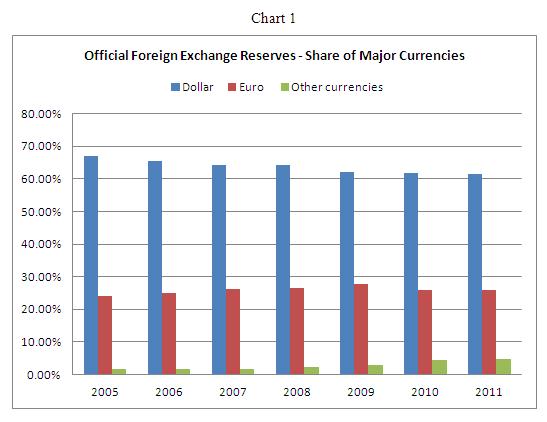

Chart 1 - 04 09 2012


The opinions expressed herein are those of the author and do not necessarily represent the views of The Northern Trust Company. The Northern Trust Company does not warrant the accuracy or completeness of information contained herein, such information is subject to change and is not intended to influence your investment decisions.
Total
0
Shares
Previous Article

The Impact of High Oil Prices on Emerging Markets

Next Article

Which Stocks Win on Main Street’s Comeback?

Related Posts
Read More

JH Explorer in the Andes: Take my breath away – Inside the Vicuña district, a future engine of global copper supply

During a recent site visit high in the Andes Mountains, Portfolio Manager Tal Lomnitzer discovers one of the world’s most compelling emerging copper districts. What stood out was not only the sheer scale of the Vicuña opportunity, but its potential role in supporting the global shift toward electrification and energy security.