



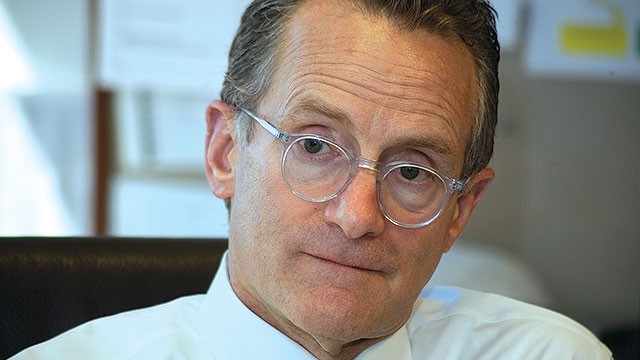

George Soros appeared in an MIT World interview where he spoke candidly for 1 hour and 23 minutes about his "theory of reflexivity" and the New Paradigm for Financial Markets. It was originally produced at the end of October 2008, but it is relevant and timeless to a degree, and a treat; a chance to listen at length to one of the finance world's geniuses share his widsom in the sunset of his illustrious life.
Notes from the MIT site about the lecture:
George Soros extends his “theory of reflexivity” from abstraction to application in the realm of investing. His book, The New Paradigm for Financial Markets, offers a timely look at the credit crisis that reached crescendo in 2008. His views fall between prescience and vindication. Nevertheless, he concedes fallibility: “With all my great, deep understanding, I don’t always get the markets right.”
In conversation with Ricardo Caballero, Soros recounts the formative experience of his life -- surviving the German occupation of Hungary -- “a far from equilibrium situation.” He credits his father for recognizing that “the normal rules don’t apply” and falsifying documents permitting the family’s escape from fascism. Soros attributes his intellectual development during college to the philosophy of Karl Popper. This led him eventually to question the economic postulate of “perfect knowledge and perfect competition.”
He concluded that markets do not exist in a vacuum nor spontaneously self-correct. Thinking participants introduce friction, inevitably influencing outcomes for better or worse. Soros characterizes this phenomenon as the cognitive function interfering with the manipulative function and vice versa, thus the reflexivity of his theory. “Path dependence is very much due to imperfect understanding,” he states and “actions have unintended consequences.”
Time and again Soros has anticipated financial bubbles and capitalized on opportunities he foresaw. Caballero elicits his ideas on bubble formation and collapse. Soros’s metaphor is “people go on dancing even though they realize that the music is about to stop.” He says the most common bubble is real estate where the misconception is that value “is independent of the willingness to lend.” Soros asserts that a “superbubble has been growing for at least 25 years,” periodically manifested by the international banking crisis and Latin debt in the early ’80s; 1997’s emerging market crisis; the Internet technology explosion; overleveraging that created the housing bubble; and escalating oil and commodity prices. He also faults financial innovation and securitization of debt. “People became very loose in their lending habits” and increased risk “by separating agent from principal.”
Soros’s prescription for a sounder financial system begins with reducing troubled mortgages to 80% of current value, thereby minimizing foreclosures and preventing further decline of housing prices. He also recommends recapitalizing banks to encourage lending, and lowering the reserve requirement to 6%. His ultimate suggestion sounds simple enough: “Stabilize the global economy.”
Soros admits markets will always tend toward bubbles. He places responsibility on regulators to rein this in, adding “that would require the use of judgment and they’re bound to get it wrong … because they’re human.”
Source: MIT World, George Soros on The New Paradigm for Financial Markets
http://mitworld.mit.edu/video/633





Comments are closed.