Posted in: Episodes

108 Hugh Hendry: Big Macro Fault Lines

Hugh Hendry, a.k.a. The Acid Capitalist, and Founder of the award winning hedge fund management firm, Eclectica Asset Management, joins Pierre Daillie and Joseph Lamanna for over 90 minutes, in a hot-take filled and hilarious-at-times conversation deep in critical and paradoxical thinking about the past and current geo-politics of Russia and China, the QE and disinflation-fueled equity and bond bull markets, the dynamics of oil and natural gas in the context of both pre-inflation concerns and the ultimate exogenous energy threat to Europe, his unique perspective on the impact and opportunity presented by the carbon permit/credit market, as well as his take on the now flaring Russia/Ukraine conflict we are witnessing.

Our conversation is an exploratory journey around the geo-political world. Hendry identifies the chasms that are opening up the fault lines between Russia and the Western World, China and the U.S., the shift from Quantitative Easing to Quantitative Tightening, and what that all means.

Where to find and reach out to Hugh Hendry:

Hugh Hendry Official on Youtube

[Download] Hugh Hendry’s ‘Dawn of Chaos’ Report

HughHendry.com

Hugh Hendry on Instagram

Hugh Hendry on Twitter

Hugh Hendry on Linkedin

BlancBleu Saint Barts

BlancBleu Saint Barts – Press

Copyright © AdvisorAnalyst.com

Posted in: Episodes

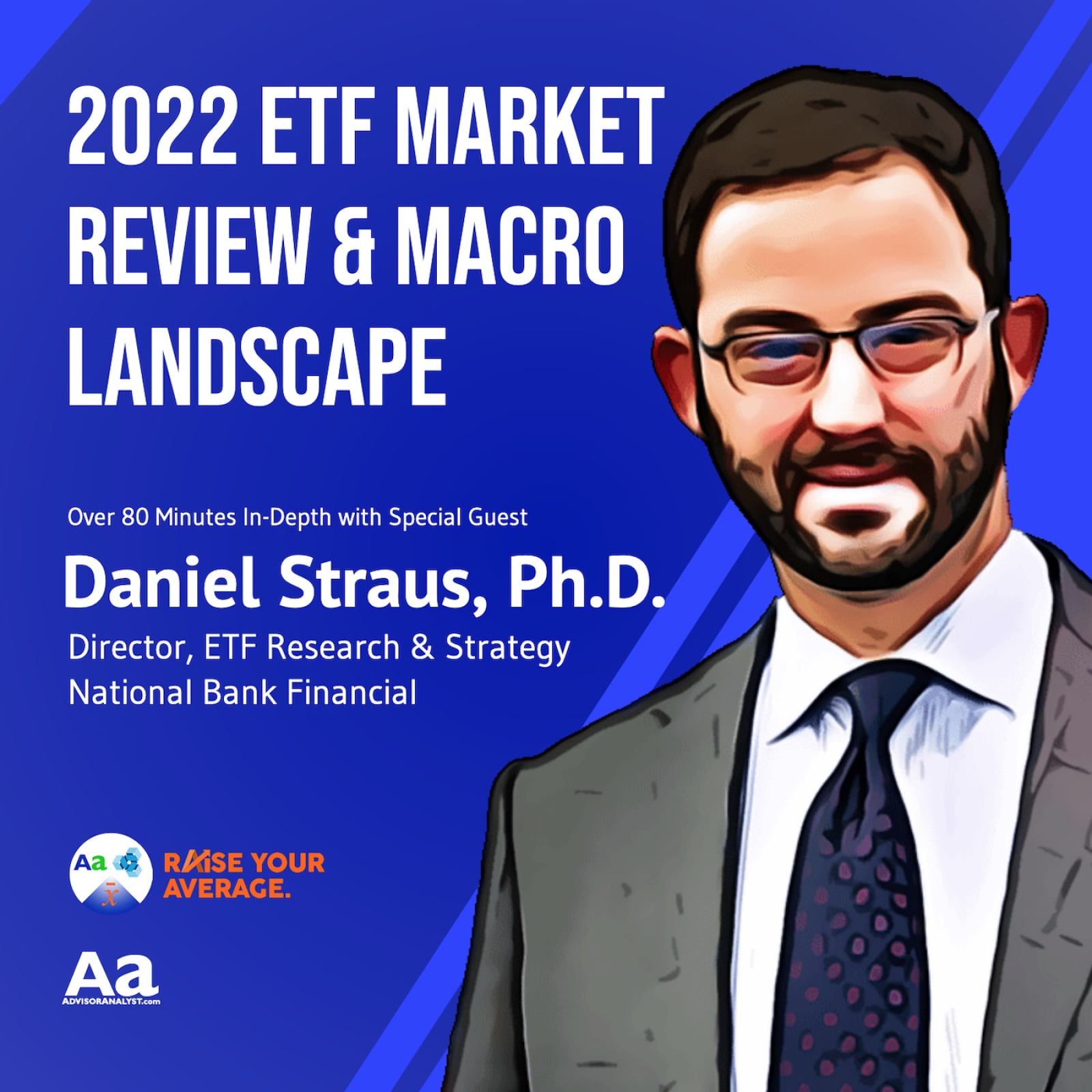
107 2022 ETF Market Review and Macro Landscape with Daniel Straus, National Bank Financial

Daniel Straus, M.Fin, Ph.D., Director and Head of ETF Research and Strategy, at National Bank Financial joins us for a full bodied conversation about the North American ETF ecosystem and macro landscape.

Highlights

  • Daniel’s background in engineering, technology & finance
  • How the ETF landscape has changed in 12 years
  • Observation that ETFs have become a game changer, the dominant solution – but already people are talking about what the ‘next thing’ will be. Direct indexing, DeFi, etc.
  • Canadian ETFs are $350-billion, about 1/20th of the $7-trillion U.S. ETF market. Canadian adoption is accelerating as we catch up with the U.S. adoption, but Canadian tax efficiency is not as favourable as in U.S. and that may be part of the reason adoption trailed.
  • How ETFs are being used by advisors, how factors are sometimes substituted for sector bets in diversification, how ETFs have democratized access to liquid alts
  • Mutual fund companies are entered the ETF business and strongly behind actively managed ETFs (e.g. Dynamic, Desjardins, Manulife, Mackenzie). Insurance companies have entered the ETF business.
  • How many ETFs are there in Canada now
  • Thematic ETFs
  • Liquid Alts ETFs – what were once complex strategies reserved for institutions and UHNW, are being wrapped in ETFs for all investors to access
  • It helps to have  a 1-year or 3-year sample of actual performance in order to see an uptick in adoption. Some of the more sophisticated users of ETFs like to see actual numbers vs. back tests before they’ll commit to some of the more complex strategies.
  • How did the ETF landscape change over the last 2 years?
  • How did ETF flows change since last year’s inflationary uptick and into January 2022?
  • What did investors do? How did they behave in January’s rout? Where did the ETF dollars shift to?
  • Daniel shares his knowledge of market structure at length – How can thoughtful PMs best approach ETF trading to get the best outcomes for their investors/holders.
  • How advisors/PMs’ can optimize their outcomes on large trades?
  • What are Carbon Nanotubes?
  • Daniel shares some of his Sci-Fi favourites

Where to find Daniel Straus, National Bank Financial:

Daniel Straus on Linkedin

Where to find the Raise Your Average crew:

ReSolve Asset Management

ReSolve Asset Management Blog

Mike Philbrick on Linkedin

Rodrigo Gordillo on Linkedin

Adam Butler on Linkedin

Pierre Daillie on Linkedin

Joseph Lamanna on Linkedin

*****

“You don’t have to be brilliant, just wiser than the other guys, on average, for a long time.” Charlie Munger

Welcome to Raise Your Average, our deep dive journey into learning from the people and process behind the world of investing. Through conversations with leaders in the investments game, we peel back the layers of the onion on how these holders of the keys to the kingdom allocate their time, their energy, and their dollars.

We are all students and we are all teachers. We are the average of the 5 people we spend the most time with. Come hang out with us for a while and raise your average, as we raise ours.

Music credit: In Hip Hop, Paul Velchev (8MJZA6T3LK)

Posted in: Episodes

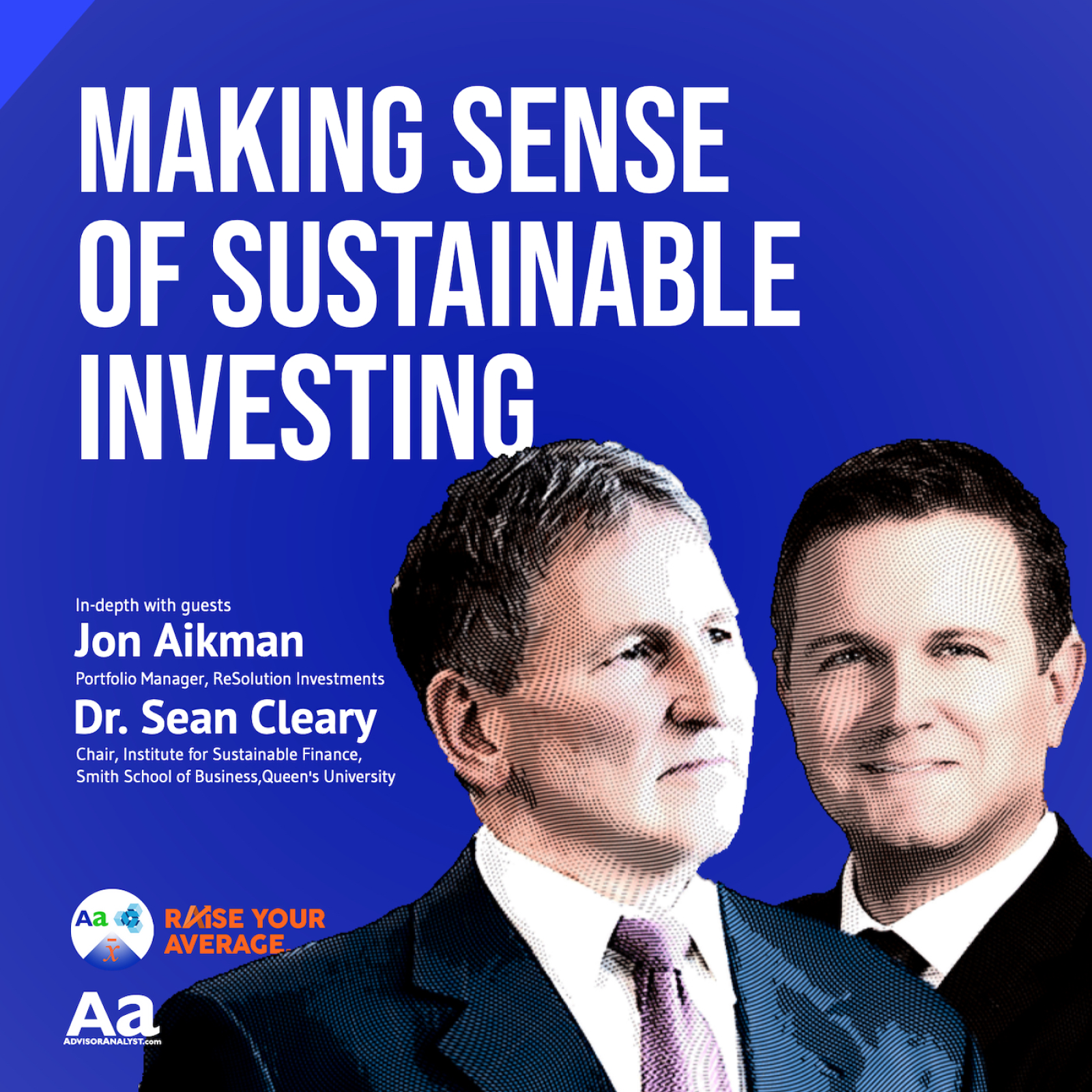
106 Making Sense of Sustainable Investing with Jon Aikman & Dr. Sean Cleary

Jon Aikman, Portfolio Manager, at ReSolution Investments and Dr. Sean Cleary, Chair of the Institute for Sustainable Finance, at Smith School of Business at Queen’s University join us for a deep dive concerning ESG, the intended and controversial unintended consequences of ESG, ways of thinking about the definition and implementation of ESG investing, impact or sustainable investing, from the angles of both risk management and investment opportunity, and the key differences between top-down (passive) and bottom-up (active) ESG investing. We also get into their unique perspectives and examples of how investors, and the advisors who serve them, can meaningfully approach ESG, SRI, or impact investing, for those wanting to know how they can align their investment strategy with their personal, or institutional views, values, and desires.

Where to find our guests:

Jon Aikman on Linkedin

ReSolution Investments / ReSolve Asset Management

Dr. Sean Cleary, Chair, Institute for Sustainable Finance, Smith School of Business, Queen’s University

Institute for Sustainable Finance, Smith School of Business, Queen’s University

Where to find the Raise Your Average crew:

ReSolve Asset Management

ReSolve Asset Management Blog

Mike Philbrick on Linkedin

Rodrigo Gordillo on Linkedin

Adam Butler on Linkedin

Pierre Daillie on Linkedin

Joseph Lamanna on Linkedin

AdvisorAnalyst.com

Posted in: Episodes

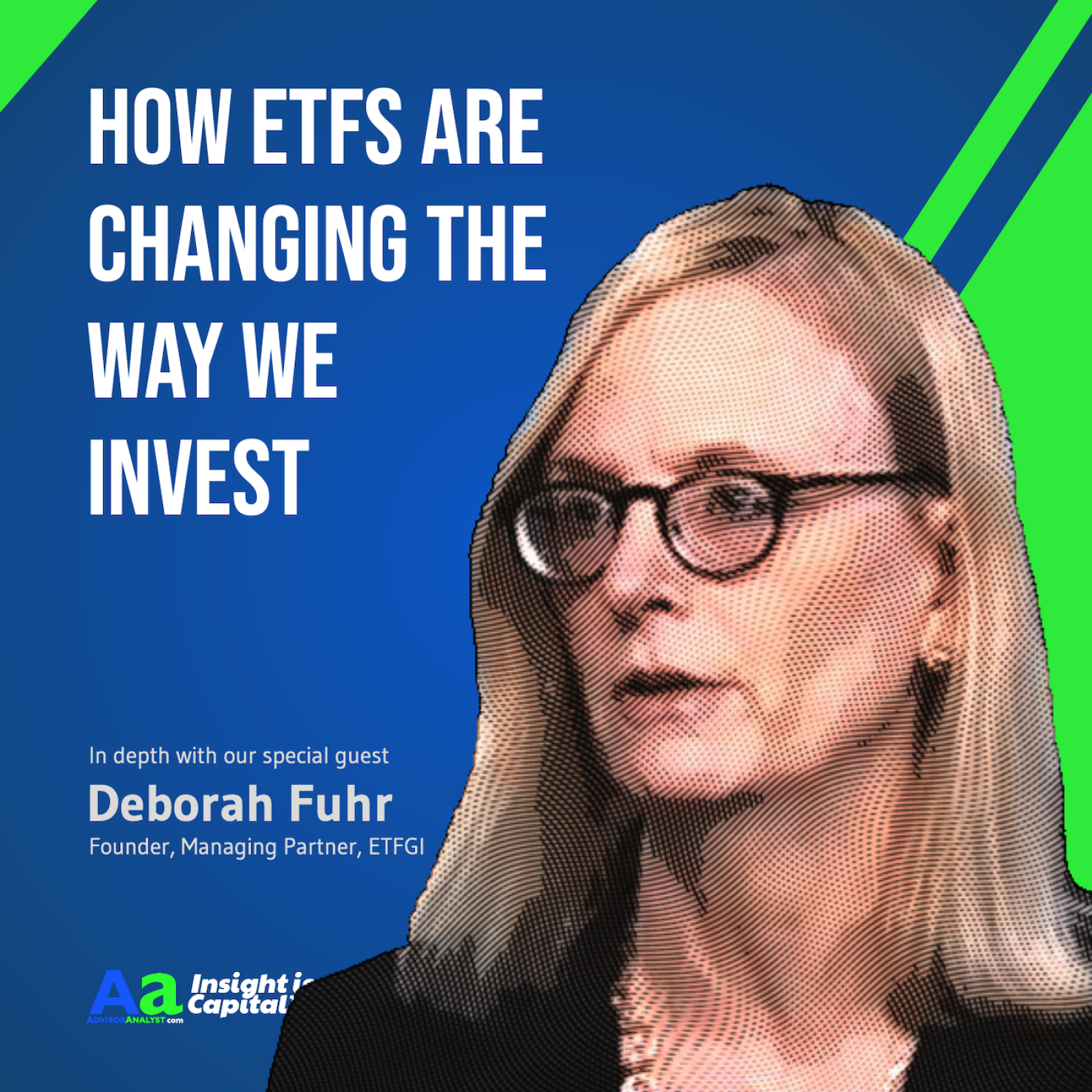
105 How ETFs Are Changing the Way We Invest with Deborah Fuhr, ETFGI

Deborah Fuhr, Founder & Managing Partner, ETFGI joins us for a fireside chat about the work she is doing to further the evolution of the ETF industry. To begin, Ms. Fuhr sheds some light on the arc of her career. It’s an ‘aha moment’ and it is her work history and background that provides an enlightening answer to the question “Who is Deborah Fuhr?”

From her early days at Greenwich Associates to her rapid ascent to the high echelons of Wall Street and The City in London, we get to understand from her why she was ultimately motivated to launch ETFGI, and her mission. She also launched Women in ETFs to bring together people in the ETF industry across the globe to champion our goals of actively choosing equality, diversity, and inclusion.

Deborah Fuhr has a had a front row seat in the investment, and ETF business, since it’s beginnings, in executive roles, leading teams at Morgan Stanley and Blackrock/Barclays Global Investors, specifically in the earliest days of the first prominent ETF companies.

Fast forward to present, and ETFGI provides global ETF market research and consulting across all markets to a repertoire of the most prominent ETF companies, pensions and financial institutions.

We get to talking about the interesting trends that are shaping the way the world invests, the way we invest, and the attitudes that are shaping this long-term trend. Deborah Fuhr also sheds light on some of the ways in which ETF formations have been evolving away from once having been wrappers for passive index investing, into being an innovative wrapper for just about every kind of investment vehicle.

Finally we discuss WE, or Women in ETFs, its mission, and its success in championing the opportunities and benefits of equality, diversity, and inclusion in the ETF industry.

Where to find Deborah Fuhr:

Deborah Fuhr on Linkedin

ETFGI

Women in ETFs

Posted in: Episodes

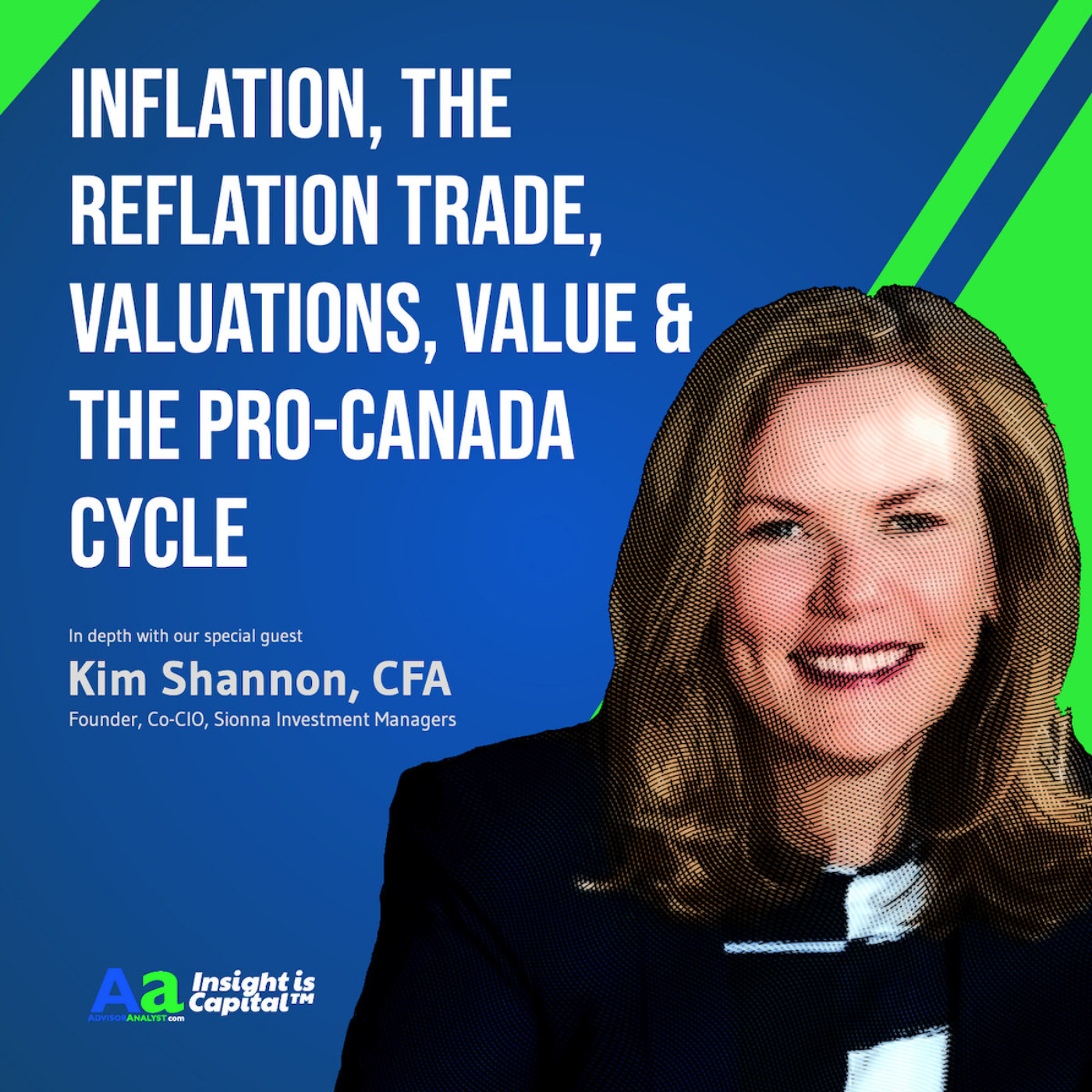
104 Kim Shannon: Inflation, Value Investing & Canada Now

Kim Shannon, CFA, Founder & Co-CIO, Sionna Investment Managers joined us for deep dive of a fireside chat on her career and perspective as a value manager, investing, inflation, the reflation trade, and why the current leg in the economic cycle is a favourable backdrop for Canadian equities.

Kim reflects on her career history – her beginnings as a value manager under the wing of her early mentor at Royal and Sun Alliance, investing legend, John Di Tomasso, in the early 80s. She describes her investing journey, the application of her knowledge and her own proprietary take on value investing, and how she and her associates subsequently turned an old then $40-million AUM fund into Canada’s largest equity mutual fund, which earned her the reputation as one of Canada’s pre-eminent market wizards.

The last ten years however have seen the hollowing out of value fund AUMs against growth and momentum, and Kim Shannon, no stranger to the challenges of competing against the market, candidly admits that it’s been a tough go, maintaining her integrity and conviction through the period. Until last year, that is, when value stocks, in the context of a comeback in inflation, began to show the meaningful glimmer of reverting back to historical trend. That glimmer of a reversion to mean in investing styles emerged during last year’s re-opening in the context of reflation following the COVID-19 growth shock of 2020.

She points out that, “The last 12 years have been the longest period of underperformance of Value, and when Value failed to outperform following the March 2020 bear market, that really affected the psyche of investors about Value.” Kim Shannon goes on to add that, “So that really affected client psyche about value because a lot of clients had held in with value because it always defended at a down market.”

We then discuss valuations on several the last decade’s market leaders, and even with a reversion in P/E multiples, Shannon points out that even if P/Es come down to 150 times earnings, their valuations imply that it will take 150 years for those stocks to pay investors back. Most of the darlings of the 1990s run up no longer exist, such as Sun Microsystems, and companies like Cisco and Intel have failed to inspire investors.

“The average tenure of stocks today is 20 years,” explains Shannon. That means that investors are paying up for valuations that will take, in some cases many generations to collect on for companies, that, in most cases, won’t be around in 20 years.

Our conversation winds through the topics of inflation, value as a reflation trade, value investing, and culminates with her bull case for Canadian stocks. There is also strong likelihood that if if there is a sustained inflation, it will be supportive of Canadian equity valuations.

We discuss some of her favoured areas of opportunity and get into some of the names she likes. Her over-arching thesis is that she believes and expects that Canadian stocks are set to outperform U.S. stocks in the period ahead, and we discuss her pro-Canada investment case.

Notes:

Kim Shannon’s reference to George Athanassakos’ (Professor at Ivey School of Business – Benjamin Graham School of Value Investing) research findings from last year:

What if inflation is here to stay? Think value stocks

“We also examined the annual inflation rate above which the value premium became decidedly positive. This inflation rate was approximately 2.5 per cent. Once inflation started to exceed 2.5 per cent, value stocks started to outperform, while growth stocks, in general, did better when inflation was below 2.5 per cent. Between 1930 and 2020, there were 50 years when annual inflation was at or above 2.5 per cent and 40 years when it was below 2.5 per cent. The median value premium in the first period was 11.04 per cent and in the second 2.34 per cent. It’s worth noting that it is primarily small-cap value stocks that drive these relationships.”

*****

Where to find Kim Shannon, Founder & Co-CIO, Sionna Investments:

Kim Shannon on Linkedin

Sionna Investments

*****

Thank you for watching – If you’re enjoying Insight is Capital, please subscribe to the podcast at Apple or Google Podcasts, and please do share your thoughts and comments, and ratings.

Posted in: Episodes

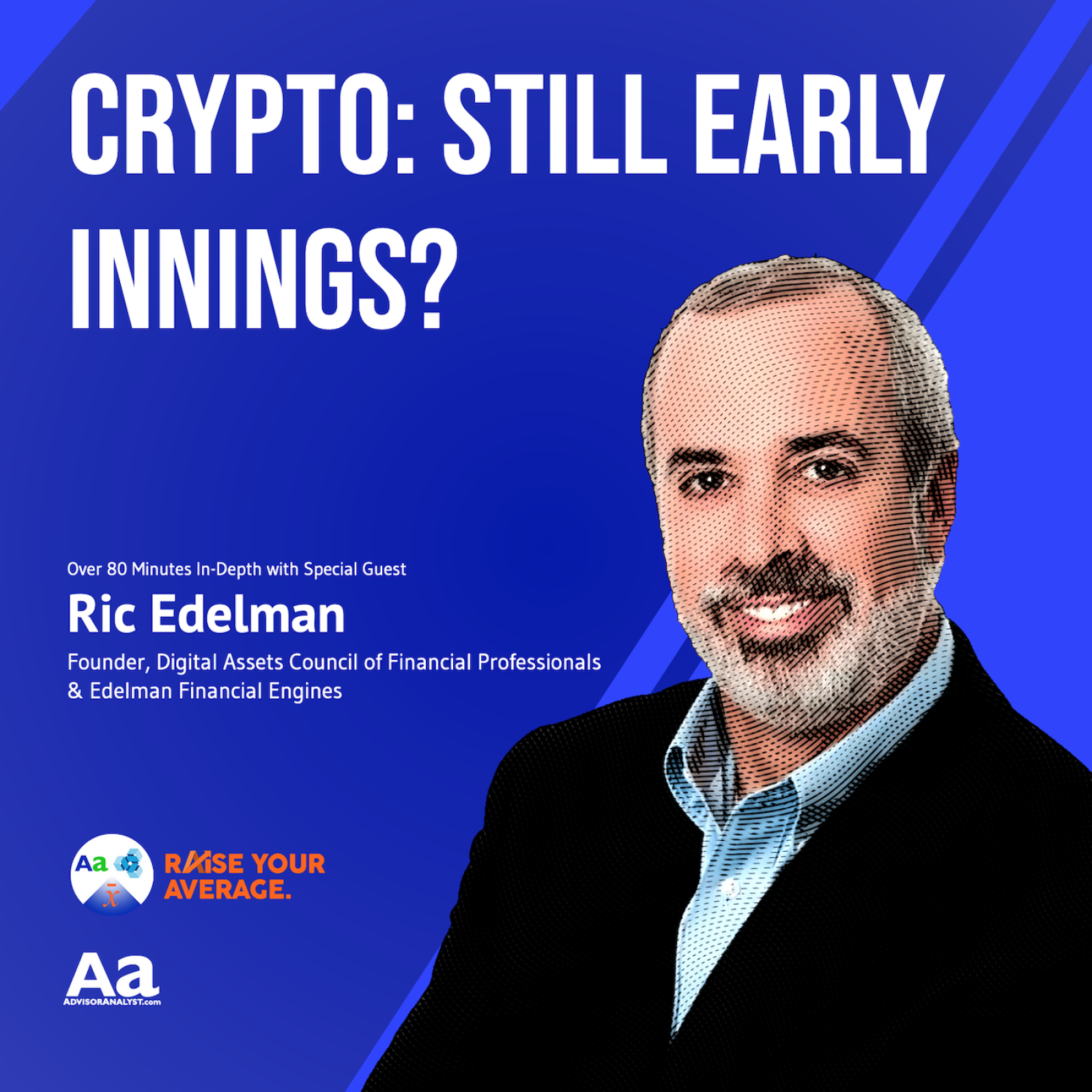
103 Crypto: Still Early Innings with Ric Edelman

Ric Edelman, Founder, DACFP (Digital Assets Council of Financial Professionals & Edelman Financial Engines, the largest independent U.S. RIA firm joins us for 80 minutes to discuss his thoughts on Crypto, Bitcoin, Ethereum, and Blockchain.

Ric Edelman shares his history in the financial industry as the founder of Edelman Financial Engines, and as founder of DACFP, the Digital Assets Council of Financial Professionals, which he founded more recently to address the growing needs advisors have to level up their awareness and knowledge of the transformational ‘Crypto’ asset class.

In our conversation, Mr. Edelman provides an excellent overview and understanding of the most important components of the cryptocurrency and blockchain space.

He warns advisors to not be caught on the back foot when they are advising clients on whether or not e.g. Bitcoin is an asset they should or should not consider adding to their portfolios.

Currently 17% of all Americans own some bitcoin, and it’s popularity has taken on wide network effects during the run-up of the last two year. It’s expected that 20 million Americans will invest in digital assets in the near future. 78% of U.S. investors say digital assets are appealing. 82% of clients expect their financial advisors to be knowledgeable about bitcoin.

“It’s no longer an asset you can wave off as a fad,” explains Edelman. “If you’re going to provide any kind of advice on anything ‘crypto’ you had better make sure you have acquired the required knowledge to do so.”

“It is real. It is here to stay, and it is one of the most profound and transformational innovations that will shape the world,” says Edelman. “You have a fiduciary responsibility to your clients to become an expert on this subject. It will also set you apart competitively from all other advisors who perilously continue to wave it off as irrelevant or unimportant.”

If you’ve been asked, for example, what Blockchain, Bitcoin or Ethereum are, and found you weren’t having much success sticking the landing, here in our conversation, Ric Edelman shares some of his most successful anecdotes and analogies that will help you to provide a significantly better understanding to your clients, and everyone else you talk to.

We also get into a wide ranging and deeper discussion on the scalability and implementation of real-world commercial use cases, valuation and the origins of Bitcoin and Ethereum valuations.

*****

The DACFP was conceived in 2018 by Ric Edelman, one of the top thought leaders in the financial services industry, and is an independent, educational organization, with a most impressive faculty of instructors, providing advisors with a 13-Credit Course Certificate in Blockchain and Digital Assets (designed for financial advisors).

Raise Your Average listeners get 20% OFF the fee for the DACFP program with the

discount code:

GENSLERWEALTH20

Visit https://dacfp.com to enroll and claim your discount.

*****

Where to find Ric Edelman, DACFP:

Ric Edelman on Linkedin

Ric Edelman on Twitter

DACFP

The Truth About Your Future

Where to find the Raise Your Average crew:

ReSolve Asset Management

ReSolve Asset Management Blog

Mike Philbrick on Linkedin

Rodrigo Gordillo on Linkedin

Adam Butler on Linkedin

Pierre Daillie on Linkedin

Joseph Lamanna on Linkedin

AdvisorAnalyst.com

*****

“You don’t have to be brilliant, just wiser than the other guys, on average, for a long time.” Charlie Munger

Welcome to Raise Your Average, our deep dive journey into learning from the people and process behind the world of investing. Through conversations with leaders in the investments game, we peel back the layers of the onion on how these holders of the keys to the kingdom allocate their time, their energy, and their dollars.

We are all students and we are all teachers. We are the average of the 5 people we spend the most time with. Come hang out with us for a while and raise your average, as we raise ours.

Music credit: In Hip Hop, Paul Velchev (8MJZA6T3LK)
Posted in: Episodes

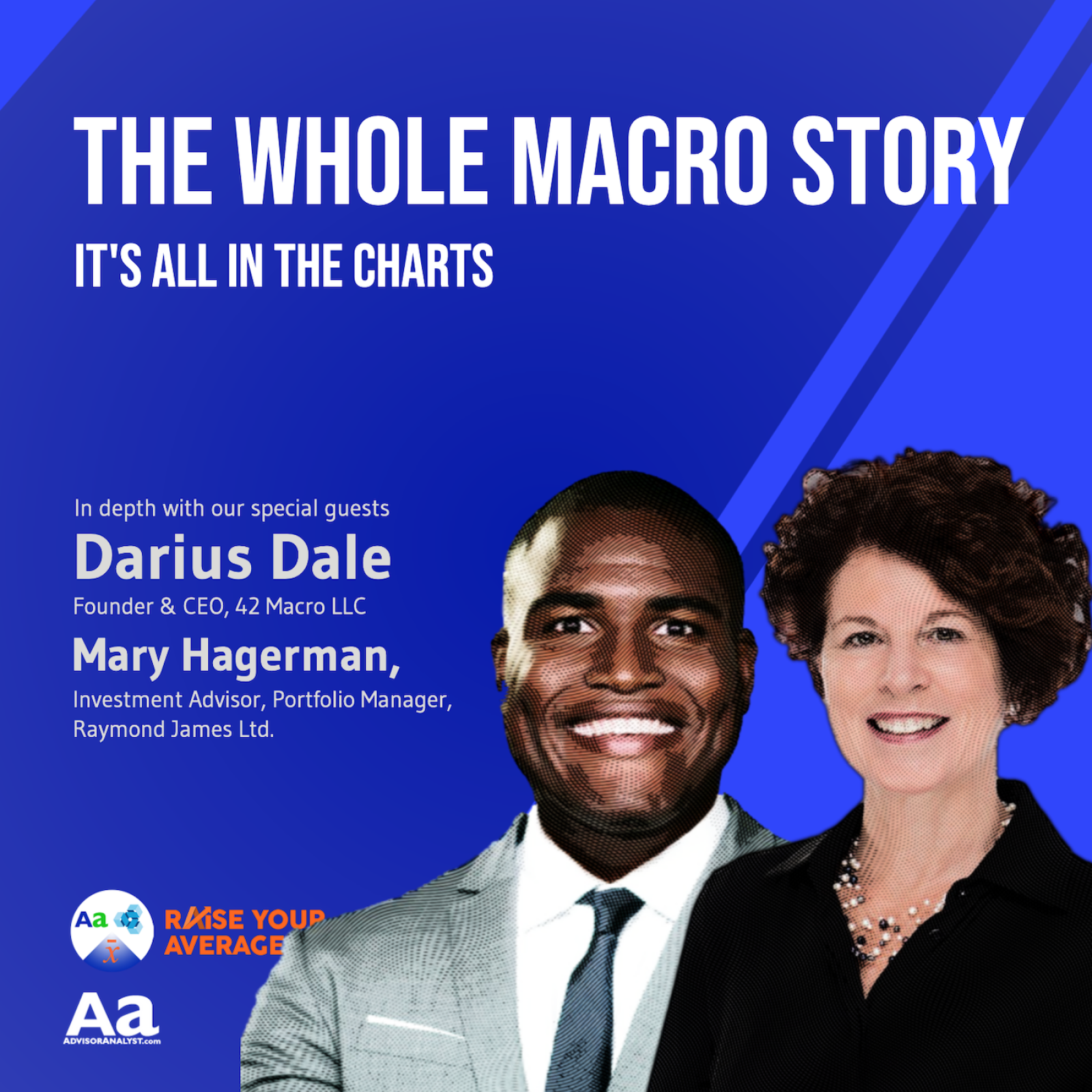
102 A Sea of D's in 2022 w/ Darius Dale and Mary Hagerman

Darius Dale, Founder & CEO, 42 Macro LLC, and Mary Hagerman, Portfolio Manager, Raymond James (our guest advisor panelist) joined us on Raise Your Average for a full market macro overview. Darius Dale takes us through the inner workings of his and his firm’s “GRID” macro framework as well as macro-forecast modelling framework. We discuss his outlook at the time for the markets and economy, and the inflationary and simultaneously, deflationary dynamics that are causing confusion surrounding whether inflation might be pernicious or temporary.

The key takeaway from this conversation is that we are likely entering a period of heightened volatility as the market reacts to what could be a temporary inflationary pulse, as Dale’s framework suggests there is a “sea of D’s” or (D)eflationary signals in 2022. It remains to be seen what the half-life could be of a ‘reflation’ trade (that favours for example value stocks vs. growth stocks) as we progress to toward the second half of this year.

Darius Dale’s framework provides a fully quantified view of all market fundamentals – what he calls “Quantamental” – and it provides a magnificent view from 30,000 feet. Among the highlights of our conversation was a series of 3 charts that demonstrate quantitatively and eloquently the zeitgeist of inequality in the U.S., which gave rise to the Fed’s disproportionately large stimulus reaction during the pandemic and how that has given rise to the inflationary pressure boundaries we are currently breaching. We also discuss the nuance of the question, “Is it inflation, or is it inflationary?”

Where to find Darius Dale:

Darius Dale on Linkedin

42 Macro LLC

Darius Dale on Twitter

*****

Where to find the Raise Your Average crew:

ReSolve Asset Management

ReSolve Asset Management Blog

Mike Philbrick on Linkedin

Rodrigo Gordillo on Linkedin

Adam Butler on Linkedin

Pierre Daillie on Linkedin

Joseph Lamanna on Linkedin

AdvisorAnalyst.com

*****

This episode was recorded November 2021

“You don’t have to be brilliant, just wiser than the other guys, on average, for a long time.” Charlie Munger

Welcome to Raise Your Average, our deep dive journey into learning from the people and process behind the world of investing. Through conversations with leaders in the investments game, we peel back the layers of the onion on how these holders of the keys to the kingdom allocate their time, their energy, and their dollars.

We are all students and we are all teachers. We are the average of the 5 people we spend the most time with. Come hang out with us for a while and raise your average, as we raise ours.

Music credit: In Hip Hop, Paul Velchev (8MJZA6T3LK)
Posted in: Episodes

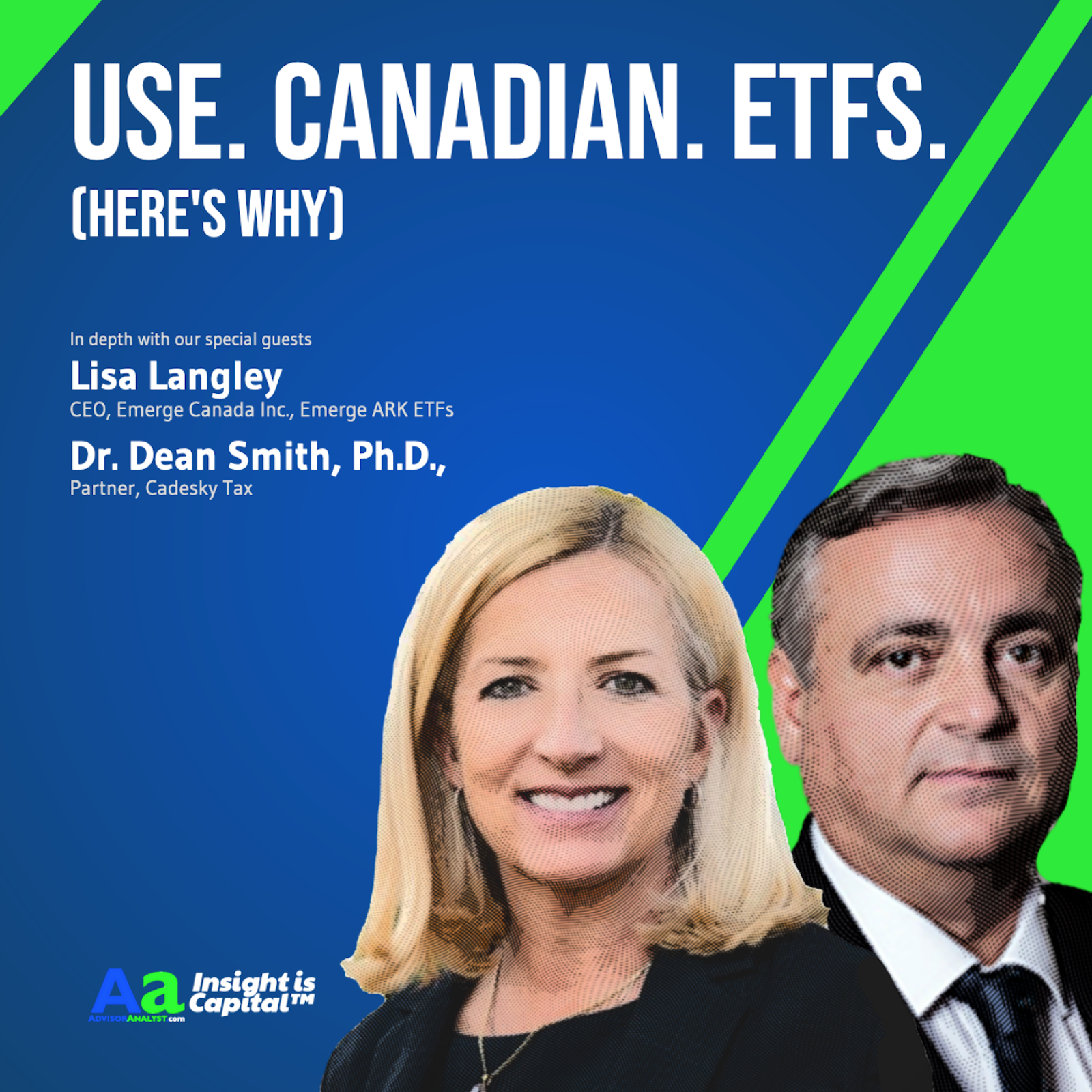
Ep. 101 Use. Canadian. ETFs. (Here's Why) with Dean Smith, Ph.D., and Lisa Lake Langley

Lisa Langley is on a mission. Although she is CEO of Emerge Canada Inc., the sponsor of Emerge ARK ETFs, whose disruptive innovation ETFs are the Canadian sisters of the U.S. based ETFs sub-advised by ARKInvest, Lisa has been devoting considerable time during the last 3 years to the mission of educating Canadian advisors on the pitfalls of using U.S. domiciled ETFs in the portfolios they manage on behalf of their clients, specifically in the cases where there are equivalent Canadian domiciled ETFs they could be using.

You can find more information on her firm’s mission, here at: “Think Canadian ETFs”

We didn’t talk about her firm’s ETFs here.

Instead, to talk about the issue and her next-to-most important mission, Lisa invited Dr. Dean Smith, Ph.D., partner at Cadesky Tax, a Canadian tax expert, who specializes in working with multi-national companies and wealthy expatriate individuals on U.S.-Canada cross-border tax issues, to join us for a deep dive on the various high -value considerations investors need to be aware of when it comes to specifically investing in (equivalent) Canadian-domiciled ETFs vs. U.S.-domiciled ones.

The bottom line is that it is in the financial best interest of Canadian investors, and their advisors (you), to decisively begin using Canadian-domiciled ETFs in all portfolios, going forward. Our conversation in this podcast is all about “Why?”

It’s also important that we recognize here that many investors and advisors currently hold U.S.-domiciled ETF positions that may be difficult to replace or unwind because they have accumulated substantial capital gains, so our talk is not about unwinding those positions, but rather, rethinking the decision to further add to those U.S. domiciled ETFs, vs. finding equivalent Canadian-listed counterparts.

Our objective here is to focus on what to consider for future decisions. Think of it as your resolution for 2022. Positions in U.S.-domiciled ETFs that fulfill an investment objective should only be considered in the event there is no Canadian-listed equivalent ETF, i.e. only if there is no other way.

There are serious fiduciary implications, and considerable long term practitioner liability to consider. The consequences could wind up being very messy, particularly on long-time held U.S. domiciled ETF assets.

Tune in, this is important. Once you know, you won’t be able to look away or think about it any other way.

Where to find our guests:

Lisa Lake Langley on Linkedin

Emerge Canada Inc. / Emerge Canada ETFs

Dr. Dean Smith on Linkedin

Cadesky Tax

Posted in: Episodes

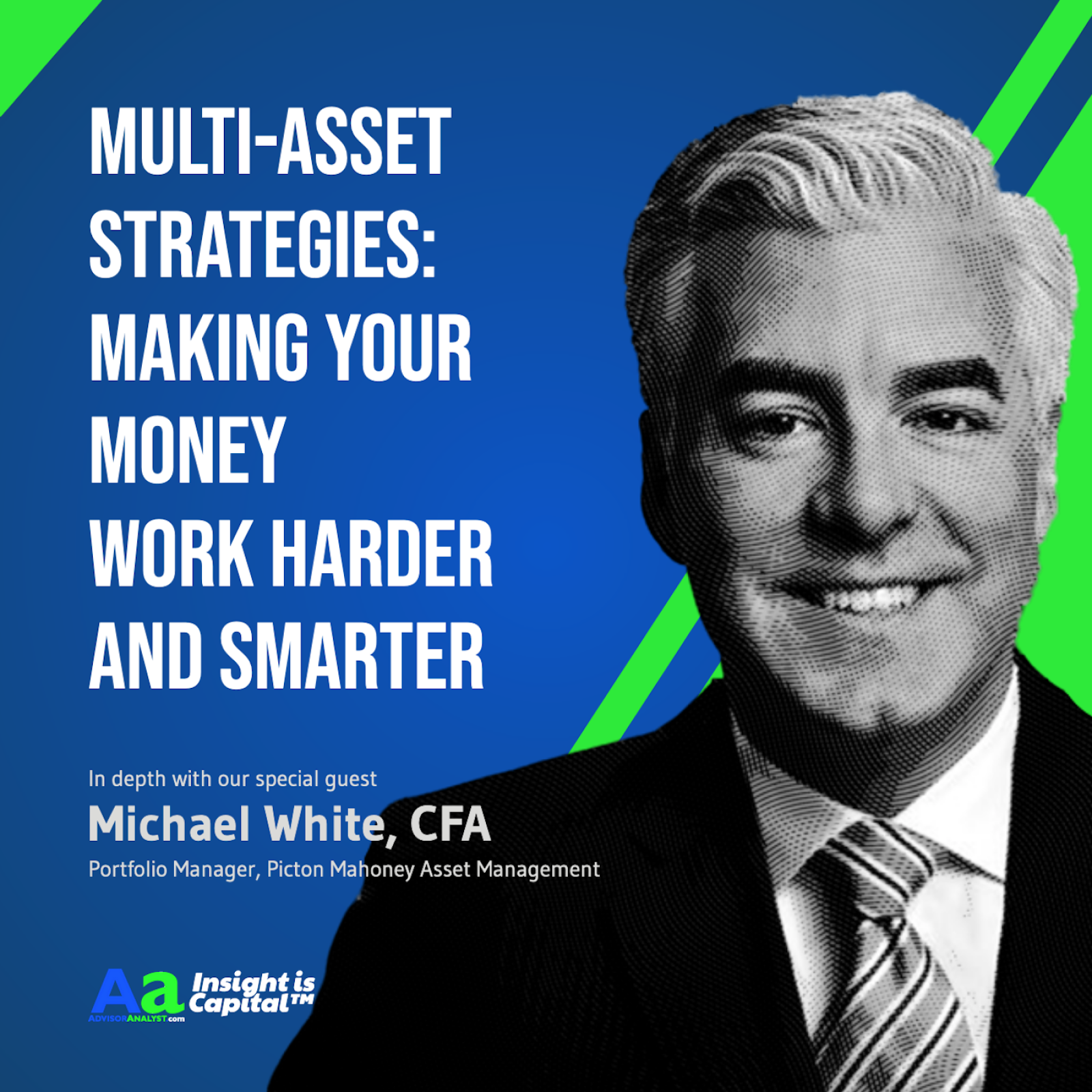
Ep. 100 Multi-Asset Strategies: Making Your Money Work Harder and Smarter

Michael White, CFA, Portfolio Manager, Multi-Asset Strategies at Picton Mahoney Asset Management joins Pierre Daillie to discuss how taking a multi-asset/multi-strategy approach to diversification – using alternative strategies that don’t rely on stock and bond markets rallying – can potentially help diversify the risks that investors are taking in the market and enhance the quality of returns in portfolios.

Posted in: Episodes

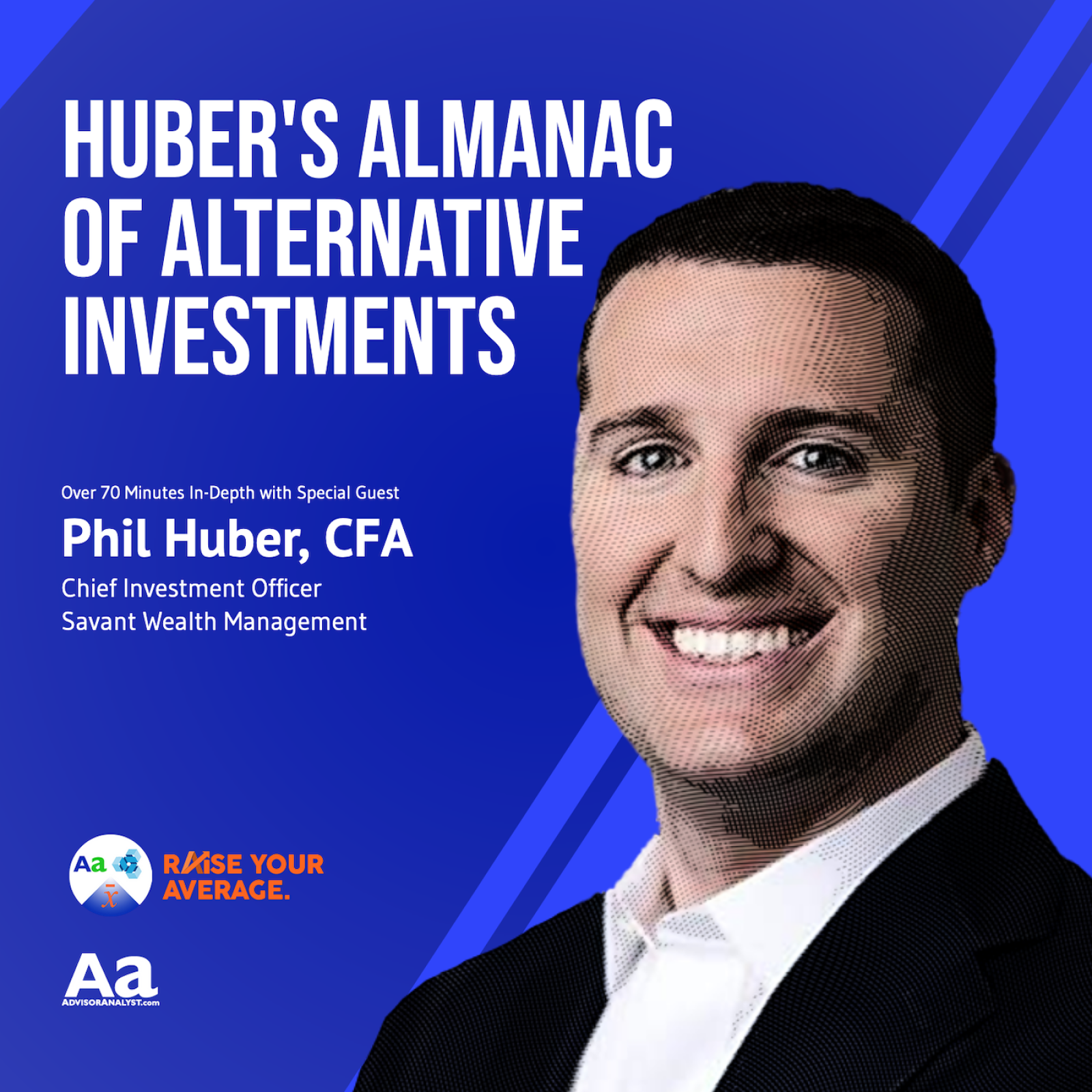
99 Huber's New Almanac of Alternative Investments

Phil Huber, CIO, Savant Wealth Management, based in Chicago, joins us for a deep dive on how advisors can thoughtfully and successfully implement alternatives to gain a competitive edge in portfolio construction. Phil is a former award-winning advisor, was appointed CIO, at Savant following the merger of Huber Financial Advisors and Savant Capital, which forged their $8-billion Chicago-land behemoth Savant Wealth Management RIA two years ago.

Recognizing that there was a massive proliferation of alternative investment vehicles, he decided to publish a tour-de-force guide that provides detail, reference, and rich insights on understanding how and why the universe of alternative investments available today fit into today’s traditional retail investment portfolios.

Today’s capital market assumptions (CMAs) show that investors must either lower their forward expected investment returns forecasts or learn how to productively use alternatives to augment total return and mitigate the risks inherent in today’s low rates, low yields, and richly valued equity and bond markets.

We explore the numerous new tools and vehicles advisors, and in turn, their clients – investors – can exploit the alternatives universe that was once only available to UHNW investors and institutions. We also explore how advisors can begin to introduce the implementation of this universe of alternative investment solutions.

Phil provides insight as to what the five main categories of alternatives investors need to begin to consider adding to against their legacy 60/40 portfolios, which for the most part have, enjoyed a 40-year secular disinflationary tailwind since the 1980s, in order to reduce the risk of being blindsided by changes in market and economic regimes.

“The best portfolio is the one you can stick with,” over the long term, through thick and thin, and since behavioural risk is potentially the most deleterious and costly risk investors can experience in their lifetimes, it has now become critical for advisors to set themselves apart by helping their clients to construct portfolios that are resilient and sustainable, from the point of view of being able to maintain strategic asset allocations over the long-term, without being destroyed by future flights-to-safety.

*****

Where to find Phil Huber, CIO, Savant Wealth Management

Phil Huber on Linkedin

Phil Huber on Twitter (@bpsandpieces)

Bps and Pieces Blog

Savant Wealth Management

Phil Huber’s New Book:

The Allocator’s Edge: A modern guide to alternative investments and the future of diversification – https://links.advisoranalyst.com/The-Allocators-Edge

*****

Where to find the Raise Your Average crew:

ReSolve Asset Management

ReSolve Asset Management Blog

Mike Philbrick on Linkedin

Rodrigo Gordillo on Linkedin

Adam Butler on Linkedin

Pierre Daillie on Linkedin

Joseph Lamanna on Linkedin

AdvisorAnalyst.com

******

“You don’t have to be brilliant, just wiser than the other guys, on average, for a long time.” Charlie Munger

Welcome to Raise Your Average, our deep dive journey into learning from the people and process behind the world of investing. Through conversations with leaders in the investments game, we peel back the layers of the onion on how these holders of the keys to the kingdom allocate their time, their energy, and their dollars.

We are all students and we are all teachers. We are the average of the 5 people we spend the most time with. Come hang out with us for a while and raise your average, as we raise ours.

Music credit: In Hip Hop, Paul Velchev (8MJZA6T3LK)