Posted in: Episodes

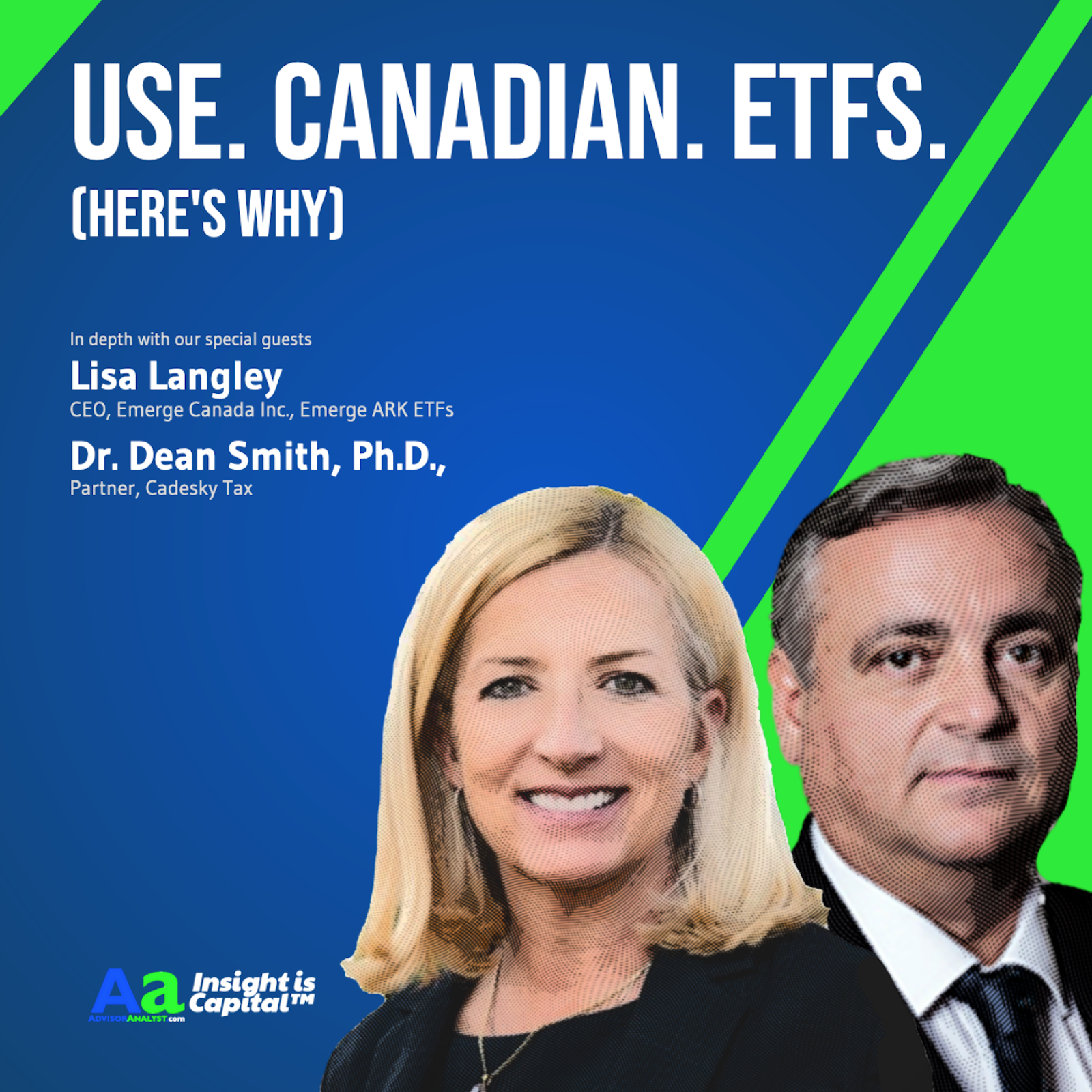
Ep. 101 Use. Canadian. ETFs. (Here's Why) with Dean Smith, Ph.D., and Lisa Lake Langley

Lisa Langley is on a mission. Although she is CEO of Emerge Canada Inc., the sponsor of Emerge ARK ETFs, whose disruptive innovation ETFs are the Canadian sisters of the U.S. based ETFs sub-advised by ARKInvest, Lisa has been devoting considerable time during the last 3 years to the mission of educating Canadian advisors on the pitfalls of using U.S. domiciled ETFs in the portfolios they manage on behalf of their clients, specifically in the cases where there are equivalent Canadian domiciled ETFs they could be using.

You can find more information on her firm’s mission, here at: “Think Canadian ETFs”

We didn’t talk about her firm’s ETFs here.

Instead, to talk about the issue and her next-to-most important mission, Lisa invited Dr. Dean Smith, Ph.D., partner at Cadesky Tax, a Canadian tax expert, who specializes in working with multi-national companies and wealthy expatriate individuals on U.S.-Canada cross-border tax issues, to join us for a deep dive on the various high -value considerations investors need to be aware of when it comes to specifically investing in (equivalent) Canadian-domiciled ETFs vs. U.S.-domiciled ones.

The bottom line is that it is in the financial best interest of Canadian investors, and their advisors (you), to decisively begin using Canadian-domiciled ETFs in all portfolios, going forward. Our conversation in this podcast is all about “Why?”

It’s also important that we recognize here that many investors and advisors currently hold U.S.-domiciled ETF positions that may be difficult to replace or unwind because they have accumulated substantial capital gains, so our talk is not about unwinding those positions, but rather, rethinking the decision to further add to those U.S. domiciled ETFs, vs. finding equivalent Canadian-listed counterparts.

Our objective here is to focus on what to consider for future decisions. Think of it as your resolution for 2022. Positions in U.S.-domiciled ETFs that fulfill an investment objective should only be considered in the event there is no Canadian-listed equivalent ETF, i.e. only if there is no other way.

There are serious fiduciary implications, and considerable long term practitioner liability to consider. The consequences could wind up being very messy, particularly on long-time held U.S. domiciled ETF assets.

Tune in, this is important. Once you know, you won’t be able to look away or think about it any other way.

Where to find our guests:

Lisa Lake Langley on Linkedin

Emerge Canada Inc. / Emerge Canada ETFs

Dr. Dean Smith on Linkedin

Cadesky Tax

Posted in: Episodes

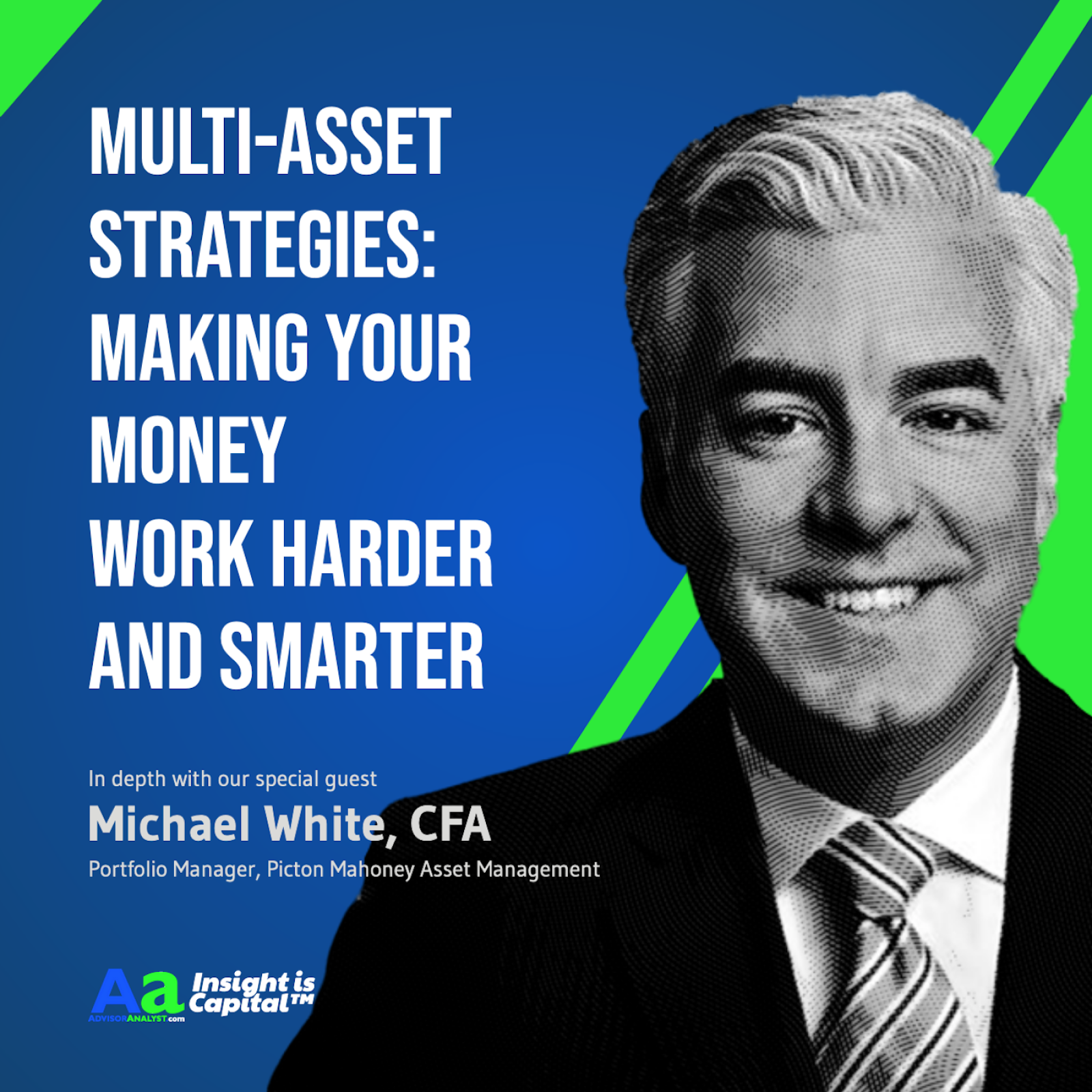
Ep. 100 Multi-Asset Strategies: Making Your Money Work Harder and Smarter

Michael White, CFA, Portfolio Manager, Multi-Asset Strategies at Picton Mahoney Asset Management joins Pierre Daillie to discuss how taking a multi-asset/multi-strategy approach to diversification – using alternative strategies that don’t rely on stock and bond markets rallying – can potentially help diversify the risks that investors are taking in the market and enhance the quality of returns in portfolios.

Posted in: Episodes

99 Huber's New Almanac of Alternative Investments

Phil Huber, CIO, Savant Wealth Management, based in Chicago, joins us for a deep dive on how advisors can thoughtfully and successfully implement alternatives to gain a competitive edge in portfolio construction. Phil is a former award-winning advisor, was appointed CIO, at Savant following the merger of Huber Financial Advisors and Savant Capital, which forged their $8-billion Chicago-land behemoth Savant Wealth Management RIA two years ago.

Recognizing that there was a massive proliferation of alternative investment vehicles, he decided to publish a tour-de-force guide that provides detail, reference, and rich insights on understanding how and why the universe of alternative investments available today fit into today’s traditional retail investment portfolios.

Today’s capital market assumptions (CMAs) show that investors must either lower their forward expected investment returns forecasts or learn how to productively use alternatives to augment total return and mitigate the risks inherent in today’s low rates, low yields, and richly valued equity and bond markets.

We explore the numerous new tools and vehicles advisors, and in turn, their clients – investors – can exploit the alternatives universe that was once only available to UHNW investors and institutions. We also explore how advisors can begin to introduce the implementation of this universe of alternative investment solutions.

Phil provides insight as to what the five main categories of alternatives investors need to begin to consider adding to against their legacy 60/40 portfolios, which for the most part have, enjoyed a 40-year secular disinflationary tailwind since the 1980s, in order to reduce the risk of being blindsided by changes in market and economic regimes.

“The best portfolio is the one you can stick with,” over the long term, through thick and thin, and since behavioural risk is potentially the most deleterious and costly risk investors can experience in their lifetimes, it has now become critical for advisors to set themselves apart by helping their clients to construct portfolios that are resilient and sustainable, from the point of view of being able to maintain strategic asset allocations over the long-term, without being destroyed by future flights-to-safety.

*****

Where to find Phil Huber, CIO, Savant Wealth Management

Phil Huber on Linkedin

Phil Huber on Twitter (@bpsandpieces)

Bps and Pieces Blog

Savant Wealth Management

Phil Huber’s New Book:

The Allocator’s Edge: A modern guide to alternative investments and the future of diversification – https://links.advisoranalyst.com/The-Allocators-Edge

*****

Where to find the Raise Your Average crew:

ReSolve Asset Management

ReSolve Asset Management Blog

Mike Philbrick on Linkedin

Rodrigo Gordillo on Linkedin

Adam Butler on Linkedin

Pierre Daillie on Linkedin

Joseph Lamanna on Linkedin

AdvisorAnalyst.com

******

“You don’t have to be brilliant, just wiser than the other guys, on average, for a long time.” Charlie Munger

Welcome to Raise Your Average, our deep dive journey into learning from the people and process behind the world of investing. Through conversations with leaders in the investments game, we peel back the layers of the onion on how these holders of the keys to the kingdom allocate their time, their energy, and their dollars.

We are all students and we are all teachers. We are the average of the 5 people we spend the most time with. Come hang out with us for a while and raise your average, as we raise ours.

Music credit: In Hip Hop, Paul Velchev (8MJZA6T3LK)

Posted in: Episodes

97 Preet Banerjee – What is Advice Worth?

Preet Banerjee, Founder and CEO of MoneyGaps (https://moneygaps.com) joins us for a deep dive into the topic of the value of financial advice, and he has been researching the answer to the question, “How do you quantify the value of financial advice?”. This is a quintessential question, and the answer is not simple. We get into an eloquent and well explained conversation about the different qualitative and quantitative components that make up that value. As pretext, Preet Banerjee is in the process of completing a Ph.D. on this very subject of how to quantify the value of financial advice (across all advice channels).

In addition, Preet recently founded MoneyGaps.com (2019), a software service for financial advisors to help them deliver a lighter, but more holistic planning experience for Canadians who may not have millions of dollars. He explains how his company’s Hybrid Advice Software-as-a-Service platform can be used by Canadian Advisors to bridge their ability to do business across the generational and/or under-accumulated wealth divides.

Preet is the bestselling author of the personal finance books, Stop Over-Thinking Your Money!: The Five Simple Rules Of Financial Success (2014).

Where to find Preet Banerjee

Preet Banerjee on Linkedin

MoneyGaps (for Advisors)

PreetBanerjee.com

Where to find the Raise Your Average crew:

ReSolve Asset Management

ReSolve Asset Management Blog

Mike Philbrick on Linkedin

Rodrigo Gordillo on Linkedin

Adam Butler on Linkedin

Pierre Daillie on Linkedin

Joseph Lamanna on Linkedin

AdvisorAnalyst.com

*****

“You don’t have to be brilliant, just wiser than the other guys, on average, for a long time.” Charlie Munger

Welcome to Raise Your Average, our deep dive journey into learning from the people and process behind the world of investing. Through conversations with leaders in the investments game, we peel back the layers of the onion on how these holders of the keys to the kingdom allocate their time, their energy, and their dollars.

We are all students and we are all teachers. We are the average of the 5 people we spend the most time with. Come hang out with us for a while and raise your average, as we raise ours.

Music credit: In Hip Hop, Paul Velchev (8MJZA6T3LK)
Posted in: Episodes

96 New Ways to Optimize Retirement with David Blanchett & Michael Finke Ph.D.

David Blanchett, Head of Retirement Research at $1.5-trillion AUM, PGIM (Prudential) and Dr. Michael Finke, Ph.D., Professor of Wealth Management, The American College, join us for a deep dive discussion into the challenges facing retirees, new ways of thinking about retirement and longevity, and new solutions advisors can use to help their clients optimize funding retirement income liabilities in this low rate, low yielding, & historically sky-high equity valuation environment. They answer the question, What are some of the newer ways retirees can approach this conundrum?

The concurrence of demographic waves, economic and market conditions, equity valuations and bond yields, have culminated in a situation that leaves many investors nearing or at retirement, cornered by a limited number of effective, and not-so-effective, investment income generating options, ranging from moderately risky, to highly risky. There’s a great deal to consider, and we get into a profound look at all of the considerations, and some options may be considerably more useful and less risky than others from all angles given the current investment climate.

Where to find David Blanchett and Michael Finke:

David Blanchett on Linkedin

Micheal Finke, Ph.D. on Linkedin

Wealth, Managed Podcast

Guaranteed Income: A Licence to Spend

Where to find the Raise Your Average crew:

ReSolve Asset Management

ReSolve Asset Management Blog

Mike Philbrick on Linkedin

Rodrigo Gordillo on Linkedin

Adam Butler on Linkedin

Pierre Daillie on Linkedin

Joseph Lamanna on Linkedin

AdvisorAnalyst.com

*****

“You don’t have to be brilliant, just wiser than the other guys, on average, for a long time.” Charlie Munger

Welcome to Raise Your Average, our deep dive journey into learning from the people and process behind the world of investing. Through conversations with leaders in the investments game, we peel back the layers of the onion on how these holders of the keys to the kingdom allocate their time, their energy, and their dollars.

We are all students and we are all teachers. We are the average of the 5 people we spend the most time with. Come hang out with us for a while and raise your average, as we raise ours.

Music credit: In Hip Hop, Paul Velchev (8MJZA6T3LK)
Posted in: Episodes

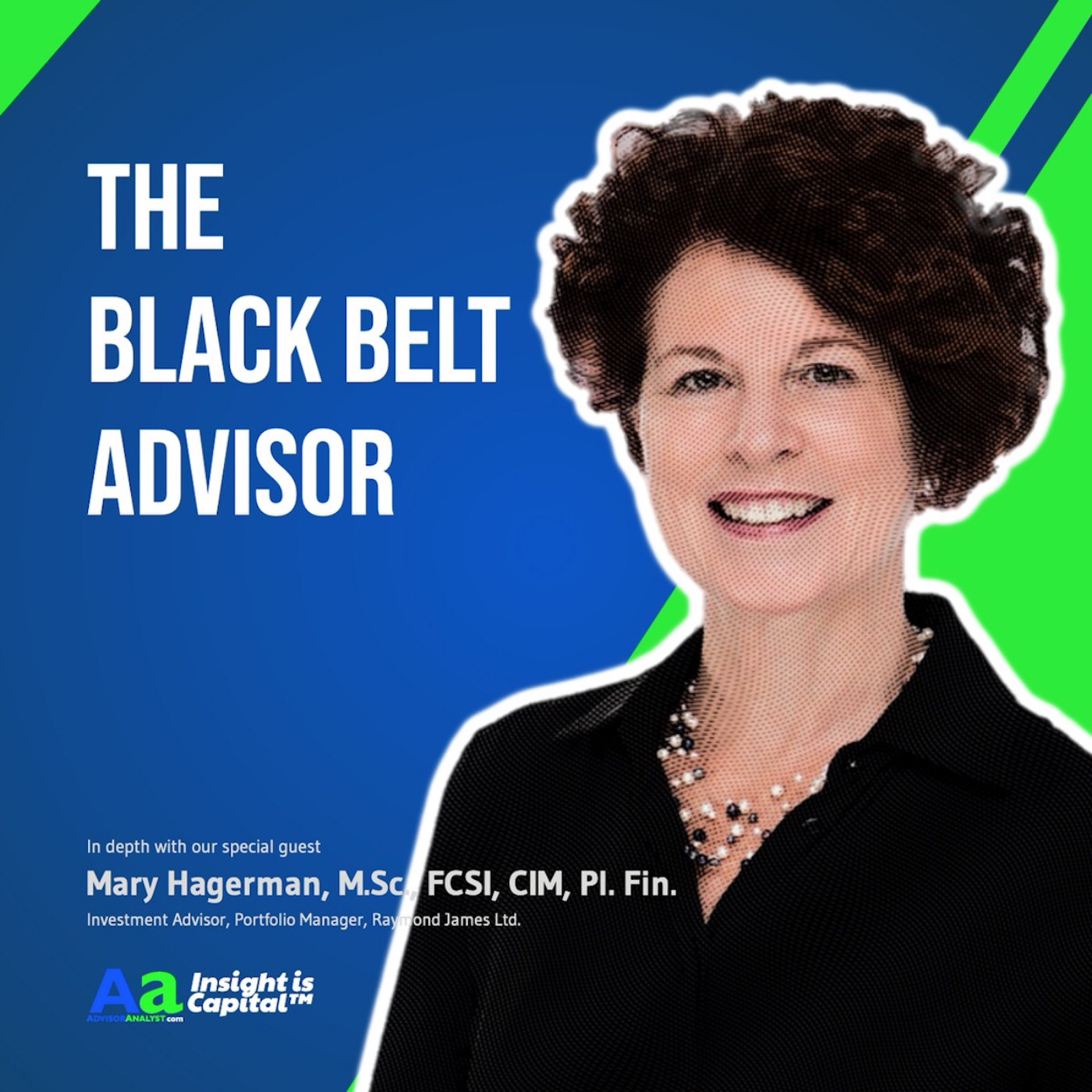
95 Mary Hagerman: The Black Belt Advisor

Mary Hagerman, accomplished, award-winning Investment Advisor, Portfolio Manager, and best-selling author of ‘The Black Belt Investor’, at Raymond James, based in Montreal, joins us for a fireside chat. Our conversation spans from Mary’s early career, her longstanding desire to implement true fiduciary financial planning in what was a traditional, transactional stockbroker/advisor driven business, to evolving her practice into a fee-based, discretionary portfolio management business model that allowed her to fulfill her career aspirations. The takeaway: It wasn’t easy. There were numerous people, industry biases, and conflicting interests and challenges that could have just as well succeeded in dashing those hopes. But, there were also great mentors, and along her journey, her love and learning of martial arts (which inspired her to write her aptly titled book), which helped to embolden her resolve to become the wealth manager she is today.

In the midst of the mass financial trauma of the GFC in 2008-2009, Mary came to the wholehearted realization she wanted to transform the way she advises and invests with and for her clients, to include and substitute legacy investment products with low cost, index-based ETFs, and that if she was going to go higher and farther in the industry, her practice would have to make the leap into the fee-based realm. Unwittingly, Mary became one of the earliest women at her firm, and in Canada, to make the jump to not only using ETFs, but becoming fee-based, and jumping through the educational and regulatory hoops to earn the privelege of being a discretionary portfolio manager.

Mary discusses the challenges she faced as a woman coming up in the financial advisory business. In that regard, things have changed since, and she also reveals what she sees as all the silver linings – that this is a great opportunity and business for women to be in. Women, she remarks, are very well suited empathetically, and EQ wise, perhaps naturally more so, than men, better equipped at asking the hard, more sensitive and emotional questions, that men often shy away from, that get to the heart of peoples’ relationship with money.

Finally, we talk about her highly regarded book, her newly formed charitable foundation (and how she did it), and her key advice for women wanting to be wealth advisors.

Where to find Mary Hagerman

Mary Hagerman on Linkedin

The Mary Hagerman Group at Raymond James Ltd.

Mary Hagerman’s bestseller

The Black Belt Investor: A Martial Arts Guide to Wealthness; How to Kick Butt and Feel Rich!

Posted in: Episodes

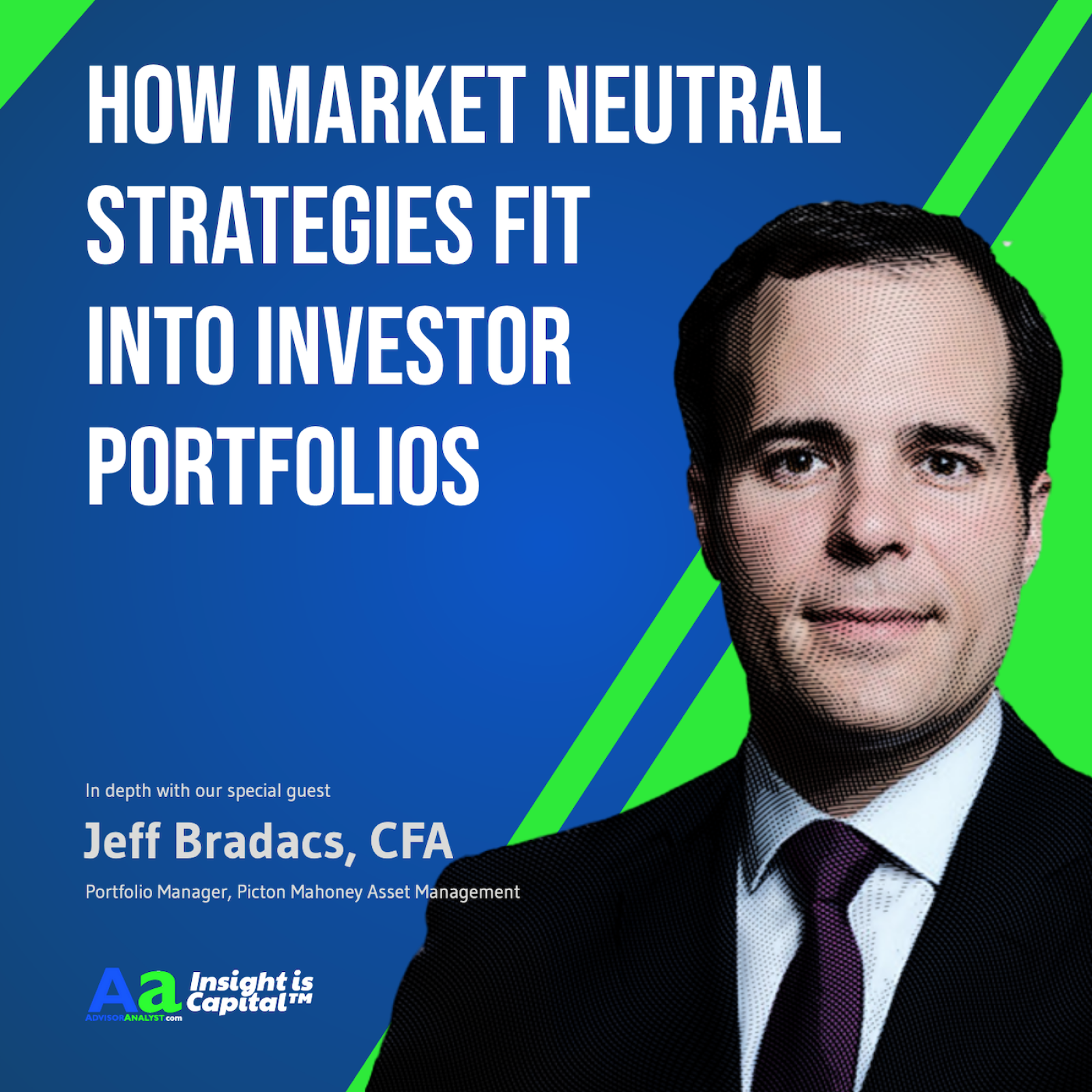
94 Jeff Bradacs: How Market Neutral Strategies Fit Into Investor Portfolios

Jeff Bradacs, CFA, Portfolio Manager, Picton Mahoney Asset Management joins Pierre Daillie to discuss how a market neutral strategy can help keep Mr. Market quiet, especially in today’s economy and market that is transitioning from a high-growth, early-cycle recovery stage to a slower-growth, mid-cycle environment. Jeff breaks down how a market neutral strategy generates returns through stock selection, where he and his team are finding opportunities and what they see in the macro environment.

Where to find Picton Mahoney Asset Management:

Picton Mahoney

Picton Mahoney Insights

Posted in: Episodes

93 Mike Green: Stock Markets Are Less Efficient, and More 'Inelastic.' What does that mean?

Michael Green, Michael Green, Chief Strategist at Simplify Asset Management joins Pierre Daillie and Adam Butler for a revealing conversation about his thesis that stock markets are less efficient and more ‘inelastic’ because of the proliferation of passive index investing over the last few decades, and what that means. His thesis and research, now corroborated and examined by academic studies, labelling it as the ‘Inelastic Market Hypothesis,’ by Xavier Gabaix and Ralph Koijen, Jean-Philippe Bouchaud, and Valentin Haddad, shine a bright new light on how and why markets are displaying increasingly violent and rapid bouts of volatility, that may intensify over the coming years and decades.

Research mentioned in the conversation:

In Search of the Origins of Financial Fluctuations: The Inelastic Markets Hypothesis (Gabaix and Koijen)

The Inelastic Market Hypothesis: A Microstructural Interpretation (JP Bouchaud)

How Competitive is the Stock Market? (Valentin Haddad)

Robin Wigglesworth’s Book – Trillions: How a Band of Wall Street Renegades Invented the Index Fund and Changed Finance Forever

Where to find Michael Green, Chief Strategist, Simplify Asset Management:

Michael Green on Linkedin

Michael Green on Twitter – @profplum99

Simplify Asset Management

******

Where to find the Raise Your Average crew:

ReSolve Asset Management

ReSolve Asset Management Blog

Mike Philbrick on Linkedin

Rodrigo Gordillo on Linkedin

Adam Butler on Linkedin

Pierre Daillie on Linkedin

Joseph Lamanna on Linkedin

*****

“You don’t have to be brilliant, just wiser than the other guys, on average, for a long time.” Charlie Munger

Welcome to Raise Your Average, our deep dive journey into learning from the people and process behind the world of investing. Through conversations with leaders in the investments game, we peel back the layers of the onion on how these holders of the keys to the kingdom allocate their time, their energy, and their dollars.

We are all students and we are all teachers. We are the average of the 5 people we spend the most time with. Come hang out with us for a while and raise your average, as we raise ours.

Posted in: Episodes

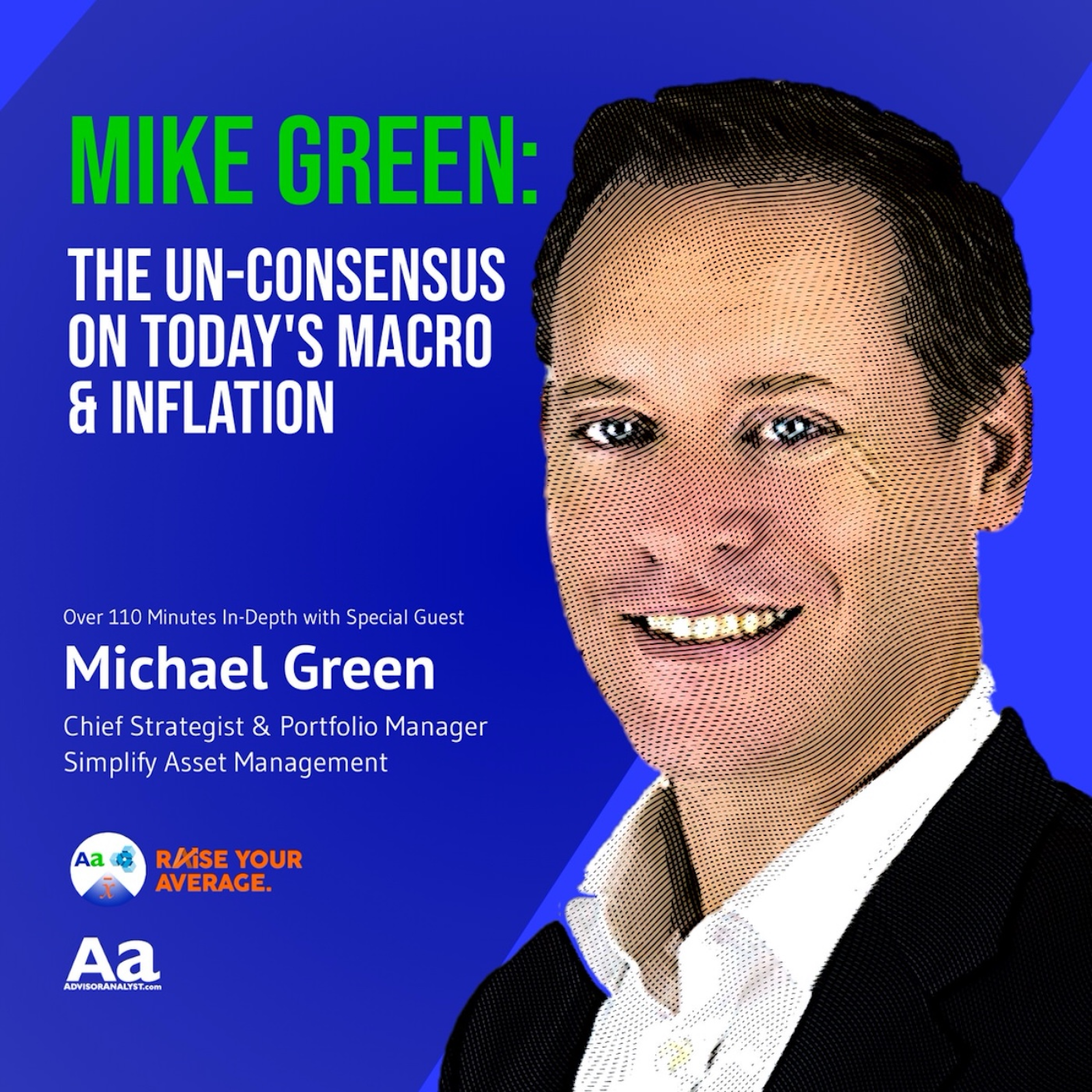
92 Simplify's Michael Green: The Un-Consensus on Today's Macro & Inflation

Michael Green, Chief Strategist at Simplify Asset Management joins Pierre Daillie and Adam Butler for a blockbuster of a conversation about his macro view of the economy, inflation, markets and the dynamics of today’s equity and fixed income markets, as well as his in depth view that stock markets are less efficient and more ‘inelastic’ due to the proliferation of passive index investing, and what that means.

Our conversation begins with Michael setting the stage for the entire conversation by describing how and why the 70s inflation occurred. [5:00] Instead, with the power of historical hindsight and investigation of all data from that period, Michael eloquently describes in non-jargony fashion what actually happened and provides a deeply profound view of how the economy works and how it worked then, and asks the thought -provoking rhetoric to shift our perspective on what we should be looking at if we want have a true look at what is happening.

Then [19:35] Michael explains his view on peak productivity, i.e. that productivity peaks at age 45 specifically in the context of today’s demographics, and how that dynamic is contributing to his view on whether or not we are entering an inflationary spiral.

[21:30] Adam asks Michael to describe what he thinks are the underlying mechanics and the subtext of what is driving the inflation impulse, i.e. bottlenecks and underinvestment, as well as inflation the ‘Meme’ or ‘Political Football’ or ‘Inflation, the Performance Art.’

[23:45] Michael explains what is, and what is NOT inflation.

[28:40] Michael shares his views on what’s happening with surge seen in commodities, shelter costs, labour/wages, followed by a striking explanation of what’s happening in shipping/trucking/transportation.[43:26]

[59:05] “As you know ‘I celebrate anytime I’m called the dumbest man alive,” says Green. “I think that possibly the best thing that can happen to me, for a very simple reason.” Green says we are in a regime where commodity prices are nearing all time highs, there’s already demand destruction in places like oil and gas, and everyone’s convinced the only path is higher – “That feels so wrong to me.” [1:00:21]

At [1:13:30] we wrap up the macro discussion around inflation and segue to Michael’s “Inelastic Market Hypothesis” the antithesis of the “Efficient Market Hypothesis.”

[1:20:21] Mike explains his thesis that as a result of the many trillions of dollars in flow to passive funds and ETFs, stock markets have become increasingly ‘inelastic’ or susceptible to secular reversals in sentiment – that the way markets work today means that reversals could be catastrophic to equity prices when and if the trend reverses as investors age.

Stock Markets Are Becoming Less Efficient, and More ‘Inelastic.’ What does that mean?

Research mentioned in the podcast:

In Search of the Origins of Financial Fluctuations: The Inelastic Markets Hypothesis (Gabaix and Koijen)

The Inelastic Market Hypothesis: A Microstructural Interpretation (JP Bouchaud)

How Competitive is the Stock Market? (Valentin Haddad)

Where to find Michael Green:

Michael Green on Linkedin – https://www.linkedin.com/in/michael-green-9a15142/

Michael Green on Twitter – @profplum99 – https://www.twitter.com/profplum99

Simplify Asset Management – https://www.simplify.us/

******

Where to find the Raise Your Average crew:

ReSolve Asset Management – https://investresolve.com/

ReSolve Asset Management Blog – https://investresolve.com/blog/

Mike Philbrick – https://www.linkedin.com/in/michaelphilbrick/

Rodrigo Gordillo – https://www.linkedin.com/in/rodrigogordillo/

Adam Butler – https://www.linkedin.com/in/adamdbutler/

Pierre Daillie – https://www.linkedin.com/in/pierre-daillie-advisoranalyst/

Joseph Lamanna – https://www.linkedin.com/in/josephlamanna/

AdvisorAnalyst.com – https://advisoranalyst.com

“You don’t have to be brilliant, just wiser than the other guys, on average, for a long time.” Charlie Munger

Welcome to Raise Your Average, our deep dive journey into learning from the people and process behind the world of investing. Through conversations with leaders in the investments game, we peel back the layers of the onion on how these holders of the keys to the kingdom allocate their time, their energy, and their dollars.

We are all students and we are all teachers. We are the average of the 5 people we spend the most time with. Come hang out with us for a while and raise your average, as we raise ours.

Posted in: Episodes

91 SIACharts' Paul Kornfeld on Actionable, Investment Decision-Making Tools, At Scale, for Advisors

Paul Kornfeld, CFA, President of SIACharts joins Pierre, Mike and Rodrigo for a deep dive into the capabilities of his firms powerful proprietary Investment Advisor platform, SIACharts encompasses a suite of tools advisors can use to efficiently make comparative decisions across all individual North American Stocks, ETFs and Canadian Mutual Funds.

We get into the nuts and bolts of what makes the SIACharts platform tick. For starters, SIACharts carries out 10-billion calculations each trading day to provide cross securities analysis across roughly 10,000 securities. The tool enables advisors to make rapid calls between securities based on SIACharts proprietary Relative Strength Analysis (not to be confused with Technical Analysis’ Relative Strength Indicator)

Advisors can easily make pair-trading distinctions between stocks, Canadian and US ETFs and all Canadian Mutual Funds on a adhoc basis, compare entire stock, ETF and mutual categories and sector and factor strategies, or across each ETF or Fund provider, as well as receive up-to-the-day scores and relative strength calls such as the SIACharts Equity Action Call, which provides day-to-day guidance on whether there is cause to increase or decrease equity exposure based on relative strength analysis. Advisors can also plot charts in either of Line, Candlestick, or Point and Figure formats.

Point and Figure charting figures large on the SIACharts platform because of its ability to provide trend analysis in an asymmetric format that ignores time as a factor, and focuses on price movement and trend. Point and Figure charting is a proven charting tool effective at identifying trends across securities either on a one-off individual security chart, or when comparing competing pair trades (e.g. stock vs. stock, stock vs. index, stock vs. Sector, ETF vs. Sector, or Fund, etc.) to identify the relative outperformance of one security versus others, and/or other measures.

Throughout the conversation, Paul demonstrates how advisors can use this unique and powerful investment management tool to make significant improvements to their investment selection and management process, as well as streamline their trading and communications processes with their clients.

One of the most underrated factors in considering the use of SIACharts is how it not only provides valuable insight in the determination of timing and relative strength across securities and markets, tracks model and individual client portfolios, but how it is transforming the practices of advisors who have adopted the platform. It is a massive timesaver in the context of securities selection and analysis.

As a meeting preparation tool for instance when getting ready to meet, or intra- or post-meeting with prospective clients, for example, advisors have been able to add enormous value to their initial interactions by being able to provide portfolio x-rays against pre-existing portfolios to point out the strengths and weaknesses in portfolios on very short notice. Clients trend toward highly impressed by the advisor’s ability to make quick systematized calls on portfolios on short-notice and on an ongoing basis, in and around the portfolio review process, and also thus, freeing up substantial time for advisors to be able to spend more time on high value relationship building.

Paul points out that among his favourite tools in the SIACharts war chest is the ability to set up alerts on individual securities and model portfolios to notify of changes in relative strength across all dimensions. When you can empower your practice to be in a position to deliver on investment commitments such as market entry and exit calls, on an immediate basis, from wherever you may be at any given moment, for example, it greatly enhances the value and competitive dynamic of your advisory practice.

Finally, from a behavioural finance perspective, Paul demonstrates via SIACharts’ case studies how SIACharts tools provided asset preservation guidance during tumultuous periods, such as last years’ panic selloff signals, or by how advisors on the platform were signalled appropriately to both enter Valeant during its massive upward growth spike and, conversely to exit same during its fall from grace. Think Nortel Networks and Bre-X débâcles.

Thank you for tuning in, and if you found the conversation to be valuable in any way, please hit that subscribe button in Youtube, Apple Podcasts, or Google Podcasts, the Notifications button, as well as ‘liking’ and commenting as you see fit.

Get a All-Access Free Three Week Trial to SIACharts Here (Advisors only):

Where to find Paul Kornfeld and SIACharts:

Paul Kornfeld on Linkedin

SIACharts

Where to find the Raise Your Average crew:

ReSolve Asset Management – https://investresolve.com/

ReSolve Asset Management Blog – https://investresolve.com/blog/

Mike Philbrick – https://www.linkedin.com/in/michaelphilbrick/

Rodrigo Gordillo – https://www.linkedin.com/in/rodrigogordillo/

Adam Butler – https://www.linkedin.com/in/adamdbutler/

Pierre Daillie – https://www.linkedin.com/in/pierre-daillie-advisoranalyst/

Joseph Lamanna – https://www.linkedin.com/in/josephlamanna/

AdvisorAnalyst.com – https://advisoranalyst.com

*****

“You don’t have to be brilliant, just wiser than the other guys, on average, for a long time.” Charlie Munger

Welcome to Raise Your Average, our deep dive journey into learning from the people and process behind the world of investing. Through conversations with leaders in the investments game, we peel back the layers of the onion on how these holders of the keys to the kingdom allocate their time, their energy, and their dollars.

We are all students and we are all teachers. We are the average of the 5 people we spend the most time with. Come hang out with us for a while and raise your average, as we raise ours.

Music credit: In Hip Hop, Paul Velchev (8MJZA6T3LK)